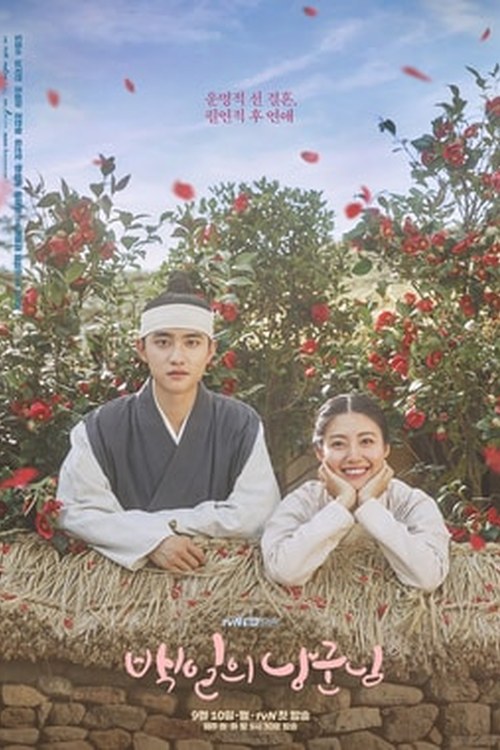
100 Days My Prince · Season 1 · Episode 1 · 10 September 2018
S1E1 Episode 1
A crowded but sharp opener where power begins as play, hardens into orders, and ends by chasing the truth.
THE MOMENT The moment the prince wakes with no memory and no idea of what he's lost - the show's central premise lands.
The premiere establishes the Joseon court's brutal political atmosphere before the assassination attempt that strips the Crown Prince of his identity. The tonal contrast between palace menace and village comedy is set up cleanly, and both leads' predicaments are sketched with economy.
Full episode analysis below. Spoiler-light verdict above.
Updated
A soldier promises to crush enemies and save the people. Minutes later, a boy accused of beating up other children insists they were only playing warriors. The cut is blunt, a little cheeky, and it lays out the hour’s central idea: power begins as performance, then somebody brings a real sword. Episode 1 works best when it keeps that contrast alive. Its world is built on children copying violence, commanders hiding behind orders, and a prince who can turn irritation into policy before anyone in the room can blink.
Children Play at War, Men Make It Legal
The premiere opens with a useful trick. It lets martial language sound heroic, then shows how quickly that language curdles. The soldier’s vow to crush enemies and save the people, gives the hour its first moral posture. By, that posture has shrunk into a boy accused of beating other children while claiming they are playing warriors. The joke has teeth. The child is rehearsing the adult world around him.
BollyAI’s read: the episode understands that court drama needs an origin wound. It does not begin with policy. It begins with mimicry. Children hear what power sounds like, then try the lines on smaller bodies. That makes the later palace machinery feel less abrupt. When the adults arrive with accusations, royal orders, and traitors to execute, the show has already shown the seed version of the same instinct.
The weakness is density. The early stretch moves from war talk to childhood conflict to political danger at a pace that can make the hour feel overpacked before it has secured its emotional anchors. Still, the opening earns its harshness because it gives the episode a clean spine. Everyone claims to be protecting the people, while protection is already tangled with dominance.
Yoon Bu-jun Is Trapped Before the Sword Falls
Yoon Bu-jun is the premiere’s most immediate tragic figure because his contradiction is concrete. He wants to keep his daughter alive, yet he is pulled into the machinery of harsh orders. a commander claims a royal order to execute him as a traitor. By, the report is cold: the orders were carried out and “they’ve all been slain.”
That sequence gives the episode its first real blow. The show does not need a long speech to make the cruelty legible. A father’s protective instinct runs into state violence, and the state wins. The line attached to the execution arc, “but helping the people who are suffering comes first,” lands as a cruel value statement because the hour has already placed ordinary mercy inside a system that punishes it.
What works here is the speed of consequence. The accused traitor label does not hang in the air as abstract intrigue. It becomes bodies. It becomes a family problem. It becomes a daughter forced to survive the consequences of adult decisions. The episode’s court politics are broad at this stage, but Yoon Bu-jun gives them weight. He is the hour’s proof that noble language and lethal orders can occupy the same room.
The Prince Declares War on Birds
The middle stretch shifts into palace administration, and Episode 1 becomes more uneven. The move from executions to drought, yin-yang logic, and a marriage decree is ambitious, but the writing sometimes explains its structures with more patience than drama. The dialogue is dense. The debates lean didactic. For a while, the palace risks becoming a classroom with better costumes.
Then the Crown Prince orders a eunuch to get rid of every bird in the palace by day’s end. It is a small command with a large shadow. The order is absurd on the surface, but it fits the episode’s control logic perfectly. When a ruler cannot bear a reminder, the reminder must vanish. The instruction that the birds should be removed “so that you will never see them again” gives the prince’s authority a petty, frightening shape.
That is the premiere at its sharpest: locating tyranny in a practical errand. A bird problem becomes a character sketch. The prince does not need to announce cruelty when he can outsource disappearance. The scene also helps the tonal balance. After the heavy execution arc, this beat carries a streak of palace comedy, but the comedy has a hook in it. The joke is that everyone must treat the whim as governance.
The Riddle Turns Policy Into a Cage the episode introduces its strongest formal device: the “THE PEOPLE” riddle, with an unprecedented promotion attached to solving it. The prompt sounds clean. The result is anything but clean. By, the Crown Prince and others are arguing over how an answer might allow them to leave the palace, and the hour has turned language into a locked door.
This is smart plotting because it literalizes the episode’s fixation on interpretation. Earlier, a royal order could justify execution. Now, a phrase can trap or release. The same court that kills through command must solve a puzzle about “the people,” and the irony does useful work. Everyone speaks of duty, order, and public suffering, yet the people have become a word to decode rather than lives to protect.
The puzzle section also helps the premiere recover from its heavier middle exposition. It gives the palace debate a shape. Instead of leaving officials to talk around policy, the hour places a prize, a rule, and a constraint in front of them. The downside is timing. The riddle arrives after a crowded run of administrative concerns, so its full snap takes time to arrive. Once it does, the episode regains momentum because the argument finally has a game board.
Secrecy Starts Looking Like the Real Throne
The final movement plants the season’s cleanest hooks. A suspected poisoning attempt emerges after an altered medicine list. A missing female physician becomes a question the palace cannot ignore. a suspected person reaches the edge of disclosure with “The harrowing truth is...” before pursuit is ordered. The cut is blunt by design. The truth exists, but the system moves faster.
That closing shape matters. The episode begins with violence performed by children and ends with knowledge being chased before it can settle. Between those points, a father is destroyed, a prince controls his surroundings, and a riddle turns public duty into private advantage. The hour’s season-arc job is clear: plant the poisoning investigation while keeping the emotional cost tied to earlier bloodshed.
BollyAI’s main reservation is that the premiere crams too many engines into one hour. Execution, palace policy, drought logic, marriage decree, riddle, poisoning, disappearance: the load is heavy. Some transitions feel like blocks being stacked rather than pressure rising. Yet the episode has a durable instinct for images that summarize power. A child playing warrior. A father marked traitor. Birds ordered away. A truth interrupted mid-sentence. Those images carry the premiere when the exposition gets loud.
The Verdict
Episode 1 is a solid, crowded launch that works best when power reveals itself through action rather than explanation. The execution arc gives the hour moral weight. The bird order gives the Crown Prince an instantly legible cruelty. The “THE PEOPLE” riddle turns palace language into a trap with rules. The weaker stretch is the administrative middle, where drought, yin-yang debate, and decree-making slow the emotional charge before the puzzle restores shape.
BollyAI’s read: the premiere opens too many doors at once, but most lead somewhere worth entering. As a season opener, it plants the poisoning mystery, the missing physician, and the palace’s appetite for secrecy with enough force to earn the next step.