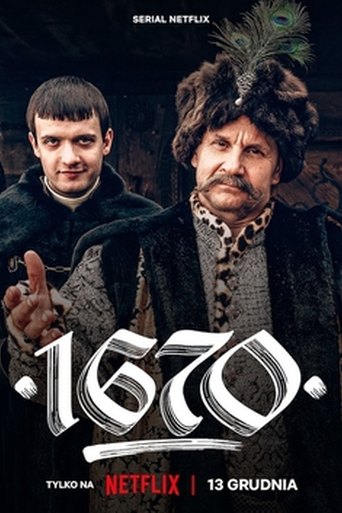
1670 · Season 1 · Episode 1 · 13 December 2023
S1E1 The Assembly
A sharp opener turns noble ambition into procedural comedy, with the veto landing cleaner than the mystery thread.
THE MOMENT Jan Pawel's first direct address to camera - the character's delusional confidence delivered with a deadpan that sets the comic key for the whole series.
The mockumentary format is established from the first talking-head: nobleman Jan Pawel Adamczewski explaining his plan to become the most famous person alive, with full confidence and no self-awareness. The series establishes its satirical register quickly - the 17th century setting is a costume for very contemporary Polish attitudes toward hierarchy and ambition.
Full episode analysis below. Spoiler-light verdict above.
Updated
Jan Paweł Adamczewski begins with time. The year is 1670, he jokes, and the date somehow proves that the world is moving too fast for a man who wants everything around him under control. Then the episode points to starving peasant children, Marek, Józia, and Darek, and lets the joke sour without dropping the rhythm. The premiere’s sharpest idea is simple: Jan Paweł speaks in national destiny while the people under him answer in hunger, taxes, and procedure.
A Prayer Interrupted by Hunger
Jan Paweł’s stated dream is huge enough to be funny before anyone undercuts it. He wants "absolute prosperity for Poland," and the episode immediately makes that ambition feel less like policy than personal branding. The prayer scene works because his piety, optimism, and self-regard keep running into interruptions. He wants grandeur. The room gives him logistics.
That is the engine of the premiere. Jan Paweł talks as if Poland is a project waiting for his wisdom, but the hour keeps forcing him toward smaller, uglier facts. The starving peasant children do not belong to a separate dramatic lane. They sit inside the comic architecture. Their presence punctures his rhetoric without turning the scene into a sermon, and that restraint matters. The episode does not need Jan Paweł to understand the contradiction. It only needs him to keep talking through it.
The joke lands because the show builds him as a man who confuses desire with leadership. He wants prosperity, but more than that, he wants to be seen wanting it. That is a cleaner, meaner comic target. The premiere is at its best when it lets his confidence run one beat too long, then lets reality enter through a side door.
The children also keep the period setting from becoming decorative. Their hunger gives the comedy a hard surface. Jan Paweł can frame his household and country in elevated language, but the episode keeps cutting back to material pressure: food, labor, taxes, access. That pressure is what makes his optimism funny instead of merely silly.
The Letter Becomes a Performance
The assembly letter is the hour’s neatest bit of character comedy. Jan Paweł reads it aloud by watching and leading the peasants, which turns a basic information scene into a performance of authority. He is not merely receiving a message. He is staging comprehension.
That matters because the later family assembly-meeting depends on the same vanity. When Jan Paweł says he has deciphered the encrypted message, the episode plays with status as much as plot. The invitation to the territorial assembly becomes a test of how much ceremony a man can attach to a simple event. In a flatter version of the scene, the letter would only move the story forward. Here, it exposes the gap between his self-image and the machinery around him.
Maciej adds a useful counterweight. His beat is small but pointed: he wants to work, help with blacksmithing, and navigate a new role, yet even feeding horses has to wait until tasks are assigned. That makes him less loud than Jan Paweł and more revealing. In this world, action depends on permission, place, and hierarchy. The episode keeps finding comedy in the delay between wanting to do something and being allowed to do it.
That delay also gives the household scenes shape. Characters are not simply idle while Jan Paweł performs. They are caught in a system where initiative can be a problem if it arrives from the wrong person or at the wrong moment. Maciej’s desire to be useful clashes with the estate’s need to define usefulness for him. The joke is quiet, but it strengthens the episode’s larger argument about authority. Everybody wants movement. The rules decide who gets to move.
The encrypted-message thread is where the premiere shows a slight wobble. It plants the question of what the message contains beyond the assembly invitation, but the beat is funnier as posture than as mystery. The show gets good mileage from Jan Paweł’s claim of deciphering. The actual contents remain thinner.
Cicero Walks Into a Tax Debate
The nobility assembly gives Andrzej a clearer objective: he wants higher taxes approved. The choice is smart because taxation is a perfect comic pressure point for this episode. Everyone can talk about the nation. Someone still has to pay.
Andrzej’s rhetorical strategy, introduced through the line "Because, as Cicero said," is funny because it aims upward while the debate is headed toward a wall. The classical name does exactly what it should in a satire of noble procedure: it dresses self-interest in borrowed dignity. The episode does not need to unpack Cicero. The invocation itself is the joke. It is the sound of a man reaching for history because the present is not cooperating.
This section sharpens the premiere’s central contradiction. Jan Paweł wants prosperity, Andrzej wants the tax motion to pass, and the nobility setting promises the grandness they seem to crave. Then the debate becomes procedural. That shift is the craft. The episode moves from rhetoric to mechanism, from speeches to the rule that can kill a motion. It understands that bureaucracy can be funnier than chaos when the characters believe they are participating in something noble.
The pacing helps. The dialogue density, with its rapid transitions and interruptions, keeps the assembly from becoming a static debate scene. People are not simply exchanging positions. They are trying to win the room, protect status, and survive the rules.
Andrzej’s tax push also prevents the episode from making Jan Paweł the only comic target. The premiere is sharper when it spreads vanity across the system. Jan Paweł has the louder dream, but Andrzej brings his own performance of seriousness. The assembly gives him the setting he wants, then exposes how little that setting guarantees. He can cite Cicero. He can make the case. The room still has its own trapdoor.
The Veto Is the Punchline
The liberum veto is the episode’s cleanest punchline because it is also the plot’s turning point. The motion to raise taxes is denied, and the grand plan collapses into one procedural stop sign. That is strong comic design: the episode spends time inflating ambition, then lets a rule deflate it without fuss.
The aftermath gives the hour its best payoff. A peasant reports that he was victorious at the assembly and will not be paying higher taxes. The wording matters because it flips the status logic of the episode. Jan Paweł and Andrzej have treated the assembly as a noble arena, but the result lands most clearly from below. The peasant’s victory is not elegant. It is practical. He does not have to pay.
That turn makes the premiere feel sharper than a simple period farce. The peasants are more than background evidence of Jan Paweł’s hypocrisy. By the end, they become the clearest interpreters of what happened. The noble project fails in noble language, and the peasant conclusion is blunt enough to sting.
The late long silent stretch is an interesting brake on an otherwise talk-heavy episode. It gives the hour a nonverbal rupture after so much verbal fencing, which can work as deadpan release. It also risks draining the momentum that the assembly result has built. The silence is a bold rhythm change, but the episode’s strongest weapon remains the fast collision of speeches, interruptions, and consequences.
The Verdict
"Episode 1" is a confident opener with a clear comic thesis: power sounds ridiculous when reality keeps answering back. Jan Paweł’s prosperity fantasy, Andrzej’s tax push, Maciej’s assigned usefulness, and the peasants’ final relief all orbit the same joke about hierarchy failing to control outcomes. The premiere is strongest when procedure becomes comedy, especially at the assembly, where one rule does more damage than any speech.
The weakness is focus. The encrypted-message beat has comic value, but it plants more curiosity than this episode pays off, and the late silent stretch slightly blunts the verbal momentum. Still, as a season launch, the hour establishes a durable engine: inflated national language above, practical survival below, and Jan Paweł stuck in the ridiculous space between them.