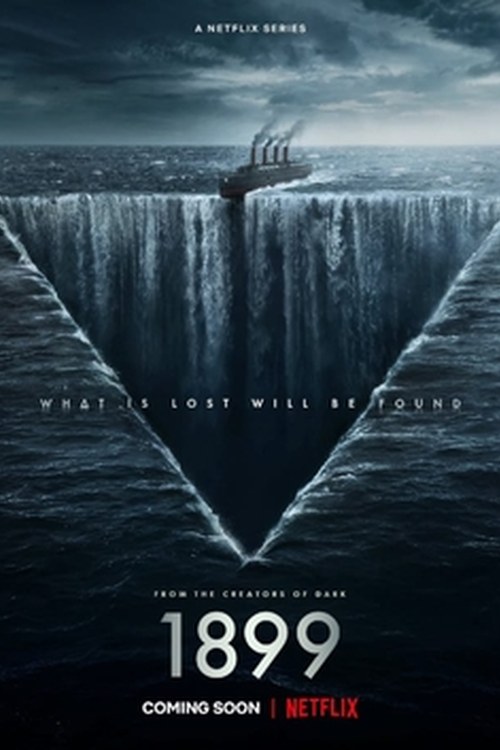
1899 · Season 1 · Episode 3 · 17 November 2022
S1E3 The Fog
Episode 3 turns every official answer into a fresh wound, with the ship’s final reversal as its sharpest proof.
The hour keeps the ship’s social rot under the lantern light. It turns **Elliot’s** attempts at control into **a messier group dynamic**, nudging **Eyk’s** pragmatism toward a more dangerous curiosity. Meanwhile, **Maura** and **Mr. Toussaint** end up locked in a quieter kind of
Full episode analysis below. Spoiler-light verdict above.
Updated
A voice tells Ada to wake up. Soon after, an examiner checks her body, looks for bruising, finds the skin unbroken, and offers a clean answer: "Looks like natural causes to me." That is where the hour sets its trap. The diagnosis should calm the ship. Instead, it turns every certainty into a suspect. Medicine fails first. Authority and faith follow. Episode 3 tracks the collapse of control, one official-sounding answer at a time.
The Body Refuses to Behave Like Evidence
The early medical scene is the hour's sharpest move. Ada's examination is built around the language of order: bruising, skin, poisoning, natural causes. The examiner wants a cause of death and performs the kind of forensic review that should narrow the world. The writing then makes that neatness feel inadequate. If the skin is unbroken and poisoning is ruled out, the mystery only gets stranger.
That is the episode's cleanest craft idea. It lets reason speak first, then shows how little reason can hold. The medical debate also carries a sour social note when someone argues it is a mistake for women to venture into medicine. The line does more than add period texture. It places another false certainty beside the medical one: the certainty of who is allowed to know, diagnose, and enter the room where facts are handled.
The hour works when it stacks those certainties without underlining them. A body is being explained. A woman is being dismissed. A ship is already rotting from mistrust. The scene plays less like a solution than a lid pressed down on boiling water.
A Ribbon Turns Suspicion Personal
The ribbon gives the investigation a sharper edge. Once it is identified as belonging to the speaker's daughter, the mystery stops being general shipboard panic and becomes a private wound. The episode understands the value of a small object. A ship can hold hundreds of fears, but a ribbon can make one fear specific.
That specificity matters because the next turn is a reality conflict: someone insists that Nina was seen yesterday. The line does not explain itself. It lands because the episode has already trained the hour around gaps between what can be checked and what can be believed. The forensic scene asks what happened to a body. The Nina claim asks whether the witnesses can trust their own senses.
This is where Episode 3 finds its pulse. Answers are scarce. Contradictions drive the hour from one scene into the next. The ribbon says memory has weight. The Nina sighting says memory may be lying. That is a nasty pairing, and the episode lets the discomfort sit.
The drawback is pacing. The hour moves from dense diagnosis and investigation into long silences during transitions and aftermath. Silence can charge a mystery, but here the stop-start pattern makes the episode feel segmented. Discovery arrives, the story drifts, then another alarm pulls it forward. The structure has mood. It needs more pressure.
The Company Shadow Gets Bigger
When someone says the ship company is trying to hide something, Episode 3 widens the frame without abandoning the immediate crisis. That balance matters. The Prometheus cannot remain a ghost ship in the distance. It needs documents, records, proof. The plan to go back and find the logbook gives the hour a practical spine. Someone wants evidence of what happened, and the logbook becomes the promise of a version of events that can be held in the hand.
That is good mystery machinery. The show plants clean questions: who hid what on the Prometheus, what was written down, and whether the disappearance points to natural causes, fire, or a company cover-up. The episode can delay the answers because the search feels necessary. The logbook does that work.
The company suspicion also keeps the hour from getting trapped in pure hallucination. The Nina beat bends reality. The logbook beat pulls the story back toward conspiracy and record-keeping. That push-pull is the engine, with the impossible and the bureaucratic sharing the same corridor.
The limitation is that the episode's language of concealment is stronger than its revelations. The claim that the company is hiding something carries charge, but the hour remains in the planting stage. It builds a promising shelf of questions, then asks the next episode to pay rent on them.
Prayer Loses the Room
Father Ramiro gives the episode another version of failed control. His instinct is leadership through prayer, a bid to impose meaning when the ship starts losing its mind. Then the contradiction sharpens: he wants spiritual order, while others want to turn back to America, with guns present.
That detail matters. Guns change the grammar of a crowd. Prayer asks people to submit to an order above them. Weapons declare that the order has already broken. Father Ramiro's authority does not shrink because he says the wrong thing. It shrinks because the room no longer belongs to words alone.
The forgiveness beat near the end deepens that collapse. Someone asks for forgiveness and says they were right about not being supposed to have dreams. It is a grim confession because it turns hope into evidence against the self. The private dramas are working in the same direction as the shipboard crisis. Forward movement has become suspect. Dreams, America, diagnosis, leadership, proof. Every promise is being questioned.
This is where the episode earns its severity. It lets people reach for their usual tools, then shows those tools failing in public.
The Captain's Turn Is the Argument
The final movement belongs to Captain Eyk, because the ship's course is the episode's cleanest external expression of its inner mess. He wants the ship turned back to Europe, tied to the belief that the previous decision was not a mistake. Then the closing beat states that the ship is turning around again. The contradiction is the point. Command, in this hour, is pressure wearing a uniform.
The ending works because it converts argument into motion. The passengers' desire to proceed toward America collides with fear, evidence, faith, weapons, and suspicion. The ship's physical turn becomes the hour's verdict on that conflict. Nobody has solved Ada. Nobody has solved Nina. Nobody has opened the logbook for a full answer. Yet the vessel moves.
That is strong serial writing, with one caveat. The repeated turning-around pattern risks becoming a loop if the next beat does not sharpen the consequences. A ship can reverse course only so many times before the gesture loses bite. Here, it still has bite because the episode has attached the turn to panic and contested authority.
Episode 3 is strongest when it treats direction as a problem of power. Everyone wants the ship to go somewhere, but the right to steer is up for grabs.
The Verdict
Episode 3 is a solid, sinister hour that understands how to make procedure feel useless without making it pointless. The examination, the ribbon, the Nina contradiction, the Prometheus logbook hunt, Father Ramiro's weakening grip, and the final turn all prove the same claim: the Kerberos is full of people trying to name a crisis that keeps changing shape. The score lands below excellent because the pacing has visible jolts, especially between dialogue-heavy investigation and long transitional quiet. Still, the craft spine is firm. As a season chapter, it pushes 1899 from eerie discovery into open command conflict, while planting the logbook and Nina as the questions that matter most next.