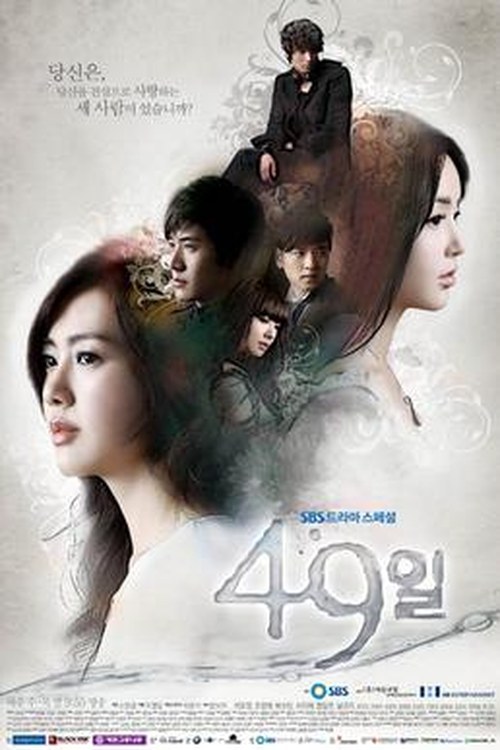
49 Days · Season 1 · Episode 1 · 16 March 2011
S1E1 Episode 1
A busy but effective premiere turns wedding pressure into afterlife paperwork, then makes love answerable by evidence.
THE MOMENT Ji-hyun's moment of realization that she is in someone else's body - played without any comedic softening.
The premise is established with efficient, unsentimental staging - the accident that triggers the 49-day countdown is shot with real shock, not melodramatic lingering.
Full episode analysis below. Spoiler-light verdict above.
Updated
“Get out of the car!” is a brutal way to open a life that thinks it is running late, not running out. The hour begins with movement, pressure, and social machinery: an engagement, a father blindsided by a wedding timeline, applause doing the work of approval. Then the show cuts the engine. A car accident turns all that chatter into a hospital corridor, a body into a problem, and Shin Ji-hyeon into a woman arguing with death itself. The premiere works because it treats the supernatural premise like paperwork arriving at the worst possible moment.
A Wedding Clock With No Mercy
The first stretch is all acceleration. Someone is late for an engagement. Guests are greeted. The bride's family message begins with applause. The social script is already moving before anyone has properly checked whether the people inside it are ready. That is the pilot's cleanest early idea: marriage arrives as a schedule with witnesses, with romance shoved behind logistics.
The father reacting to an engagement revealed as “yesterday” gives the hour its first human friction. The 15-day timeline matters because it makes the episode feel compressed before the accident ever arrives. Everyone is being asked to accept a future at unnatural speed. The line “Dad! We got engaged yesterday!” lands as more than a domestic flare-up. It tells the audience which language the show cares about most: time.
That early dialogue density is not always elegant. The engagement logistics come fast, and the conflict is more functional than graceful. The writing wants to establish pressure, family reaction, and impending ceremony in one rush, so some of the texture gets flattened. A few exchanges feel like signposts. The characters are moving pieces into place for the premise, and the machinery shows.
Still, the haste has a purpose. The episode needs Ji-hyeon surrounded by arrangements, promises, and public affection before it can test what any of that affection is worth. The opening does not have to sell the wedding as a dream. It has to sell the world around Ji-hyeon as crowded enough to make loneliness a threat. The engagement room, with its speeches and smiles, becomes useful later because it looks so full.
That fullness is the point. The premiere keeps asking who is present, who is performing, and who is paying attention. Ji-hyeon's life appears socially secure. She has family, a fiancé, guests, and a ceremony closing in. On paper, she has everything a melodrama heroine needs in order to be mourned. The episode's sharper question is whether paper can be trusted.
The Crash Cuts Through the Noise
The accident is the pilot's hard pivot, and the hour understands that a crash does not need speeches around it. After the crowded talk of the early scenes, the shift into longer quiet stretches gives the transition weight. The show moves from social noise to medical finality. The change exposes how thin ordinary certainty can be.
The line “He's passed away” appears after the car accident sequence, and the wording is cold in the right way. No grand phrasing, no decorated grief. Just an administrative sentence that turns a person into an outcome. Then the hospital information complicates Ji-hyeon's situation further: she is in a vegetative state. The episode places her between categories, and that limbo becomes the engine.
This is where the premiere finds its shape. Ji-hyeon rejects the label of death because, in the most literal sense available to her, she has evidence. Her body is still there. Surgery, hospital machinery, and medical language should mean she has a case. The show has already begun moving her into a different system, one where a doctor and a death-guide can be right in different ways. That contradiction gives the pilot its bite.
The hospital scenes also help the episode recover from the bustle of the opening. The camera does not need to overstate the horror. Ji-hyeon's body does the work. Her living form lies inaccessible while her consciousness tries to negotiate from the outside. It is a clean visual problem, and the show trusts it. The physical body becomes proof and prison at once, a reminder that survival without agency can look like a verdict.
That is also why the accident avoids feeling like a cheap genre switch. The premiere has spent its first act building a life made of appointments and expectations. The crash does not erase that structure. It freezes it. The wedding clock keeps ticking in the background, now mocked by a larger clock Ji-hyeon never knew she was on.
The Scheduler Turns Death Into Procedure
Scheduler enters with a title, not comfort. “I'm a Scheduler” is an oddly perfect introduction because it refuses softness. He does not arrive as a mystical saviour or a demon with theatrical menace. He arrives as someone with rules. Predetermined lifespans. Mistakes. Timetables. The afterlife, in this hour, has bureaucracy.
That choice steadies the supernatural turn. A weaker version of the premiere would drown the reveal in cosmic awe. This one makes death feel like an appointment that has been mishandled. Ji-hyeon's denial then plays against a system that has no emotional reason to indulge her. She insists she is alive. The Scheduler's job is to move souls according to schedules. Their conflict is clean: she argues from panic, he argues from procedure.
The performance dynamic matters. Ji-hyeon is all urgency, because her world has been reduced to one impossible correction. The Scheduler's composure makes him funny and abrasive without turning him into a joke. He has information, authority, and very little bedside manner. The title makes him sound like a clerk. The power behind it makes that clerk frightening.
The limitation is that the mythology arrives in a heavy block. Once the accident has happened, the episode has a lot to explain: vegetative state, death status, lifespans, exceptions, and the possibility of return. The Scheduler's exposition is necessary, but the mechanics briefly take over the drama. For a stretch, the hour is more rulebook than scene.
The episode regains force when those mechanics become a test. That is the difference between lore and story here. Predetermined death is a concept. A woman with 49 days to prove she is loved has direction. The Scheduler's rules stop being background information and start shaping every relationship the premiere has introduced. Suddenly the opening scenes matter more than they seemed to at first.
The show also benefits from making the error feel procedural rather than sentimental. Ji-hyeon was not supposed to die in that moment. That does not make the universe kind. It makes the system correctable under brutal terms. The distinction is useful. The premise gives her a loophole, then makes the loophole narrow enough to hurt.
Tears Become the Real Currency
The 49-day challenge is a strong premise because it turns love into evidence. Ji-hyeon must find three people who love her enough to produce a pure tear. The cruel part is the standard. Sympathy and courtesy do not count. A tear has to be a “pure drop,” and that single rule makes the entire social world of the opening scenes look suspicious in hindsight.
This is where the engagement setup pays off. The applause, the family messaging, the rushed marriage pressure, and the public performance around Ji-hyeon's life all become unstable. The room may be full of people. The test asks whether any feeling inside that room is clean enough to save her. That is a sharper hook than the basic fantasy device of returning from death. The episode asks whether love can survive measurement.
It is a melodrama situation with a merciless rulebook. That mix gives the premiere its best dramatic charge. Love, grief, and loyalty are usually treated as emotional weather in this genre. Here they become qualifying conditions. A person can care and still fail the test. A person can cry and still produce the wrong kind of tear. The rule is simple, but it has teeth.
The premise also reorients Ji-hyeon's privilege. At the start, she appears protected by family money, social ceremony, and a future already being arranged around her. After the accident, none of that guarantees anything. Status cannot cry for her. A wedding cannot certify love. A packed room cannot promise the three tears she needs. The episode turns comfort into uncertainty without pretending her earlier life was empty.
The open loops are simple but sticky: who will cry the right kind of tear, why the accident does not fit the Scheduler's plan, and whether Ji-hyeon can stop fighting the word “dead” long enough to solve the problem in front of her. The show does not need to answer those questions yet. It needs to make them feel worth following, and it does.
The premiere's biggest weakness remains its crowded setup. Some early beats are blunt, and some exposition lands in clumps. Even so, the hour has a firm dramatic spine. It begins with a woman being rushed toward one life event and ends with her trapped inside a cosmic deadline. The symmetry is clean without being fussy. Everyone wanted Ji-hyeon to move faster. Now she has 49 days.
The Verdict
“Episode 1” is a sturdy, idea-forward premiere with a strong supernatural hook and a slightly overstuffed runway. The early engagement material can feel rushed, but that rush is not wasted. It builds the clock that the accident later breaks. Once the Scheduler appears, the hour locks onto a better rhythm: rules, denial, a body in limbo, and a test that turns affection into proof.
The strongest craft choice is tonal. The show lets the post-accident stretch breathe after all that early chatter, so death enters as silence before it becomes exposition. The 49-day challenge gives the season a clear engine without draining the character drama from it. Ji-hyeon has to audit the love around her, and the premiere has done enough to make that audit painful. BollyAI's score: 7.4/10.