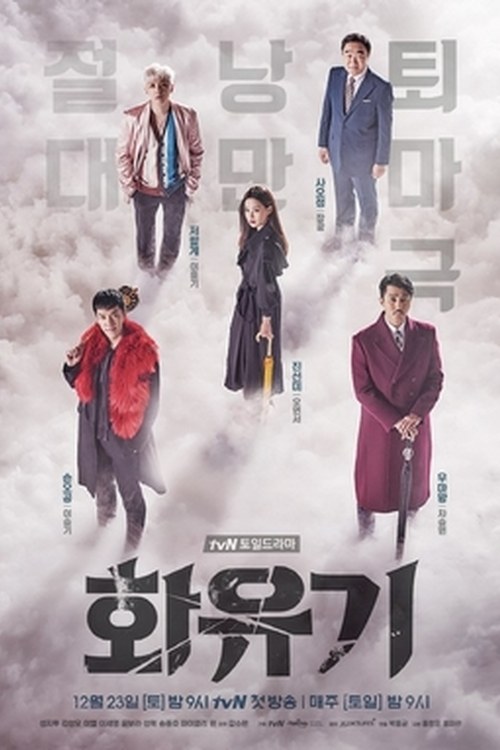
A Korean Odyssey · Season 1 · Episode 2 · 24 December 2017
S1E2 Episode 2
Episode 2 turns protection into a contract, and the fine print is where the danger starts to bite.
THE MOMENT The formal binding of Oh-gong and Seon-mi - a pact meant to be transactional that the drama slowly reveals is anything but.
The highest IMDb-rated episode in the series at 8.6, Episode 2 deepens the contract mythology and the reluctant bond with enough supernatural spectacle and romantic undercurrent to establish the show's signature register.
Full episode analysis below. Spoiler-light verdict above.
Updated
The tree is touched, and Jin Seon-mi is ordered to go away. That is the hour’s first clean cruelty: contact creates consequence before anyone has finished explaining the rules. Soon, her blood has a name attached to it. Samjang. Evil spirits are drawn to her smell, protection becomes negotiation, and an old bargain from 25 years ago returns like unpaid debt. Episode 2 works because it treats fantasy law as character pressure. Every deal promises safety. Every deal tightens the cage.
The Blood Has Terms
The episode’s strongest move is how quickly it turns Seon-mi’s condition into a system. She is in danger because her blood attracts monsters, and because the name Samjang gives that danger a shape. A vague curse can become atmosphere. A named curse becomes plot.
The early stretch, from the tree to the naming of Samjang, gives the hour its engine. Seon-mi wants protection from evil spirits that want to eat her, but the episode refuses to let protection arrive cleanly. To survive, she has to keep dealing with the forces that make her life impossible. The contradiction is sharp: she protects herself by preserving a deal that keeps her close to danger.
That is where the writing finds its hook. Seon-mi is not helpless cargo being moved from threat to threat. She is a woman trying to read the fine print while everyone around her speaks in supernatural terms. The world is loud with rules, but the emotional line is simple. If her blood calls evil, every room can turn hostile. If a name can summon help, forgetting that name becomes a death sentence.
The hour lets the mechanics do the work. Blood attracts. Names bind. Deals survive decades. For a fantasy romance setup, that is sturdy construction.
A Deal Is Still a Cage
The proposed annulment of the old deal is the first major pivot, and it is sneakier than it looks. On paper, annulling a bargain made 25 years ago sounds like freedom. In practice, it raises a worse question: if the old arrangement goes, what replaces it?
That is the episode’s best recurring idea. Legal language keeps arriving in scenes driven by appetite, fear, and leverage. Someone proposes a new arrangement. Someone else tries to wriggle out. Every supernatural rule has the shape of a contract, and none of them feels neutral. They are weapons with polite grammar.
Son O-gong sits at the center of that tension. He wants to avoid violating the deal while restraining predatory urges, and that combination gives the episode its bite. He is neither pure rescuer nor clean threat. The interesting part is the gap between what he could do, what he wants to do, and what the old deal prevents him from doing.
The writing is at its most fun when it lets that gap stay uncomfortable. Seon-mi’s safety depends on someone who has reason to harm her. O-gong’s freedom depends on navigating obligations he did not choose in this hour. The fantasy language may be elaborate, but the scene logic is plain: if one person’s survival depends on another person’s restraint, the relationship is already unstable.
The episode does strain under its own density. The mythology is engaging, but the delivery sometimes feels like the show is emptying a rulebook onto the table before the characters have had time to breathe.
O-gong Refuses the Exit
The command for O-gong to give up on life gives the episode its cleanest moral pressure point. It is a test of what kind of creature he is when survival becomes humiliating.
O-gong refuses. He vows to keep living. That refusal matters because the episode has already placed him inside a system of bargains, names, and punishments. To keep living here is no heroic slogan. It means continuing to exist inside rules that can be used against him. He is choosing a future that may not leave him free.
That choice complicates his relationship with Seon-mi. Earlier, his restraint can still be read as tactical. He avoids violating the deal. He resists predation because the terms matter. Later, when Geumganggo enters the story, restraint stops being only a choice and becomes enforced protection. The episode is building a trap in stages, and this scene is one of the steps.
The hour’s smartest trick is making O-gong’s survival instinct look almost noble before it becomes another chain. He refuses to surrender his life, then the story places that life under a new form of control. The reversal does not cancel his agency. It exposes how fragile that agency already was.
The downside is that the emotional beats have to fight the machinery. O-gong’s refusal is strong enough to stand on its own, but the surrounding rule traffic crowds it. Less explanation would have made the defiance hit harder.
Christmas Eve Delays the Bite
The Christmas Eve beat is a sly tonal swerve. The deal-holder says they will not eat today and tells Seon-mi to go. On another show, that line could play as mercy. Here, it plays like a postponement.
That is why the scene works. The hour understands that delay can be more threatening than immediate violence. If someone says they will not eat you today, the comfort lasts only as long as the word today. Seon-mi is allowed to leave, but not allowed to forget the appetite waiting behind the language.
The seasonal setting gives the moment a cold edge. Christmas Eve usually suggests warmth, gathering, and reprieve. The episode uses it as a calendar marker for deferred harm. No speech is needed. The date does the ironic work.
Then Seon-mi disappears again while checking an apartment property, and the hour pulls its practical world back into the supernatural one. That detail is useful. She is not vanishing in an abstract mystical void after wandering into a cursed forest. She is doing property work. The ordinary errand becomes another doorway into danger.
That blend is essential to the episode’s tone. A Korean Odyssey wants supernatural logic to interrupt regular life, not replace it completely. Offices, properties, old promises, evil spirits. The hour stacks them until Seon-mi’s daily routine feels porous. Any appointment can become a trap. Any professional visit can turn into a realm problem.
Geumganggo Turns Love Into Leverage
The introduction of Geumganggo is the hour’s real lock clicking shut. The object cannot hurt the wearer if Seon-mi makes him wear it. That sounds like a solution. The episode uses it to sharpen its central contradiction.
The Geumganggo-gifter wants to keep Seon-mi alive by forcing a protective bond. In survival terms, the move makes sense. Seon-mi needs protection. O-gong is dangerous, powerful, and already tied to her through the old deal. Put the right object on him, and his threat can be redirected into defense.
But fantasy objects are never only tools here. Geumganggo changes the ethics of the relationship. O-gong later becomes bound so that if Seon-mi is in danger, he is forced into protective pain or constraint rather than freely acting. That is a darker bargain than the episode first lets on. Protection arrives with coercion built into the design.
The final naming reversal gives the hour its payoff. After Geumganggo returns his name to Seon-mi, only she can call him out now. The open loop about whether she can summon him if she cannot remember his name is answered, but the answer does not release tension. It concentrates power.
That is smart serialized writing. The episode resolves the immediate problem of the name while planting a larger one about control. Seon-mi now has a tool. O-gong now has a binding. Their connection is safer for her and more dangerous for him. The romance engine, if the season pushes it that way, begins under pressure rather than softness.
The Verdict
Episode 2 is a busy but effective rule-setting hour. Its best idea is simple and strong: in this world, protection always arrives with terms attached. Seon-mi’s blood makes her a target, O-gong’s restraint makes him interesting, and Geumganggo turns their connection into a mechanism neither can treat casually. The episode stumbles when its mythology crowds the emotion, especially in dialogue-heavy stretches where the rules come faster than the feeling. Still, the structure holds. The old deal, the refusal to give up life, the Christmas Eve delay, and the returned name all point in the same direction. Season-wise, this is the hour that turns the premise from monster trouble into binding trouble, which is the better hook.