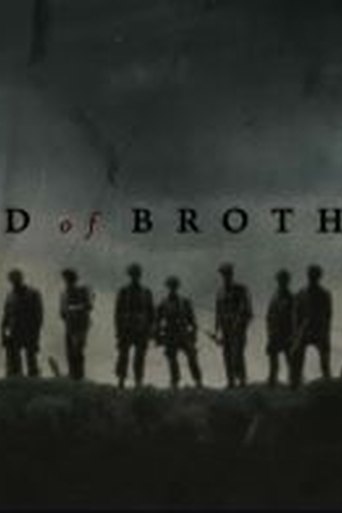
Band of Brothers · Season 1 · Episode 9 · 4 November 2001
S1E9 Why We Fight
A severe, disciplined hour that turns routine military drift into the season's clearest answer to its own title.
THE MOMENT The company stands at the perimeter fence in silence - the episode resists any score or speechmaking, letting the stillness do the work.
A hangar fills with quiet paperwork and anxious bodies, and then the quiet is gone. Men in Easy Company circle the same problem from different angles, because they are trying to turn fear into procedure. The episode does not start with a heroic charge. It starts with the moment w
Full episode analysis below. Spoiler-light verdict above.
Updated
The lecture says the Ruhr pocket is crumbling. The men hear about Remagen, breakouts, movement, the war as a map being solved. Then the hour walks them off the map and into something no lecture can file cleanly. A call goes out for O'Keefe. The mood shifts. The war stops feeling like territory, cigarettes, chocolate, and current events. "Why We Fight" argues that Easy Company has spent the season learning how to survive combat, only to reach a truth combat did not teach them how to process.
The Kids With a Job Meet the Job's Meaning
The opening reflection matters because it refuses grandeur. Most soldiers were kids. They had a job to do. That framing could sound tidy if the hour stayed with campaigns and orders. Instead, it becomes a trapdoor. The episode starts with service as duty, then shows duty alone cannot carry what arrives.
That is the spine of "Why We Fight." The hour begins in soldierly routine, then tears the routine open. Frank tries to talk to Luz while offering chocolate and cigarettes. It is a small beat, almost too ordinary for the story waiting ahead. That is why it works. The objects are comfort items, barter items, scraps of appetite and contact. The war has become pauses, passing gestures, men looking for ways to behave like people between orders.
The hour knows how to use that looseness. The early silence clusters, then the dialogue settles into administrative noise and war-room updates. There is no thunderclap yet. The craft choice is restraint: keep the men inside familiar machinery long enough for the later discovery to feel like a violation of the episode's rhythm. The title asks for a reason. The first act withholds one.
Nix Is Asked to Lie Nicely
Nix gets one of the episode's sharpest moral miniatures. After Colonel Sink's visit, he is demoted and left worrying about what to write home. The plot detail is modest compared with what arrives later, but the contradiction is brutal in miniature. He wants honesty after a jump tragedy. The answer he receives is administrative mercy dressed as military language.
The instruction is plain: "You tell 'em what you always tell 'em, their sons died as heroes." The line is not evil. That is what makes it sting. It is the kind of sentence institutions use when the truth is too jagged for paper. Parents get comfort. The dead get ceremony. The person writing the letter gets asked to sand off reality until it can fit in an envelope.
That beat prepares the hour's larger argument. Before the camp, "Why We Fight" shows a war culture already negotiating with truth. Some lies are protective. Some are habitual. Some are the only language available to men who cannot keep sending raw pain across the ocean. The episode does not condemn Nix for struggling with the letter. It uses him to show how decent men can become messengers of a cleaner story than the one they lived.
The demotion also knocks glamour out of command. Status shifts. Reports are written. Families are informed. The machine continues. The episode makes that machine look competent, then insufficient.
Current Events Cannot Explain the Room the "current events" lecture turns the war into briefing-board logic. Resistance in the Ruhr pocket is crumbling. Remagen may break out. The language is strategic, distanced, useful. Then a soldier snaps the pivot line: "Let me tell you something, this war is not about fighting anymore."
That sentence cracks the hour open before the camp does. The men are no longer focused only on taking the next position. They are asking what the war has become as the fighting thins and the scramble over aftermath begins. Who gets what. Who moves where. Who explains the dead. Who owns the ending.
The writing is smart enough to place cynicism before revelation. If the episode jumped straight from battle fatigue to atrocity, the moral turn would be cleaner and less interesting. Instead, exhaustion curdles first. The men have reason to believe the war has become grubby, transactional, political. The hour then confronts that cynicism with something larger and uglier than it can absorb.
There is a small weakness here. The early lecture material is functional by design, and functionality can feel dry. The episode needs the briefing to set up the contrast, but it plays like connective tissue until the later sequence gives it weight. The payoff justifies the plainness, though the hour asks for patience before it tightens its grip.
The Discovery Breaks the Vocabulary
The call for O'Keefe marks the turn. The episode moves toward the hidden camp discovery, and the old vocabulary starts failing in real time. The men can understand orders. They can understand hunger. They can understand an enemy. What they find forces a different kind of recognition.
The direct line, "They're Jews," lands with stripped-down force because it identifies without explaining away. No speech can make the moment manageable. No battle phrase can contain it. The episode's best choice is that it does not treat discovery as a puzzle to be solved by dialogue. From roughly onward, the silences lengthen and subtitles carry more of the weight. The war has been talk, updates, explanations, orders. Here, quiet becomes the only honest first response.
The hidden atrocity also answers the title without turning the answer into a slogan. "Why we fight" is never handed down as a stirring speech. It arrives as evidence. The men do not need a clean sentence. They need to look at what happened, then act.
The episode's restraint keeps sentimentality away. It lets horror alter the men's function. They are no longer advancing through territory. They have to manage the living consequences of what they have found. Once they see it, responsibility replaces shock as the scene's engine.
Mercy Becomes a Medical Problem
Dr. Kent brings the hour's hardest practical contradiction into focus. The prisoners need care. The immediate instinct is to feed them. Then the surgeon warns that food given too fast can kill them: "they'll eat themselves to death." It is one of the episode's most punishing turns because mercy, in that moment, becomes dangerous without knowledge.
That beat prevents the camp sequence from resting on feeling alone. The commanders cannot simply be moved. They must make decisions. Dr. Kent wants the prisoners treated safely, kept centralized, and placed under medical supervision until a proper place is found. The episode understands that compassion without procedure can still do harm. After so much military procedure has looked morally evasive, procedure becomes protection.
The open questions sharpen the unease. What became of the prisoners after guards burned huts and fled south? Will the men find a safe place in town without causing further harm? The episode does not let the rescue impulse become a neat emotional release. The prisoners are alive, and that means the story becomes logistics, medicine, shelter, food, time.
The final status of the war keeps that pressure alive. Hitler is dead, but when the question of whether the war is over receives the answer "No," the hour refuses the comfort of historical neatness inside the moment. Orders to Berchtesgaden still matter. The fighting timeline still moves. Meaning has arrived, and the job is unfinished.
The Verdict
"Why We Fight" is a severe, controlled hour that earns its title by refusing to announce it too early. Its strongest move is structural: it begins with routine military drift, lets Nix's letter dilemma expose the management of truth, then makes the camp discovery destroy every smaller explanation the men have been using. The episode is not flawless. Some early briefing material sits like necessary scaffolding. But the later medical warning gives the hour a second moral turn after the first shock, which is why it lasts. BollyAI's score: 9.2/10. In the season arc, Easy Company's endurance finally has to answer to purpose, and the answer is grim rather than clean.