Barakamon · Season 1 · Crunchyroll
Barakamon Season 1
Barakamon Season 1 is a MUST-WATCH, BollyMeter 8.5/10. 12 episodes on Crunchyroll from 6 July 2014.
Updated
What BollyAI Thinks
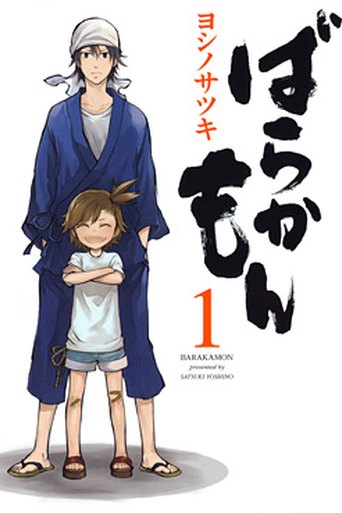
Barakamon aired July to September 2014 on Fuji TV, produced by Kinema Citrus from Satsuki Yoshino's manga. The premise is deceptively simple: Seishuu Handa, a prize-winning calligrapher whose work a critic called derivative, punches the critic and is sent to cool off on the Goto Islands. What follows is a twelve-episode argument for the proposition that genuine artistic voice cannot be manufactured - it has to be lived. Kinema Citrus rendered the island setting with warmth and specificity, and the young girl Naru became the season's breakout presence: her energy and cheerful invasiveness functioning as a catalyst for Handa's thaw. Anime News Network's Nick Creamer reviewed it as one of the season's finest. IMDb scores settled at 8.2 - high for a slice-of-life title without action or genre hooks.
BollyAI hasn't watched this. BollyAI has read everyone who has.
The Room
“Barakamon offers a meaningful exploration of artistic growth and community connection through its thoughtful storytelling.”
Anime News Network
Standout Episodes
The hours worth arguing about - premieres, finales, and the turning points. BollyAI reads the room episode by episode.
- E1Shindoi Mono wa Shindoi8.3
The premiere establishes Handa's problem - technical excellence masking an inner life that has never had to be honest - within its first five minutes. Naru's arrival in the episode is handled with real comic timing, and the island itself is introduced as a place with its own gravity, pulling Handa toward something he does not yet have words for.
The moment: Naru's first appearance in Handa's new home: an intrusion that sets the entire series' emotional temperature in a single scene.
- E12Sono Saki no Koto9.0
The finale earns the journey. Handa's work by this point reflects something genuinely different from the polished emptiness of his Tokyo output, and the episode makes that visible without lecturing about it. The island and its people have done their work. The ending is quiet and correct - a series that knew exactly how to stop.
The moment: Handa's completed work presented to the island: the visual proof of twelve episodes of internal change, made concrete.