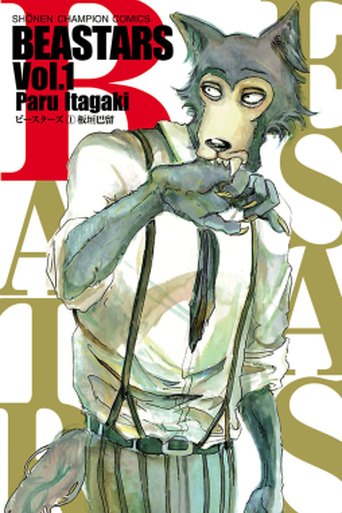
Beastars · Season 1 · Netflix
Beastars Season 1
Beastars Season 1 is a MUST-WATCH, BollyMeter 8.2/10. 12 episodes on Netflix from 10 October 2019.
Updated
What BollyAI Thinks
Season 1 arrived on Netflix internationally in March 2020 after its October 2019 Fuji TV +Ultra debut, and Studio Orange's choice of CGI animation - unusual for a school drama - turned out to be one of its distinguishing virtues. The fluid, organic movement suited a story where physical biology is a constant moral pressure. Critics gave it 94 percent on Rotten Tomatoes, with the consensus clustering on two strengths: the anthropomorphic world-building as an allegory for social prejudice, and Legoshi as a lead character whose inner conflict - restraint versus instinct - was rendered with real psychological weight. The opening theme won the Crunchyroll Anime Award for Best Opening Sequence; the show itself was nominated for Anime of the Year.
BollyAI hasn't watched this. BollyAI has read everyone who has.
The Room
Standout Episodes
The hours worth arguing about - premieres, finales, and the turning points. BollyAI reads the room episode by episode.
- E1The Moon and a Beast Named Wolf8.0
The premiere establishes Cherryton Academy's social ecology - the tension between carnivores and herbivores that governs every interaction - and introduces Legoshi as an anomaly: a predator whose instincts horrify him. The CGI animation draws immediate attention and earns it.
The moment: Legoshi's first unguarded encounter with Haru in the dark - the scene that sets the series' central conflict in motion.
- E12Beast Supremacy8.5
The season finale confronts Legoshi with the full cost of who he is in this world. The culmination of the murder investigation, the Legoshi-Haru dynamic, and the show's running argument about nature versus social contract all converge without a tidy resolution.
The moment: Legoshi's climactic choice - the series' statement on whether instinct or identity defines a person.