Black Warrant · Season 1 · Netflix
Black Warrant Season 1
Black Warrant Season 1 is a MUST-WATCH, BollyMeter 8.6/10. 7 episodes on Netflix from 10 January 2025.
Updated
What BollyAI Thinks
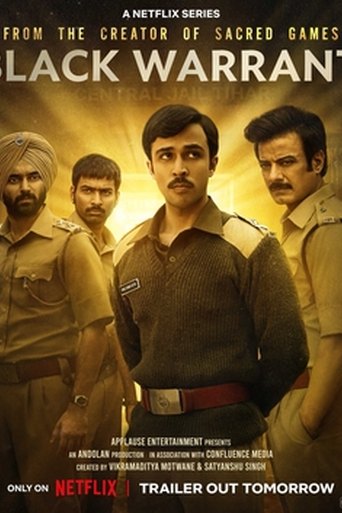
Black Warrant reached the Netflix Global Top 10 on release, which surprised no one who had read the early reviews. The 100% Rotten Tomatoes score was built on a consensus that Motwane and co-creator Satyanshu Singh had found exactly the right register for the material: neither exploitative true-crime spectacle nor hagiographic biopic, but a close, systemic account of what a prison does to the people inside it - including the people who supposedly run it. Zahan Kapoor's Sunil Gupta is a moral centre who bends without breaking, and the show's patient accumulation of institutional detail (the factional violence, the informal power structures, the relationship between jailers and long-term inmates) felt like it had been researched rather than invented. Ranga-Billa and Charles Sobhraj as early-season presences gave the show both historical weight and genre pull.
BollyAI hasn't watched this. BollyAI has read everyone who has.
The Room
“Black Warrant is a gripping portrait of institutional rot - Motwane's most accomplished long-form work.”
Rotten Tomatoes (critics consensus)
Standout Episodes
The hours worth arguing about — premieres, finales, and the turning points. BollyAI reads the room episode by episode.
- E1Episode 18.4
The premiere announces its intentions in the opening frames - Tihar seen from outside is a political symbol; Tihar seen from inside is an ecosystem with its own weather. Sunil's first day introduces the show's central tension: his professional idealism against an institution that has been slowly absorbing idealists for decades. The death warrants against Ranga and Billa provide the immediate dramatic frame, journalist Pratibha Sen a second pair of eyes on the system.
The moment: Sunil walking the main corridor with a senior jailer who names each prisoner's crime as they pass - a guided tour through human consequence.
“An opening episode that has the patience to let a world accumulate before it asks you to feel anything about it.” — Rotten Tomatoes (critics consensus)
- E5Episode 58.7
The hunger strike episode - prisoners organising under conditions designed to prevent organisation - is the show's most politically charged hour. Sunil's position becomes actively untenable: reform requires the trust of inmates, and the trust of inmates costs him the institution's. The episode also handles a high-profile execution with documentary restraint.
The moment: The hunger strike's third day, when the administration's response reveals that the institution's first loyalty is to order rather than justice.
“The series at its most unflinching - an hour about how institutions respond to the demands of the people they hold.” — Rotten Tomatoes (critics consensus)
- E7Double Life Sentence8.8
The finale deploys the 1984 riots as macro-historical pressure that turns the prison's internal fault lines into fractures. Tomar's leadership is interrogated; Sobhraj asks Sunil for a favour that crystallises everything the show has been building toward. The ending is historically honest and emotionally precise - the show earns its final image.
The moment: Sunil's decision in the chaos of the riots - the moment where institutional loyalty and personal conscience speak simultaneously and cannot both be honoured.
“A finale that understands the difference between an ending and a resolution, and chooses the harder thing.” — Rotten Tomatoes (critics consensus)