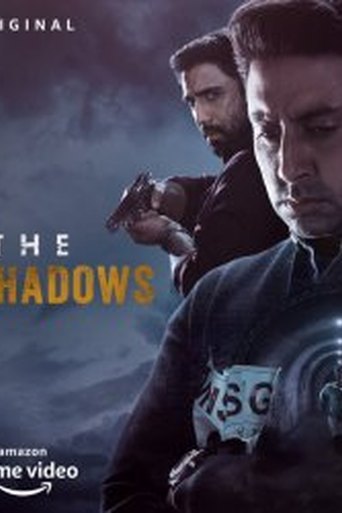
Breathe: Into the Shadows · Season 1 · Episode 2 · 10 July 2020
S1E2 Episode 2
A tense, well-structured escalation that turns a father into a killer, though the victim remains too sketchy to make the tragedy cut deep.
Three minutes in, a phone buzzes with a new instruction - not a ransom demand but a command to record a killing. The episode turns a father into an unwilling accomplice in a stranger's death and then pivots to a newsroom montage as the footage goes viral. The procedural cruelty of the kidnapper's instructions and the quiet compliance of Avinash...
Full episode analysis below. Spoiler-light verdict above.
Updated
Three minutes in, the phone buzzes with a new instruction. Not a ransom, not a location, not a proof of life. A demand that the father, Abha, record a killing. Not commit it himself just yet, but participate. The camera doesn't cut away when he asks the question the episode has no interest in answering with words: “Should I kill someone because he wants me to?” The hour that follows answers with action. It drags Abha past the point of moral debate and turns him into a cameraman for a snuff film. The craft here is the cold, procedural tightening of a vice, punctuated by long silences that do the emotional work the dialogue often refuses. But the vice tightens around a target the audience has barely met, and the episode can't decide if the real story is the father's descent or the cop's return. One of those arcs lands. The other feels like an obligation.
The Noose Tightens, One Beep at a Time
The episode opens not with the mystery of the kidnapper but with a domestic emergency. Siya is diabetic. Her insulin is low. The clock that ticks in the first five minutes isn't a thriller's countdown to a bomb; it's the quieter, more terrifying count of a medicine dose running out in a hidden room. Abha is told to kill. Abha does not rage. He does not call the police with some clever plan. He asks the question, then the silence stretches for over two minutes. The long pause from to, as the camera holds on his face and the empty frame of his home, is the episode's best argument against dialogue. It says: this man will comply. Not because he is weak, but because the alternative is to watch his daughter die by interval, one missed shot at a time. The kidnapper’s voice is a disembodied text and a phone call, and the episode treats it like a narrative software bug that keeps issuing updates no one can skip. The instruction to record the death and send the video is delivered with the flatness of a food delivery notification. That flatness is the horror. It turns a father into a production assistant on a murder set, and the horror is that he accepts the gig.
The Trap Springs with a Stranger's Face
The target is Pritpal Singh Bharaj. He is introduced as an angry man who wants to catch a harasser and ends up chasing the wrong car into a pre-set ambush. The episode gives Pritpal exactly one trait: protective fury. “Once I get my hands on him, I will strangle him,” he says, and that line, delivered with a father's loyalty, is the trapdoor the killer opens beneath him. The chase sequence is the episode’s first real jolt of movement after all that stillness. It’s well-shot: a cloudy, dusty road, a return to a place that feels like a construction site or a half-finished village, and then the violence that comes not as a fight but as a sudden, blunt cessation of movement. Pritpal is killed. The camera records. The video is sent. The audience, like Abha, watches from a distance. The problem is that Pritpal is a stranger. The episode has not given the viewer a single reason to know him beyond that one line about wanting to strangle someone. So when the murder lands, it lands as a plot beat, not as a tragedy. The show is so invested in the mechanics of the trap, the morally crumbling father, that it forgets to make the victim feel like a person. A man dies, and the viewer’s first instinct is to think, “Alright, so that’s how the instructions work.” The coldness is the point, but the craft lets the coldness wash over the victim too easily.
Kabir Returns to the Board, Not the Hunt
Meanwhile, Kabir Sawant walks out of the hospital and onto a police transfer. This subplot is handled with the efficiency of a DMV form. He is released from jail, he asks to go to Delhi to find Meghna, and he gets the transfer. The scene where he signs the papers and walks into the light is shot like a redemption arc, but there’s no redemption here yet. He’s simply being moved to another city so the story can keep him in the game. The episode knows it must reintroduce the cop from the first season, but it does so with the least possible friction. His presence feels like a narrative investment with a delayed return. By the end of the hour, Kabir has not intersected with Abha’s crisis at all. The two plots run parallel, and while the silence in Abha’s world is magnetic, Kabir’s storyline just hums along. It’s not a failure, but it’s a holding pattern. For an episode that is otherwise meticulous about tightening its screws, the Kabir scenes leach pressure away.
The Viral Verdict and the Silence That Follows
The final act cuts to a newsroom montage. The video of Pritpal’s death has gone viral. Headlines flash, anchors debate, the public reacts. This is the episode’s genre pivot: the quiet domestic horror is now a media event. The editing here is fast, jittery, a sharp contrast to the long wides and locked-off frames of the first two acts. The episode wants you to feel the acceleration, the point where Abha’s private nightmare becomes public evidence. But it also wants to remind you that Abha’s nightmare is still private. The camera returns to him, sitting alone, and the silence of that return is more potent than any news clip. The show understands that the real weight of what he’s done isn’t in the broadcast; it’s in the space where his daughter still isn’t home. The episode leaves Abha in that space, and the season arc gets its first real hook: a man who has crossed a line no public apology can erase, with the only person he did it for still missing.
The Verdict
Episode 2 widens the season’s hooks at the cost of some emotional texture. The procedural cruelty of the kidnapper’s demands and the quiet compliance of Abha are gripping, built on long silences that trust the actor and the frame more than the script. The murder trap is mechanically satisfying, but it treats the victim as a prop for the plot rather than a person whose death should echo. Kabir Sawant’s return is competent but cursory, a police procedural thread waiting for a reason to matter. The viral-video finale brings the noise but earns its best effect when the screen goes quiet again. BollyAI’s read: a tense, well-built second hour that escalates the nightmare with discipline, but can’t quite make the casualty feel like more than a cog in the machine.