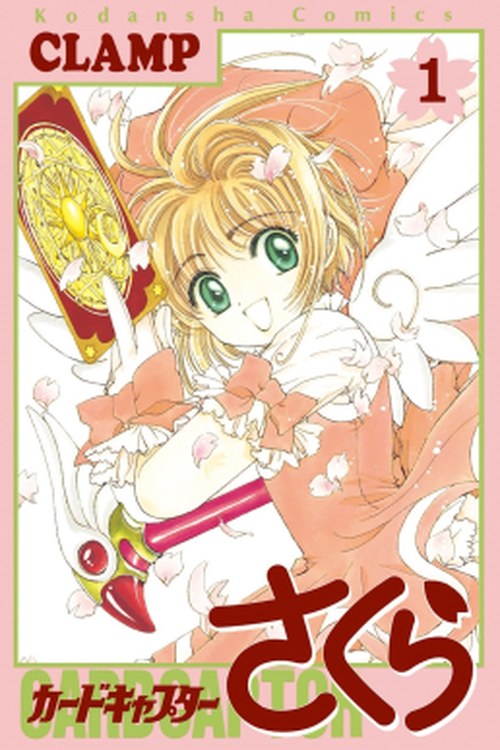
Cardcaptor Sakura · Season 1 · Crunchyroll
Cardcaptor Sakura Season 1
Cardcaptor Sakura Season 1 is a MUST-WATCH, BollyMeter 8.2/10. 35 episodes on Crunchyroll from 7 April 1998.
Updated
What BollyAI Thinks
Cardcaptor Sakura began on NHK BS2 in April 1998, adapted from CLAMP's manga by Madhouse. Season 1's 35 episodes establish the card-capture premise and Sakura's relationships with Tomoyo, Kero, and the rivals-turned-allies Syaoran Li and Meiling. The series won the Animage Grand Prix for Best Anime in 1999, a reader poll that at the time was one of anime's most closely watched popularity metrics. Its distinctive achievement is architectural: a magical girl series built on warmth and emotional nuance rather than combat escalation, with CLAMP's character designs rendered by Madhouse with uncommon care. The MAL community score of 8.18 from over 234,000 raters reflects its status as a genuine classic rather than merely a nostalgia property.
BollyAI hasn't watched this. BollyAI has read everyone who has.
The Room
Standout Episodes
The hours worth arguing about - premieres, finales, and the turning points. BollyAI reads the room episode by episode.
- E1Sakura and the Strange Magical Book8.0
The premiere sends the Clow Cards scattering into Tomoeda in a sequence that is both the show's inciting event and a precise statement of its tonal register - peril made beautiful, stakes kept at a human scale. Cerberus immediately establishes himself as one of anime's more distinctive magical companions.
The moment: The Clow Cards erupting from the book and dispersing into the night sky - an image the series returns to as a visual signature.
- E35Sakura's Never-Ending Day8.3
The season finale raises the emotional stakes with a time-loop premise that forces Sakura to confront the consequences of the card-capture task she has treated as adventure. The episode is the moment the series declares its ambitions beyond the genre's usual conventions.
The moment: Sakura caught in the loop's repetition - the playful premise turned genuinely unsettling.