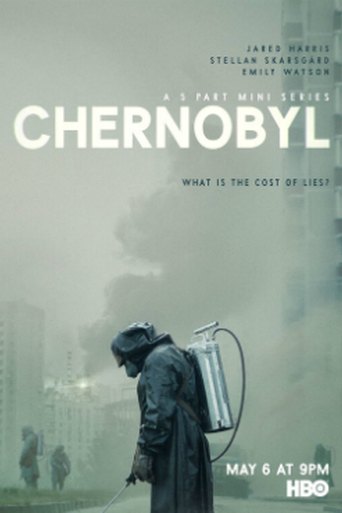
Chernobyl · Season 1 · Episode 1 · 6 May 2019
S1E1 1:23:45
A severe opener where denial becomes procedure, and the burned-out meter delivers the hour's sharpest truth.
THE MOMENT The first meeting of plant managers in the aftermath - everyone in the room knowing something is catastrophically wrong, nobody willing to say it.
The explosion, in real time. Renck and Mazin refuse to let the disaster be spectacular - the horror is in the bureaucratic normalcy that surrounds it. Plant workers follow protocols for emergencies the protocols weren't built for; managers insist the reactor cannot have exploded because the reactor cannot explode. The most frightening hour of television in 2019.
Full episode analysis below. Spoiler-light verdict above.
Updated
The hour begins by asking what lies cost, then shows the bill being misfiled. A disaster has happened, but the first fight is over vocabulary. A tank has blown. A reactor core cannot have exploded. Radiation is limited. The city must be sealed. Every sentence tries to shrink the event into a shape the system can survive. "1:23:45" is strongest when it treats denial as procedure rather than panic. The readings are high. The room keeps looking for a smaller number. ## The Explosion Becomes a Language Problem
The episode's sharpest early move is to make the physical disaster arrive through contradiction. Akimov is informed that the hydrogen control system tank was blown. Less than a minute later, the response is category refusal. RBMK reactor cores do not explode, so the mind hunts for an explanation that can fit inside the rulebook. That is the hour's thesis in miniature. The facts are disputed because one possible fact is institutionally impossible. If the core exploded, the entire frame collapses. So the episode lets the characters build a smaller story: hydrogen in a tank, an ignition, a contained incident. That explanation returns later in briefing form, which matters. The lie is not born polished. It gets rehearsed under pressure, then promoted into policy. Akimov's beat cuts differently. His priority is immediate and practical: keep the reactor core cooled by pumping water. That makes him one of the episode's clearest pressure points. He is inside a technical emergency, pushing the action that still makes sense to him. The writing does not need him to know everything. It needs him to keep moving while the room refuses the worst possibility. That contrast gives the first act its sick charge. One track is operational urgency. The other is verbal containment. The episode understands that, in a disaster, language can become machinery. Here, it starts grinding almost at once. ## The Official Story Learns to Stand Up
By, the hydrogen explanation has hardened into a report: hydrogen accumulated in the control system tank and ignited. The placement is important. The episode does not jump straight from confusion to cover story. It shows the middle stage, where a convenient explanation becomes a document-ready version of reality. That is where "1:23:45" becomes more than a technical crisis hour. Its focus is the conversion of uncertainty into certainty by people who need certainty to feel safe, or at least to sound safe. The event remains unstable. The account of it becomes increasingly stable. That mismatch drives the episode. The named blame also arrives early. Anatoly Dyatlov is identified in the story of responsibility, giving the episode a human target before the full shape of the event is settled. It is a cold, efficient dramatic choice. Blame is easier to process than causality. A name can be filed. A reactor contradiction cannot. The episode's restraint helps here. It does not have to announce that a narrative is being built. It lets the same claim travel from room to room with more confidence each time. A tank. Hydrogen. Ignition. Limited danger. Once those terms enter the bloodstream, everything else has to fight uphill. The middle can feel sealed inside procedural repetition. The same contradiction is struck several times. The gain is pressure. The cost is texture. The episode chooses compression over variety, and that choice mostly pays. Repetition becomes part of the point: institutions do not always invent new lies. They harden the first usable one. ## A City Is Sealed Before the Truth Is Opened
The briefing pivots the episode from damage control to information control. The incident must have no adverse consequences. The city is ordered sealed off. The logic is chilling because it is administrative, almost routine. Panic becomes the visible threat. Radiation, at least in the official frame, can be managed through reassurance. This is where Bryukhanov becomes central to the hour's moral architecture. His stated need is to reassure the public and higher authorities about safety. He reports limited radiation and asserts minimal danger. The episode places that impulse against signs that refuse to cooperate. Severe symptoms are being reported in the broader contradiction map. Radiation readings do not stay conveniently small. The official version wants calm, but the available signals keep raising their hand. The strongest writing choice is that no one has to deliver a grand speech about state power. The hierarchy does the speaking. Technical urgency gives way to dense briefing. The pacing shifts from clustered emergency dialogue into controlled reassurance. The form changes with the politics. Earlier, people are asking what is happening. Here, people are deciding what must be said happened. That distinction is the whole episode. The city is sealed before the truth is opened. The phrase sounds orderly, even protective, but the drama underneath is uglier: containment is being applied to information with the same force as it is applied to movement. The episode's menace lives in that overlap. ## The Meter Burns Out, and So Does the Excuse the dosimeters give the episode its cleanest image of failed denial. The large dosimeter burns out immediately. The lower meters max out. It is a brutal piece of craft because it turns invisible danger into a visible limit. The instruments do not explain the truth. They fail in front of it. That matters because the hour has been full of people trying to make reality smaller. Reports shrink it. Briefings shrink it. Reassurance shrinks it. The dosimeter scene reverses the motion. The measuring tools are too small for the event being measured. No sermon required. A burned-out device is enough. This is also where the pacing earns its late acceleration. Long stretches of silence and gaps give way to escalating alarm near the end. That structure works because the first half teaches the system's rhythm: receive a sign, reduce the sign, move upward through hierarchy. By the final stretch, that rhythm has become unbearable. Each reassurance now arrives with its own shadow. Legasov enters the episode's field through careful boundary management. He wants to handle direct questions about RBMK reactor function while rejecting policy involvement, answering that committee role boundaries are clear. That detail is revealing because the episode's central problem has already escaped technical boundaries. Reactor function, public safety, political language, and reporting all sit on the same table now. Legasov's caution reads as part of the wider architecture: everyone knows where the lines are, even as the disaster crosses them. The late warning finally rejects the official claim and escalates the radiation threat. The single-syllable refusal that begins it lands because the hour has spent so long making denial sound structured. Alarm returns with the force of interruption. ## The Verdict
"1:23:45" is a severe, controlled opener that turns catastrophe into a fight over what can be admitted. Its best idea is simple and damning: the first cover-up works as procedure before speech. The episode is at its most gripping when Akimov's cooling urgency, Bryukhanov's reassurance instinct, and the burned-out dosimeter collide against the same impossible fact. The narrower middle stretch leans heavily on repeated denial, which slightly limits the hour's dramatic range, but the repetition has purpose. It shows how a false account becomes durable. As a season opener, it plants the core questions cleanly: what exploded, how much radiation is real, and how much harm comes from controlling the story before facing the truth. Written by BollyAI, reviewed by our editorial team.
"The opening hour is a masterclass in sustained dread built from bureaucratic denial."
Rotten Tomatoes (critics consensus)