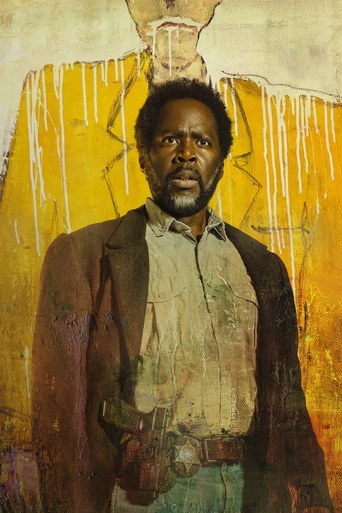
From · Season 1 · Episode 1 · 20 February 2022
S1E1 Long Day's Journey into Night
A tense, grounded pilot that turns protection into a trap before the larger mystery even needs to explain itself.
THE MOMENT A voice at the window saying it will keep a little girl's secret. The episode's monsters introduce themselves not with teeth but with kindness.
The pilot does its world-building through a man who has already failed. Boyd preaches that a man protects his family, yet the cold open buries two people his system could not save, and every rule he recites afterward sounds like penance. The episode's nerve shows in its silences: a 91-second hush before the first kill, held like a breath the...
Full episode analysis below. Spoiler-light verdict above.
Updated
A father and son get a clean ending before the episode takes clean endings away. The game finishes with checkmate, a small domestic beat that gives the hour its sharpest opening contrast: people still believe rules work. Then Frank is told to get up, Norman is promised he will be okay, and the episode begins turning reassurance into a bad joke. The pilot's best idea is simple and mean. In this place, protection is the instinct everyone reaches for first, and protection is what starts trapping them.
Protection Becomes the First Prison
The first hour builds its moral engine around Frank before the larger mystery fully shows its face. The line thrown at him, that a man protects his family, carries purpose. It states the pilot's terms. Safety here is a duty, a failure, and a public accusation.
That matters because the episode opens with panic, blame, and a family standard that Frank cannot meet in time. The urgency is physical before it is mythological. Someone has to get home. Someone has to get up. Someone has to survive long enough for reassurance to mean anything. The hour keeps compressing those needs until every sentence feels half a second late.
The craft choice is blunt, and mostly effective: start with consequences, then let the question arrive. The danger arrives through a breakdown in responsibility. Frank is a man in danger, but more importantly, he is being judged by the role the episode refuses to treat gently. That gives the pilot its first real bite.
Normalcy Gets One Last Move
The father-son game is the hour's neatest little trap. A checkmate is orderly. It has rules, turns, and a visible end. The episode places that moment near the top so the rest of the pilot can ruin its comfort. Once the danger begins, nobody is moving on a board they understand.
That is where Norman's reassurance lands with cruel efficiency. Being told he will be okay does not calm the scene. It sharpens it, because the beat is built as foreshadowing. The episode lets kindness become dramatic irony. The words try to protect him. The story refuses to cooperate.
This is also where the pilot shows its taste for jagged rhythm. Rapid, urgent dialogue gives way to long quiet, including a 152-second stretch that lets dread pool instead of spike. The contrast matters. Panic can only do so much if it arrives at one volume. Silence makes the place feel like it is listening back.
The withholding can feel stiff in spots. The episode works better when dread is attached to a choice or a body in trouble. When it leans only on pause and atmosphere, the tension thins. Still, the chess beat gives the structure a useful memory: the characters begin with rules, then spend the hour learning that the board has changed.
The Tires Go Flat, The Choices Shrink
Jim carries the pilot's cleanest contradiction. He wants to get his family to safety, but the world immediately makes that goal mechanical before it makes it philosophical. The flat tires are a sharp horror problem because they are ordinary. No grand explanation. No speech. Just rubber, failure, and the sudden knowledge that forward motion is no longer a plan.
The line asking why all the tires are flat is the episode's most efficient escalation. It turns escape from a desire into a blocked system. Jim's instinct is to leave the area, but the hour makes leaving impossible, then tests what kind of man he becomes when the obvious answer is gone. He stays to help with the accident and support Ethan, a decision that defines this pilot's moral shape. Survival changes once getting out stops being available.
That is stronger than a simple mystery hook. The looping roads and unsafe woods are questions planted for later, but the episode earns them by first attacking the characters' practical confidence. Before the woods become a larger threat, the road itself has already betrayed them.
Silence Does the Hunting
The hour's tone is uneven in a productive way. The pilot alternates between urgent dialogue and long silences, and that stop-start rhythm mirrors the characters' growing dread. Panic makes people speak too quickly. Fear makes them listen too hard.
This is where the episode starts to find its identity. Delay becomes pressure. A voice announcing that someone has been found after a search carries weight because the hour has trained every discovery to feel unsafe. Finding someone should be relief. Here, even that basic emotional math is unstable.
The pilot understands that fear often arrives as logistics. Who is missing? Who can move? Who has a working vehicle? Who is calling for help? The writing keeps those questions close to the ground, which prevents the premise from floating off into pure puzzle-box fog.
The criticism matches the compliment. The pauses help build dread, but they also expose how carefully the pilot is rationing information. A little of that is suspense. Too much becomes a hand over the cards. This first hour stays on the right side of that line, though it brushes against it.
Boyd Climbs Into the Problem
Boyd enters the accident material as a useful corrective to pure panic. Help does arrive. Someone calls for the sheriff. Boyd climbs to open the door and provide aid. The episode makes authority physical before it makes it explanatory, a smart pilot move. He enters as a man willing to put his body where the problem is.
That matters because the hour has spent so much time proving that ordinary systems fail. Roads loop. Tires flatten. Woods cannot be trusted after dark. In that context, Boyd's action gives the episode a different kind of structure. If the world will not behave, people still can.
The accident scene also ties the pilot's separate anxieties together. Jim's blocked escape, Ethan's need for support, Boyd's rescue instinct, and the wider call for help meet around damaged bodies and stuck doors. The mystery may be bigger than any one character, but the pilot's strongest scenes stay intimate. A person is trapped. Another person climbs. That is enough.
As a first chapter, the hour plants its season question cleanly: what force makes escape impossible, and what does protection cost after dark?
The Verdict
"Long Day's Journey into Night" is a strong pilot because it treats its mystery as a pressure system rather than a brochure. The looping roads and unsafe woods matter, but the episode's real hook is behavioral: Frank is accused of failing his family, Jim cannot simply drive his away, and Boyd's authority begins with rescue instead of answers. The pacing has rough edges, especially when silence stretches past tension and into withholding, but the hour's best beats are clean, grounded, and nasty in the right way. This is good opening-episode craft, built on the idea that fear begins when the simplest duty becomes impossible. The pilot leaves the season with clear stakes, immediate character pressure, and enough menace to make every promise of safety sound suspect.