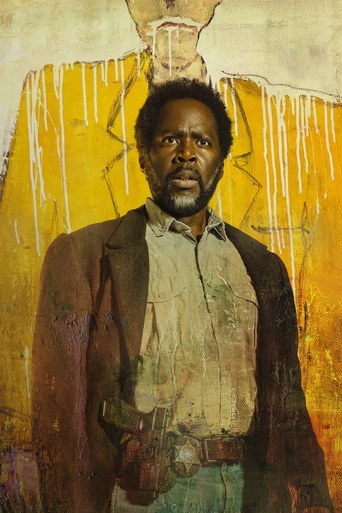
From · Season 1 · Episode 3 · 20 February 2022
S1E3 Choosing Day
A sharp procedural hour where ritual clarifies the town, though explanation sometimes gets ahead of the dread.
THE MOMENT Frank addressing the town before walking into the box, his confession landing on the same phrase Boyd shouted at him in the premiere.
The hour where the town's social contract is read aloud, and it turns out to be written in dread. Boyd built a deterrent he hoped never to use, and Khatri names the trap at 34:07: a guillotine in the square is only mercy until someone tests your conviction. The episode resolves it with the season's quietest horror, a volunteer. Meanwhile...
Full episode analysis below. Spoiler-light verdict above.
Updated
A child asks, "Is Daddy coming home?" The question hangs there before the episode lets blood answer first. Within minutes, a wound is found, night is framed as something that arrives whether anyone deserves it or not, and the town starts moving toward ritual. The hour's real subject is the system people build when fear needs paperwork. "Choosing Day" works best when it lets silence press on the room. It weakens when it explains the rules too directly, but its moral trap stays clean. ## Fear Learns to Speak in Rules
The episode opens with hope reduced to a child's question, then turns that hope into triage. The discovery of bleeding gives the hour its immediate danger, but the writing is more interested in what danger does to language. By, someone is already explaining that the coming night is not personal. That detail matters. The monsters remain the obvious threat, but the town's survival tool is procedure: explain it, contain it, make it sound inevitable. The strongest craft choice here is rhythm. A long stretch of silence does heavy lifting. It lets the episode breathe like a room where nobody wants to say the obvious. When dialogue returns, it lands with the thud of rules being placed on a table. The danger becomes civic before it becomes physical. That silence also keeps the early scenes from turning into pure briefing. The town has information to deliver, and the episode cannot avoid that work, but the pause gives the exposition pressure. People are not calmly teaching newcomers a rulebook. They are standing inside a system built from prior losses. The quiet makes that history legible without spelling out every corpse behind it. This is also where the episode shows one of its limits. The explanation about the night does its job, then drains some mystery from the immediate scene. The hour wants dread and clarity in the same breath. Sometimes clarity wins too early. Still, the structure is smart. By making the threat sound routine, the episode makes the town more disturbing. ## The Morning Address Makes Panic Official the community gathers for a morning address, and "Choosing Day" shifts from personal fear to public order. This is the episode's hinge. A private question about Daddy coming home becomes a collective performance of rules. The town survives by gathering, naming, instructing, and making people stand inside a system. That move gives the hour its best idea: horror is scarier when everyone already knows the agenda. The morning address implies repetition. These people have done this before. They know where to stand. They know when to listen. The familiarity is the chill. The episode does not need to show a monster in that moment because the crowd carries history. If a whole community has language for the terror, then the terror has been winning long enough to become tradition. The address also prepares the ground for the choosing ceremony later. The hour is built around the idea that safety here comes with belonging, obedience, and visible choice. The town's rules may be necessary, but the episode keeps asking what those rules cost. That question gives the middle stretch more shape than a standard survival briefing would have had. The staging matters because the address turns panic into civic behavior. People gather because that is what the town does. They listen because listening is part of staying alive. The ritual gives frightened people a role, and roles can be comforting. They can also become traps. "Choosing Day" keeps returning to that tension, especially when public order asks private people to make decisions under pressure. ## Frank Builds the Cage He Fears
Frank is the episode's harshest contradiction. He wants to protect his family, but the dossier pins him to the creation of a violent box punishment. The line "Frank. The box." cuts like an accusation because it collapses a whole moral argument into three words. The box is not an abstract policy. It has a maker. It has a name attached. That is where the episode's craft sharpens. Frank's protective instinct and violent solution feed each other. The more he wants control, the more extreme the control becomes. The box turns fear into architecture. It is a physical answer to a moral panic, and the episode understands that physical answers can be terrifying because they make cruelty easy to repeat. This is also the hour's cleanest horror image, even from the limited beats provided: a community threatened by monsters builds its own container for punishment. The outside danger does not excuse the inside one. It pressures it into shape. Frank is compelling because the episode makes his wrongness practical. In a town waiting for night, practicality can become the prettiest mask for violence. The box also expands the episode's view of survival. Protection here is no longer only about doors, windows, talismans, or hiding before dark. It becomes a question of what people are allowed to do to each other in the name of lasting one more night. That is a sharper threat than another attack scene would have been. The monsters set the terms, but the town chooses the enforcement. Frank's role makes that choice personal. The episode is careful enough to avoid making him a simple emblem. His fear has a recognizable source. His solution is still monstrous. That gap is where the character works. "Choosing Day" does not need to excuse him to understand how someone like him can help build something awful. ## Julie's Choice Refuses to Stay Settled
Julie carries a different kind of pressure. She wants safety and belonging, but the dossier says she flips her choosing ceremony decision. That turn matters because the episode has spent so much time making rules feel fixed. Julie's change punctures that certainty. A ceremony designed to create order suddenly has to absorb hesitation, fear, and the need to belong somewhere without knowing what belonging will demand. The single-word choice, "Town," is blunt by design. It does not sound like liberation. It sounds forced, or at least squeezed through a situation that has left too little room for a clean answer. That is the right texture for this episode. "Choosing Day" treats choice as a survival mechanism, something made under pressure while the next night waits offscreen. The ceremony also gives the episode a useful public-private collision. Julie's decision belongs to her, but it happens inside a structure built to witness and absorb it. The town wants choices that stabilize the group. Julie's flip introduces instability at the exact moment when ritual is supposed to resolve it. That makes the beat more than a character turn. It becomes a test of whether the town's systems can handle real uncertainty. The episode's weakness is that Julie's turn, based on the available beats, risks landing more as structural function than emotional release. The hour needs her flip to complicate the ceremony, and it does. What is less clear from the presented beats is how fully her inner change is dramatized before the decision. Still, the final effect works because it leaves a live question behind: what happens to Julie after choosing differently than expected? That question gives the ending some needed charge. "Choosing Day" is built around rules, but Julie reminds the hour that people do not become orderly just because a ritual asks them to. Fear can push someone toward belonging. It can also make belonging feel like another form of exposure. ## The Verdict
"Choosing Day" is a solid, disciplined hour that finds its best material in procedure. The morning address, the choosing ceremony, and Frank's box all turn fear into public systems. The episode's dread comes less from attack than anticipation, helped by the long silence early on and the repeated sense that night will return with or without permission. Its main flaw is over-explanation. The monster logic is useful, but the hour is strongest when it lets quiet, ritual, and physical objects do the talking. The early silence has more force than some of the rule-setting around it. Frank's box says more about the town than another speech could. Julie's single-word choice lands because the ceremony around it has already made the pressure visible. BollyAI's score: 7.4 out of 10. In the season's early arc, this episode moves From from trapped-town mystery toward a harsher question: what kind of society gets built when survival becomes law? Written by BollyAI, reviewed by our editorial team.