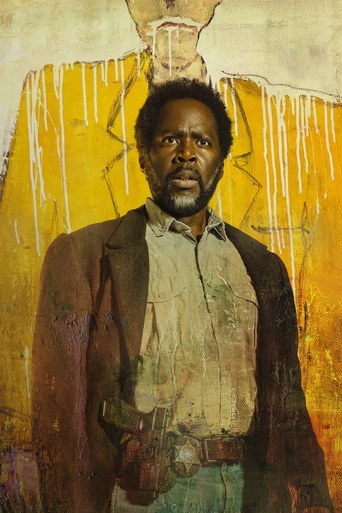
From · Season 1 · Episode 8 · 27 March 2022
S1E8 Broken Windows, Open Doors
A tense, practical hour where Boyd attacks survival itself, even as the story starts pulling him away from the town.
THE MOMENT Kenny's speech, the deputy pushing the sheriff out the door. The town's order of authority quietly inverts in a single scene.
Triage, the morning after. The script's insight is that Boyd's sense of duty has curdled into a delay tactic, and it takes Kenny, the gentlest person in town, to say it to his face: the talismans were a Band-Aid, and staying is its own kind of abandonment. Julie steps out of a cabinet she did not enter, a sentence the...
Full episode analysis below. Spoiler-light verdict above.
Updated
The warning lands like a thrown chair. Boyd faces the group and tells them staying put is a death sentence: “If you don’t come with me right now, you’re all going to die.” The line is blunt, almost ugly in its impatience, and that is why it works. This town has trained people to survive by shrinking their world. Boyd is asking them to do the opposite. Escape is no longer a dream here. It is a pressure test, and Boyd is the first man cracking under the weight of selling it.
The Sheriff Breaks the Shelter Spell
“Broken Windows, Open Doors” understands that the most dangerous habit in this town is competence. The early shelter planning has the shape of a community that has learned how to manage terror. Basements are discussed. Space is counted. Colony House residents are “squared away.” On paper, that is leadership. In practice, it is people making the cage more comfortable.
That is where the episode finds its argument. Boyd is sheriff, so he is supposed to hold the center, calm the panic, and keep the system running. Instead, he becomes the loudest challenge to that system. He wants to protect the town, but protection has started to look too much like surrender. Staying in place keeps people alive tonight. It also trains them to die later.
The writing gives that tension a practical face before it lets Boyd sound heroic. His speech grows out of logistics, limited space, and the sense that the survivors are reorganizing the same doomed pieces on the same doomed board. The episode is at its best when procedure curdles into dread. A shelter plan should feel comforting. Here, it sounds like inventory before a storm everyone knows is coming.
The group dynamic remains broad. The episode gives Boyd a hard position and the town a fearful resistance, but the pushback could use sharper individual edges. Still, the conflict is clean. The sheriff is no longer managing survival. He is indicting it.
The Monster Is in the Wallpaper
The hour’s supernatural line is quieter than Boyd’s confrontation, but it matters: “Whatever it is, it’s a part of the fabric of this place.” That idea does a lot of work. The threat is not treated as a visitor, an intruder, or a puzzle box sitting in the corner. It is stitched into the environment. The terror is architectural.
That framing helps the episode avoid reducing the mystery to creature mechanics. The fear comes from scale. If the entity belongs to the place, then every routine becomes suspect. Shelter is suspect. Roads are suspect. Even calm walks feel loaded because the setting itself feels awake. The early silences are doing more than stretching time. They make the town feel like it is listening.
This is where “From” uses restraint well. The hour does not need a new answer every ten minutes. It lets the survivors say out loud what the show has been teaching through atmosphere: this place has rules, and the rules may belong to something larger than any one monster at the window. That is more unnerving than another attack beat.
The risk, as always with this kind of mystery, is vagueness. “Fabric of this place” is evocative, but the episode has to keep cashing that language into choices and consequences. Here, it mostly does. The phrase hangs over Boyd’s later urgency. If the prison is alive, waiting for a safe moment is foolish. The house is part of the trap.
Silence, Then the Town Starts Talking Too Fast
The pacing has a jittery design: long quiet stretches, then frantic bursts of speech when the crisis sharpens. That rhythm suits the episode’s subject. These people are living in the pause between alarms.
The calm walk early on gives the hour space to breathe while holding tension in reserve. The show knows silence in this town is never neutral. A quiet stretch after everything that has happened does not comfort. It makes the next interruption feel preloaded.
Then the episode flips into public argument. Boyd’s warning cuts through the communal routine, and the later rallying speech turns private fear into a collective objective: “We need to find a way home or else every single person here is gonna end up exactly like Father Khatri.” The line works because it uses a specific loss as a future map. Father Khatri is not only remembered as grief. He becomes evidence.
That is a smart escalation. The episode does not treat “home” as sentimental wallpaper. It turns home into a deadline. Either the survivors build a path out, with the signal tower looming as the practical hope, or they keep repeating the same cycle until the town claims them one by one.
The middle stretch is less precise. The alternation between silence and urgency creates mood, but it can make the hour feel like it is holding back one beat too long. The tension is real. The momentum occasionally waits for Boyd to force it forward.
Boyd Runs Toward the Thing He Cannot Control
Boyd being led away is a small beat with a large shadow. The episode positions him as the man urging motion, then pulls him into danger himself. He wants the town to stop hiding, and almost immediately the story tests whether his courage is leadership or compulsion.
That contradiction matters because Boyd is not written as a simple brave man. He wants to protect the community, yet he also keeps chasing something personal: redemption, proof, control, a way to make his authority mean more than nightly containment. The episode does not need to overexplain which motive is driving him in every second. The behavior tells the truth. He cannot save the town by standing still, but every step away from it risks abandoning the people he is sworn to protect.
That is why his confrontation with the group has bite. The warning is correct in spirit, but his delivery carries desperation. He is trying to pull everyone into movement before he has fully made peace with what movement costs. A safer show would frame that as straightforward heroism. Here, Boyd’s courage has an undertow.
The open question of what happens after he is led away gives the episode its cliff-edge. It does not close his arc. It tightens the knot. The sheriff has told everyone that staying means death. Now the story asks what leaving will demand.
Ellis Steps Out of Hiding
Ellis gets the episode’s late emotional turn, and it is a useful one. His confession that he followed the sheriff reframes him as someone caught between concealment and loyalty. He wants to stay hidden, but he steps forward when Boyd needs courage reflected back at him. That is a strong character beat because it uses action first, motive second.
The timing is interesting. By placing Ellis’s reveal near the end, the episode lets Boyd’s public urgency dominate the hour before bringing the personal cost into view. The sheriff is not simply a leader shouting at frightened people. He is a man being watched, followed, and measured by someone with his own reasons to stay out of sight. Ellis’s decision to reveal himself turns Boyd’s mission from a civic argument into a family-adjacent wound.
There is a structural tradeoff. Because the confession arrives late, it lands more as a hook than a fully developed emotional payoff inside this hour. The beat is strong, but the episode spends more time arranging the crisis than letting Ellis’s inner conflict breathe.
Even so, it gives the ending needed human texture. Escape plots can become engineering diagrams if the show leans too hard on plans and tools. Ellis keeps the hour personal. The signal tower may be the mechanism. Courage is the material nobody can measure.
The Verdict
“Broken Windows, Open Doors” is a sturdy pressure-cooker episode with a clear spine: survival has become a habit, and Boyd is trying to break it before the town turns that habit into a grave. Its best craft move is the way practical planning slides into existential panic, with shelter logistics, supernatural dread, and the search for home pushing in the same direction. The hour is less sharp when the middle stretch lets mood outrun incident, and Ellis’s confession could use more room. Still, the episode earns its slot by turning escape from an idea into a demand. For the season arc, it plants the signal tower as hope while leaving Boyd’s fate hanging in a darker doorway.