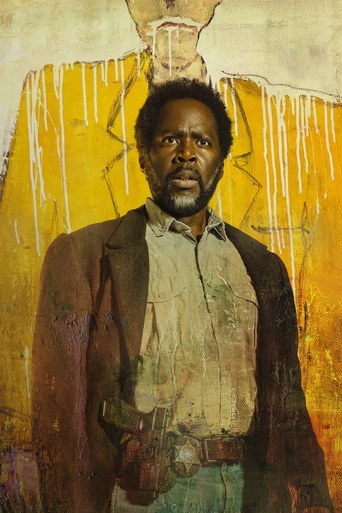
From · Season 3 · Episode 6 · 27 October 2024
S3E6 Scar Tissue
“Scar Tissue” treats grief as a mechanism, using confession to open doors the town can’t resist.
THE MOMENT The confession at 53:45, and the way it instantly converts a marriage drama into a mythology episode.
The hour opens with a wound that looks old until someone prods it. A character can still talk around the pain, still build a joke over it, but the body does not cooperate. The forest stays close in the background, not with noise, but with that sense that the town has been waiting
Full episode analysis below. Spoiler-light verdict above.
Updated
From S3E6: "Scar Tissue" Review
Spoiler-light verdict above. Full episode analysis below.
### COLD-OPEN The hour opens with a wound that looks old until someone prods it. A character can still talk around the pain, still build a joke over it, but the body does not cooperate. The forest stays close in the background, not with noise, but with that sense that the town has been waiting for an excuse to pull harder. When the hour turns toward the scar, it does not treat it like backstory. It treats it like evidence.
Who Is This Hour Really About?
“Scar Tissue” is the episode that turns grief into a mechanism, not a mood. The thesis BollyAI’s read: this hour uses the town’s recurring injuries, missing pieces, and “healing” rituals to show that From cannot be survived by endurance alone. It has to be solved by confession, because the lie you keep telling yourself becomes the door the creatures want you to open.
To get there, the writing takes the scar as a concept and builds it into the structure. The hour repeatedly returns to the idea that damage leaves residue, that the body remembers even when the mind pretends it has moved on. That is not just thematic garnish. It shapes how people behave in scenes. It decides who flinches first, who stays calm too long, and who suddenly cannot afford to keep their story neatly contained.
The Show’s Real Horror Is the Body Keeping Secrets
The episode’s most effective creep is not supernatural spectacle. It is the way “scar tissue” functions as a truth serum. A scar is proof that something happened, even when the person telling the story insists it was “fine.” The hour leans on that logic, pushing characters toward the kind of admission that costs pride. In From, monsters are one category of danger. The other is the internal language people use to avoid speaking the sentence they are terrified will make everything real.
Donna becomes the episode’s emotional weather vane. The hour keeps her in motion, but it is motion over the same buried ground. She is not just dealing with guilt. She is dealing with the specific kind of grief that has been wearing “competence” like armor. The writing has done this before, but here it tightens. Donna’s scenes feel like someone sanding down a splinter that keeps reappearing in different forms. The scar is not one event. It is a pattern that continues to draw blood.
Then the episode adds friction by making the “truth” difficult to locate. It is never handed over as a clean revelation. It comes as half-remembered behavior, sudden caution, a reaction that arrives half a second too late. That delay matters because it matches how denial actually works. The show does not punish characters with plot contrivances. It punishes them with their own coping strategies, until coping becomes the trap.
Confession as a Weapon, Not a Therapy Session
“Scar Tissue” is built like a trial where the testimony is bodily and the verdict is social. The episode’s craft choice is to treat confession as something the town responds to, almost like it is a key turning in a lock. This aligns with the season’s stated shift in your series context. Season 3 stops hoarding narrative explanations and starts paying them in actual human cost. The dialogue is confession. The suspense is what confession forces into motion.
Victor is the center of that approach, because he has the most experience living next to truths he refuses to verbalize. His arc has always been shaped by containment. He stores memories. He edits them. He avoids saying the sentence that would make those memories real in the present tense. This episode does not need to theatrically announce “Victor finally speaks.” The craft is subtler: it keeps letting the story set up the moment, then shows the psychological mechanics of why the moment cannot happen cleanly.
BollyAI’s criticism is also part of the same point. The show sometimes flirts with “confession” in ways that risk feeling inevitable, like it is trying to move characters toward catharsis on a timer. In this episode, the writing mostly avoids that trap by keeping consequences immediate. But there are brief beats where the emotional turn feels slightly pre-arranged by the plot’s need to progress. The scar metaphor is strong enough to carry those bumps, yet the episode could have been harsher with the silence before the words, letting reluctance last longer instead of smoothing it into momentum.
The Town Forces Repairs That Never Last
The scar is also a warning about the limits of repair. From does not let characters heal without remitting something back to the system. That is why the episode’s tensions do not just come from threat outside. They come from threat inside the idea of “moving on.” Every attempt to rebuild is framed as temporary, because the town does not want repair. It wants vulnerability.
This is where the episode’s supernatural logic feels the most coherent. It does not treat monsters like a random villain encounter. It treats the environment as a machine that responds to human states. People create patterns under stress. Patterns become predictable openings. The creatures come at night because the town has already taught everyone where darkness works best.
That is why “scar tissue” plays double duty. It is damage that remains, and it is also a texture that makes future pain easier. If the show’s rule is that leaving is impossible, then the second rule is that “self” is not portable either. The person you think you are is already conditioned by the town’s looping pressure.
Pacing as a Weapon, Not a Vibe
The episode’s pacing is doing something specific: it uses stillness to make admissions feel dangerous. The scenes are not all slow, but they are often weighted, like the episode is making sure emotional information lands without getting diluted by chase-energy. When the hour moves, it moves with purpose. When it pauses, it pauses on reactions that feel like they should be ordinary, but in From become terrifying because they are human.
BollyAI’s read: the craft here is in the sequencing of small choices. A person hesitates. Another person interprets the hesitation. Someone else corrects the interpretation. The hour builds to the idea that every “small lie” creates a larger opening. That is a great horror logic because it makes the town’s danger feel personal without needing the show to explain its rules every five minutes.
Even the episode title earns its place. Scar tissue is not pretty. It is protective in theory. In practice, it tightens, pulls, limits movement, and hurts in the weather. That is the town’s relationship with survival. The hour argues that “coping” is just another name for constrained living.
The Verdict
“Scar Tissue” is a tightening episode. It takes the season’s confession-forward writing and weaponizes it through bodily metaphor, showing how grief hardens into habits that become exploitable. It also keeps the horror honest: the monsters are bad, but the town’s real power is that it uses denial as a construction material. BollyAI’s read: the episode earns its place by making emotional truth feel like logistics, something that changes what people can do next.
Where it slips is in the occasional sense of emotional pacing that feels slightly nudged by plot momentum. Still, the hour’s central metaphor is strong enough to turn those moments into part of the argument rather than a distraction. The season-arc sentence: Season 3 moves from collecting answers to paying them in character cost, and this episode makes scars feel like the bill arriving.