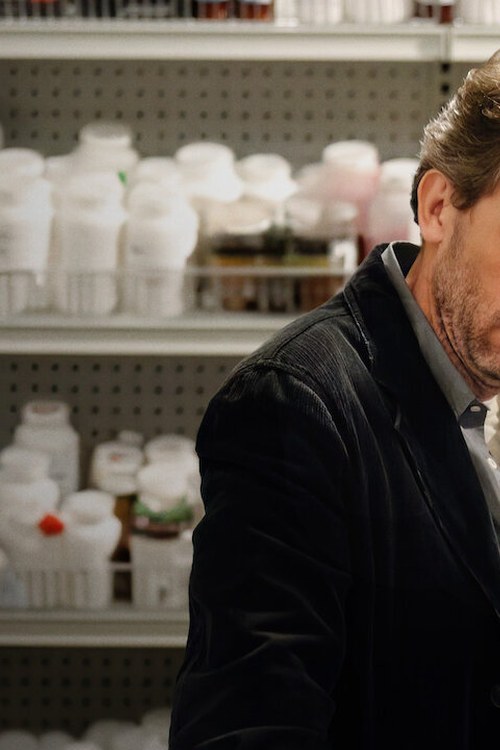
House M.D. · Season 1 · Episode 17 · 12 April 2005
S1E17 Role Model
The diagnosis is the bait, but the episode’s real win is how House weaponizes uncertainty into ethical pressure.
A patient walks in with a problem that looks straightforward enough to file and forget. The file says “viral,” the vitals say “stress,” the room says “routine.” House hears the quiet, clinical lie in all of it and starts pulling at the smallest mismatch. In his head, the case is
Full episode analysis below. Spoiler-light verdict above.
Updated
COLD-OPEN
A patient walks in with a problem that looks straightforward enough to file and forget. The file says “viral,” the vitals say “stress,” the room says “routine.” House hears the quiet, clinical lie in all of it and starts pulling at the smallest mismatch. In his head, the case is never about the symptoms. It is about the story people are telling themselves, and what they leave out when they are scared. The episode turns that instinct into a diagnostic engine, then refuses to let the human mess stay off the exam table.
The Germ That Won’t Die
Pacing as a Weapon for Curiosity
House’s Cruelty Has a Schedule
The Team Performs, Then Pushes Back
When “Tests” Become a Moral Argument
-
The Germ That Won’t Die
The episode’s central trick is how it treats “the case” as an ecosystem, not a single event. Even when the outward narrative tries to shepherd everyone toward a neat medical label, House keeps dragging them back to the boring, hard question: what else could explain these symptoms if the obvious story is wrong? BollyAI’s read is that this is classic House early-season craft. It does not just stack possibilities. It makes uncertainty feel like momentum.
In a typical procedural, uncertainty is a slowdown. Here, uncertainty is the fuel. The episode keeps presenting new data as if it is unspooling a hidden mechanism. One result does not “correct” the diagnosis. It forces a reframe of the entire patient narrative. That matters because House is allergic to the kind of diagnosis that flatters the team. He would rather be wrong loudly than correct quietly.
Major characters in this hour function like diagnostic tools with personalities. Gregory House treats the unknown as an insult to his intellect and a threat to his ego. Cuddy is the pressure system, balancing ethics, liability, and time. Dr. Wilson is the conscience that still thinks in human terms, even when House tries to corner him into silence. And the fellows, especially Dr. Chase, Dr. Cameron, and Dr. Foreman, become the episode’s proof that process can either save a patient or become a cage.
Where it gets sharp is in how the show lets the medical stakes rise without letting the episode grow sentimental. The illness is not a metaphor for House’s feelings. It is a problem that exposes who is willing to look, and who needs the comfort of certainty.
Pacing as a Weapon for Curiosity
This hour moves like it already knows the ending, then spends the middle pretending it does not. The writers use “next steps” as tension, not as filler. When House orders tests or steers the team, the pacing contracts. Scenes become shorter and more pointed. Explanations happen in bursts. The episode’s structure feels built around the moment when the team thinks it has solved the case and House quietly destroys that confidence with one question.
BollyAI’s read: Season 1 House episodes often use a rhythm that alternates between procedural clarity and personal interference. This one leans hard into that second beat. The investigation is not purely mechanical. It becomes interpersonal. Someone lies. Someone withholds. Someone overstates certainty. The episode turns those behaviors into diagnostic clues, which is why the pacing keeps snapping back to character interactions.
That is also why the hour’s best sequences feel like chess moves. The “what now” question is always fresh because House keeps changing the board. He does not just find information. He changes the team’s relationship to information. When the fellows finally catch up, it is not because the clues were handed to them. It is because House made them anxious enough to think correctly.
There is a craft cost to this speed. The episode sometimes compresses the reasoning in a way that can feel like the show is daring the viewer to keep up. It is a fun dare, but it is also a gamble. The reward is that the hour stays addictive. The downside is that when the case pivots, it can pivot faster than emotional processing can. House’s world does not pause. The patient rarely gets to be more than a set of data and a set of lies until the end.
House’s Cruelty Has a Schedule
If there is one thing Season 1 keeps proving, it is that Gregory House is not cruel randomly. His cruelty has intent, and it has timing. He uses it to provoke truth. He uses it to break habits. He uses it to stop the team from settling into “safe” reasoning. In this episode, the best moments are not the diagnostic breakthroughs. They are the interventions that look unethical on first glance and then reveal themselves as strategic.
BollyAI’s read is that the episode understands the moral contradiction at the center of the series. House can be abrasive, manipulative, and occasionally contemptuous of procedure, and still be the person who makes the case solvable. That is the show’s engine. It is also the show’s risk. When it works, it makes House fascinating. When it overplays, it makes everyone around him bend too easily around his personality.
Cuddy functions as the structural guardrail, and the episode uses that relationship to keep House’s behavior from feeling consequence-free. Dr. Wilson keeps the “human cost” in view, even when the plot wants to sprint past it. But the episode also shows something harsher: House is not just a bad bedside presence. He is bad at being a team member. He treats collaboration like interrogation.
The episode’s cruelty is therefore both character work and plot mechanism. It is not just that House hurts people. It is that he hurts the process, then rebuilds it in his preferred image. That is why the episode’s emotional tone remains tense. Even when the case improves, the interpersonal pressure does not relax.
The Team Performs, Then Pushes Back
One reason House M.D. worked beyond the procedural template is that the fellows are not decorative. They are a range of professional instincts, and Season 1 keeps testing which instinct House respects and which one he punishes. In this episode, the team’s arc is less about learning medicine and more about learning House’s methods.
Dr. Foreman tends to represent the show’s “procedural discipline” impulse. When he gets traction, it is because he treats diagnosis as an obligation. Dr. Chase often plays the role of skepticism under structure, the one who can question conclusions without losing the thread. Dr. Cameron is where ethics and empathy show up as friction. And House is the constant gravity pulling all of them back toward the case.
BollyAI’s read: the episode makes a key trade. Early on, the fellows perform for House. They respond, they comply, they try to be clever within his constraints. Later, the episode allows pushback, not as rebellion for its own sake, but as a way to protect the patient from House’s worst instincts. That is why the diagnostic turns feel earned. The team does not only repeat House’s thinking. They start to develop their own “translation layer” between evidence and meaning.
That translation layer is important because the episode uses some of its diagnostic drama to ask who owns uncertainty. Does the team own it because they are closer to the bedside? Or does House own it because he can think without sentiment? The hour keeps toggling that question, and the better scenes are the ones where the fellows briefly get it right on their own before House tries to steal the credit with a harder question.
When “Tests” Become a Moral Argument
The cleanest way this episode argues its theme is by turning medicine into a philosophy without announcing it as one. The “tests” are not just steps. They are choices about what kind of truth matters. In House’s hands, testing is aggression dressed as science. In the team’s hands, testing becomes responsibility. And in Cuddy’s hands, testing becomes risk management.
BollyAI’s read: the episode ultimately uses the patient’s situation to expose the moral math behind diagnosis. If the team orders tests to cover every possibility, it might delay treatment and increase harm. If it orders fewer tests to move faster, it might miss the one explanation that prevents catastrophe. House argues for a third way: aim the process at the story beneath the symptoms, then let that target drive the next decision.
That moral argument is also why House’s personal flaws matter to the case rather than sitting beside it. In this hour, he is not just “a genius with problems.” He is the embodiment of a belief system that treats inconvenience as evidence. The episode flirts with making that belief system look like the best available tool, even though the show also keeps hinting at its long-term cost.
The episode’s ending, whatever form it takes in the specifics, lands on the same early-season pattern: the diagnosis is the conclusion, but the real ending is the reminder that competence does not equal kindness. House can solve the puzzle. The people still have to live in the aftermath of how he solved it.
The Verdict
This episode works because it treats diagnostic uncertainty like a character conflict, not like a plot hurdle. Gregory House turns every mismatch into a provocation, and the episode’s pacing makes that provocation feel like momentum rather than sabotage. The team’s pushback is timed well enough to keep the medical logic from becoming House’s solo performance, and Cuddy and Wilson keep the hour from collapsing into pure arrogance.
Where it strains is in how quickly the case pivots relative to how much emotional space the characters get. The writing chooses speed over reflection, which fits House’s worldview but can occasionally blunt the human weight of the moral choices behind the tests.
Season-arc note: this episode strengthens the early promise that House M.D. is not really a case-of-the-week show. It is a character show that uses medicine as the excuse.