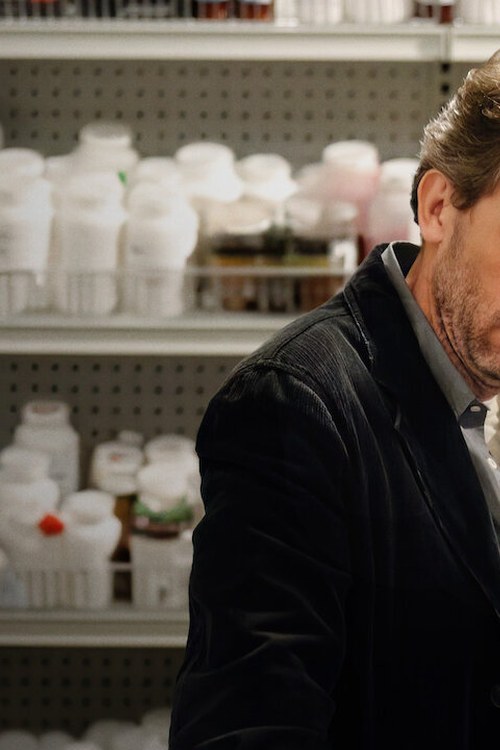
House M.D. · Season 3 · Episode 15 · 6 March 2007
S3E15 Half-Wit
House turns certainty into a hazard, and the hour proves the show’s real mystery is whether he can diagnose without performing.
This hour turns House’s usual advantage into a trap: when the diagnosis depends on one stubborn assumption, the show forces him to confront how often he manufactures certainty to win arguments. The case escalates through lab results that refuse to behave, and the episode’s emotio
Full episode analysis below. Spoiler-light verdict above.
Updated
spoiler_free
This hour turns House’s usual advantage into a trap: when the diagnosis depends on one stubborn assumption, the show forces him to confront how often he manufactures certainty to win arguments. The case escalates through lab results that refuse to behave, and the episode’s emotional weight lands on the team’s growing awareness that “fixing the patient” is not the same thing as “fixing the situation.” BollyAI’s read: the writing is at its best when it makes House pay interest on his own habits, but it occasionally sacrifices clarity to keep the conflict sharp.
review_body
COLD-OPEN
A pattern is presented like a gift. Then it isn’t. The episode’s first pressure point is simple: a medical mystery offers just enough alignment to tempt House into a fast, arrogant read, and the moment he commits, the case begins slipping out of that narrow frame. The team adapts in real time. House does not. His certainty becomes the obstacle, not the solution, and the episode spends the rest of the hour testing whether a genius can diagnose without also prescribing his own ego.
THESIS
This episode works because it turns House’s diagnostic swagger into a liability, forcing the writing to make “being right” secondary to “being honest about why you’re right.”
The Assumption as a Side Effect
House’s best episodes are not just about medicine. They are about decision-making under pressure, and this one chooses a surgical target: assumption. Early on, the case presents clues that point cleanly toward a likely lane, and House does what he does when the lane looks good. He moves early, he frames the debate around his preferred explanation, and he treats uncertainty like something you can bully into submission.
But the show refuses to reward that reflex. The facts keep arriving in the wrong order, or they arrive with qualifiers that make the initial read feel less like “insight” and more like “preference.” The writing makes the audience sit inside the discomfort House creates for himself: he is not merely trying to help a patient. He is trying to keep control of the narrative. When the case stops cooperating, the episode does not let him rebrand the failure as bad luck. It makes the failure personal.
This is where BollyAI’s read gets pointed: the episode is at its strongest when it treats House’s certainty as a symptom. His belief is not a neutral tool. It has consequences for what the team notices, what gets tested, and what gets missed. That shift is the emotional engine. It is also the thematic one.
The Team Learns the Cost of Following Him
The team in Season 3 is becoming a more interesting organism rather than a set of repeating functions. In this hour, they are forced to operate like clinicians trapped in House’s argument. When House picks a theory quickly, they have two jobs at once: diagnose the patient and also survive the intellectual weather system he generates.
Wilson is the clearest counterweight, not because he contradicts House for sport, but because he keeps returning the discussion to what the patient needs next, not what House needs to prove. Cuddy becomes the external pressure, a reminder that medical institutions do not bend their policies just because a doctor’s instincts are entertaining. Chase and Cameron show the most visible friction: they can see the logic chain collapsing, but they still have to do the practical work of protecting the patient while House re-enters the same loop with slightly updated wording. Foreman treats the hour like a systems problem. When House insists on a lane, Foreman pushes for constraints. When the episode is honest, this becomes the team’s real diagnosis method: not “what does House think,” but “what will House’s thinking exclude if nobody corrects it.”
The criticism BollyAI will land plainly is this: the episode occasionally uses diagnostic confusion as momentum, meaning some beats feel engineered to keep the conflict alive rather than to clarify the medical logic. That can make the middle third feel slightly less crisp than the setup or the ending. Still, the character work pays it off. The team’s learning is the point, and their hesitation becomes a form of tension.
A Villain Without a Mask: House’s Need to Win
Season 3 has a broader arc shift with Detective Tritter introduced as a formal adversary to House’s drug use, and that context matters even when the episode is focused on the weekly case. This hour plays like it is borrowing the antagonist structure, but instead of another person breaking House, it breaks his strategy from inside.
There is no need for a detective here. House is already acting like someone under pursuit. He doubles down whenever the case challenges him. He treats resistance as personal offense, not professional friction. He also uses his communication style to corner everyone else into reacting on his timetable. The episode makes that behavior legible, which is why the writing feels so sharp when the case turns. It is not just that House’s guess is wrong. It is that his personality designs the guess.
That is where the hour earns its bite. The show’s misanthropy becomes medically relevant. House’s distrust of easy answers, his contempt for consensus, his insistence that other people are too cautious. Those traits help him solve mysteries, yes. But they also create a blind spot strong enough to injure the work. The episode treats the diagnostic process like a moral one: what you refuse to question becomes what harms someone else.
When the Case Stops Being a Puzzle
Good House episodes end with a diagnosis, but great ones end with an aftermath. This episode’s best move is that it stops letting the case be only a puzzle. Once the working theory collapses, the writing pivots toward consequences: the time lost, the wrong tests run or not run, and the way House’s ego reshapes the timeline.
The episode does something character-driven with this. It forces House to confront the difference between intellectual dominance and clinical responsibility. The conflict does not resolve by making House instantly humble. It resolves by making him reactive, cornered by the logic he tried to control. Even when the show is being manipulative with its misdirection, it keeps the emotional premise consistent. House can be brilliant and still be self-sabotaging.
That consistency is the craft win, because it prevents the ending from feeling like a generic “lesson learned” beat. The resolution lands harder because the hour built it out of concrete behavior, not abstract growth. BollyAI’s read: the episode understands that House does not change by being told what is right. He changes when his methods stop working and he cannot rewrite the failure into a victory.
The Verdict
This episode is a controlled, character-first diagnostic hour that makes House’s main advantage. then makes it the patient’s problem. The writing’s best idea is structural: it treats certainty as a side effect and forces the team to practice medicine while also managing House’s need to win the argument. The case logic occasionally feels kept in motion more by drama than by clean clarity, which slightly blurs the middle. But the emotional throughline stays sharp, especially in how Wilson, Cuddy, and the rest of the team respond to House’s slipping authority.
As part of Season 3, it plays like a bridge between the series’ earlier episodic rhythms and the season’s larger adversarial pressure, reminding you that House’s hardest opponent is not another antagonist. It is the habit that keeps him from listening.