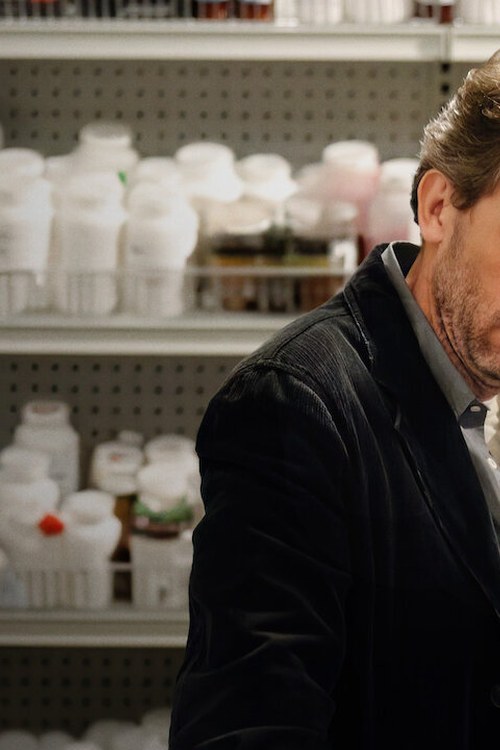
House M.D. · Season 8 · Episode 9 · 23 January 2012
S8E9 Better Half
The hour’s diagnostic logic is sharp, but it too often turns uncertainty into permission to be cruel.
A patient arrives with a familiar-looking problem, but the hour keeps swerving away from the obvious diagnosis. The symptoms get sharper, the theories get messier, and the team starts playing defense instead of offense. In the middle of that mess sits House, treating the case lik
Full episode analysis below. Spoiler-light verdict above.
Updated
The most “House” kind of cruelty, in a case that refuses to be clean
A patient arrives with a familiar-looking problem, but the hour keeps swerving away from the obvious diagnosis. The symptoms get sharper, the theories get messier, and the team starts playing defense instead of offense. In the middle of that mess sits House, treating the case like a puzzle with human consequences. The twist is not the diagnosis itself. It is the way the episode uses uncertainty as leverage, then makes everyone pay for the comfort of being wrong.
This is an episode about how House wins diagnostic battles while losing moral ones, and about how easy it is for everyone around him to confuse process with ethics.
Pushing the Diagnosis Until It Breaks Someone
House comes in wearing certainty like armor, even when the case demands patience. The writing gives him the usual privileges: the room listens, the language simplifies, and the next step feels inevitable. But this hour makes a point of showing the cost of turning medicine into a personality test. The team tries to stabilize the patient, yet the plan keeps hinging on House’s preferred kind of logic, the kind that values the next clue over the next breath.
The case structure does what House often does best. It starts with a clean mystery, then gradually replaces clarity with trade-offs. Early on, the diagnostics look like they are driving the tension. Later, it is clear that the tension is driving the diagnostics. The episode turns “what is happening medically” into “what is happening to everyone emotionally.” That is the craft move. It is also the problem.
Because when uncertainty becomes a tactic, the patient stops being a person and starts being a board position. BollyAI’s read: the writing uses that instinct to keep the plot propulsive, but it also lets the show drift too close to its own bad habit. The episode’s moral center wobbles, and the patient gets treated like an argument.
The Team as an Escape Route, Not a System
Dr. Lisa Cuddy is the pressure point that keeps showing up in different clothes. Whether the episode leans on her authority or her pragmatism, she is the same character-function: the reminder that the hospital is not House’s lab. Cuddy’s presence matters because it tests whether the team can keep operating when House turns the case into theater.
Dr. James Wilson typically anchors the show’s humanity, and in this hour that role feels like a negotiation rather than a refusal. The episode gives Wilson enough space to care, but not enough space to stop the machine. Wilson keeps trying to pull the conversation back to the patient, back to consequences, back to what this looks like when the diagnosis is not the only goal. The writing lets him have those beats, then steers the plot toward the next clinical turn before it can fully cash out the emotional turn.
Then there is Dr. Eric Foreman, who represents competence under strain. Foreman’s instincts, when they align with House’s, make the case move. When they don’t, the episode shows how quickly “clinical disagreement” becomes “team friction.” Foreman is forced to argue not only about medicine, but about what the show’s rules are in that specific moment. BollyAI’s read: this episode treats the team like a steering wheel it can spin at will. The result is that group dynamics sometimes feel like set dressing for House’s control needs.
Dr. Robert Chase and Dr. Allison Cameron (even if the episode leans lighter on one of them) sit in the same moral triangle. Do they push back early, or do they wait for proof? This hour makes them wait. And waiting is where House gets dangerous, because the show knows it can always justify delay as “process.”
“Proof” as a Lifestyle Choice
The craft here is the episode’s confidence in misdirection. The writing makes a series of diagnostic pivots that feel earned in the moment, then revisits them with a grim kind of inevitability. BollyAI’s read: the script is at its best when it commits to the idea that medicine is uncertainty made operational. It is less convincing when it uses that idea as a reason not to interrogate the human side of delay.
House handles that contradiction with the usual skill. He weaponizes the language of evidence. He makes the team argue the case as if argument equals progress. The episode repeatedly frames the decision points as clinical choices, but the emotional subtext keeps leaking through: who gets blamed, who gets overridden, who gets to be “right.”
If the hour has a sharp edge, it comes from how often it flirts with cruelty and then calls it precision. That is the show’s DNA, but this episode emphasizes it. It lets the plot reward House’s instincts with momentum, even when those instincts put other people in uncomfortable positions.
The best part is that the episode does not pretend this is harmless. The discomfort shows up in interpersonal cracks and in the way characters start to treat each other like tools. The worst part is that the episode still chooses the momentum path over the accountability path. It gives you pain without full payment.
A Diagnosis That Feels Like a Judgment
The biggest tension in House M.D. is rarely “will the patient live.” It is “what kind of person does the show let itself become while saving them.” In this hour, the writing leans hard on the idea that the patient’s case is also a mirror for the hospital’s habits.
When the case finally settles into its correct direction, it lands like a verdict. Not just on the medical question, but on the choices the characters made to get there. The episode’s structure encourages that reading. Earlier turns that feel clever start to look predatory. The show builds suspense, then uses the payoff to retroactively label parts of the journey as misguided.
BollyAI’s read: this is where the hour earns its teeth. The diagnosis is not just a puzzle solution. It is a test of how the team behaved under pressure, and whether pressure is allowed to rewrite ethics. The episode wants you to feel that cost, but it does not always quantify it. The emotional aftermath feels slightly lighter than the clinical tension that came before it.
Still, it is recognizably House. The show continues to run on the same engine: logic as both salvation and excuse.
The Verdict
BollyAI’s verdict: S8E9 is strong when it treats uncertainty as a living thing, not a storytelling pause. The hour’s diagnostic pivots stay sharp, and its tension comes from forcing the team to operate while the moral ground shifts under their feet. Where it falters is in how easily the script rewards House’s process even when the process behaves like leverage instead of care.
Score-wise, this lands as a solid, tense episode rather than a standout. It fits the late-season rhythm where the series feels more focused than it does inspired, and the case works best as a character pressure test.
Season-arc sentence: In a season already moving toward the show’s final emotional commitment, this episode functions like a reminder of what the series spent years mastering: making medicine do drama, even when the drama makes the ethics wobble.