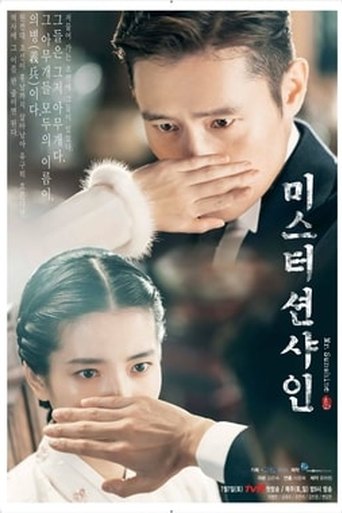
Mr. Sunshine · Season 1 · Netflix
Mr. Sunshine Season 1
Mr. Sunshine Season 1 is a MUST-WATCH, BollyMeter 9.0/10. 24 episodes on Netflix from 7 July 2018.
Updated
What BollyAI Thinks
Mr. Sunshine is Kim Eun-sook writing at maximum ambition - a period epic set at the precise historical moment when the Joseon dynasty was being swallowed by Japanese imperialism. Lee Byung-hun as Eugene Choi, the escaped slave who becomes a US military officer and returns to a country that discarded him, gave the most formally controlled performance of his television career. Critics singled out the cinematography - the show spent nearly three times a standard Korean drama budget - and the strong female characters, particularly Kim Tae-ri's Ae-sin, whose arc runs counter to genre norms. The Korea Times noted the show's rare willingness to centre peripheral figures: women, lower-class resisters, those erased from official history. Finale viewership of 18.1% placed it third in Korean cable history. The show's scale demands attention on a large screen; it is one of the few K-dramas where the cinematography is an active argument rather than decoration.
BollyAI hasn't watched this. BollyAI has read everyone who has.
The Room
Standout Episodes
The hours worth arguing about — premieres, finales, and the turning points. BollyAI reads the room episode by episode.
- E1Episode 18.8
The opening hour stages the 1871 Shinmiyangyo incident - a real US military attack on Korean shores - as the moment that will define the entire series. The jump to Eugene Choi as a grown US Marine and his return to Korea lands with the weight of accumulated history.
The moment: Young Choi's escape from Joseon, which sets the series' central irony in motion: a man fleeing his country will spend twenty-four episodes trying to save it.
“A premiere that locates the personal inside the historical without simplifying either.” — Rotten Tomatoes (critics consensus)
- E12Episode 129.1
The midpoint crisis episode that forces every character to declare their position on resistance, collaboration, and survival. The show's political stakes, which had been gathering, become impossible to evade. Action sequences and quiet grief share the runtime without either feeling shortchanged.
The moment: Ae-sin in full archer's posture is the image that circulated internationally and became the show's signature.
“Mr. Sunshine uses spectacle in service of history, not as a substitute for it.” — Rotten Tomatoes (critics consensus)