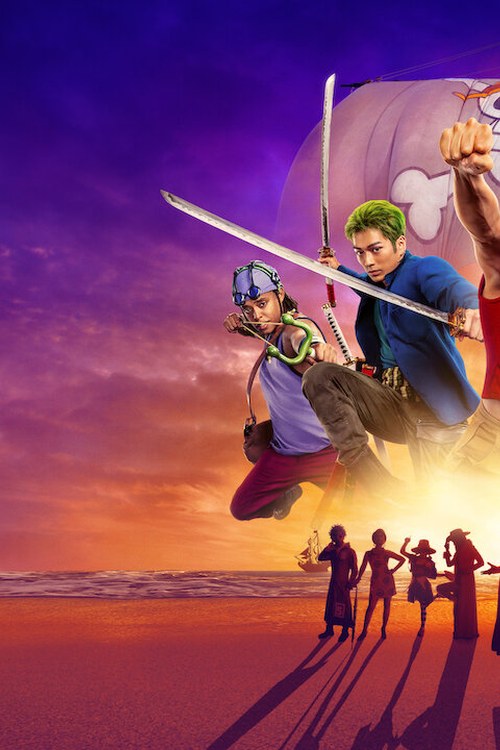
One Piece (Live-Action) · Season 1 · Episode 4 · 31 August 2023
S1E4 The Pirates Are Coming
S01E04 makes the jokes do the steering, tightening procedure into pressure so Luffy’s momentum feels earned, not lucky.
A gamble pays off, then immediately turns into a problem you cannot punch away. The hour leans into One Piece’s oldest trick: keep Luffy moving even when the world around him demands stillness. Tension arrives as logistics, not speeches. Somebody wants something found. Somebody e
Full episode analysis below. Spoiler-light verdict above.
Updated
Cold-Open: The Map Finds a Body
A gamble pays off, then immediately turns into a problem you cannot punch away. The hour leans into One Piece’s oldest trick: keep Luffy moving even when the world around him demands stillness. Tension arrives as logistics, not speeches. Somebody wants something found. Somebody else wants it hidden. And in the middle is a boy who treats danger like weather. When the beat lands, it lands flat and sharp, because the show uses momentum as a threat. BollyAI’s read: this is where the adaptation starts feeling less like an attempt and more like a machine.
Thesis: The Episode Turns Comedy Into Coercion
BollyAI’s read is simple: S01E04 builds its best tension by making its jokes do coercive work. The hour uses misunderstandings, sloppy treasure logic, and the crew’s instincts for survival to pressure characters into choices, not merely to entertain. The writing is funniest when it is also most controlling. This episode is not “lighter” action. It is action that learned to grin, then used that grin to steer people into the next trap.
The Crew as a Small, Noisy Weapon
Monkey D. Luffy keeps arriving at solutions by refusing the premise of “solutions.” When danger shows up, he does not negotiate with fear. He swats at it with enthusiasm and a kind of faith that looks stupid until it works. Roronoa Zoro is the counterweight: less impressed, more durable. His scenes tend to play like a restraint exercise for Luffy’s chaos. He does not stop the momentum. He makes it physical.
Then there is Nami, who carries the episode’s sharpest comedy through caution. Her instincts are practical, but the show rarely lets them be cold. She bargains with reality the way her hands bargain with tools. Even when she is right, the hour makes sure she is still trapped inside someone else’s plan. BollyAI’s read: the episode’s comedy does not “break” tension. It sharpens it. When Nami is nervous, the viewer feels why the plan cannot remain tidy.
This is also where the crew feels most like a unit rather than a collection of character introductions. Their teamwork is messy, but the mess is the point. One Piece’s appeal has always been that the crew is a family forged through constant friction. S01E04 leans into that friction as propulsion, and it shows the adaptation is learning the difference between “quirky” and “character-driven.”
Water-Logic Plotting: Treasure as a Problem, Not a Prize
The episode treats treasure-hunting like engineering. Not in the nerdy sense, but in the story sense: what you have matters less than what you can do with what you have. The show makes the “map” or “lead” energy feel earned through small constraints: time, route, distance, who knows what, and who thinks they know.
Sanji often operates as the social thermostat. When the hour needs heat, he supplies charm. When it needs a plan to fail, he supplies confidence. It is funny, but it is also functional. BollyAI’s read: his presence keeps the plotting from becoming purely transactional. Even when someone is chasing power, the episode insists on human friction, because pirates are never just instruments of greed in this universe. They talk. They swagger. They underestimate the wrong thing and pay for it.
The most important craft choice is that S01E04 uses uncertainty as a pacing tool. The hour does not rush toward answers. It lets the questions linger long enough to turn into pressure. That pressure is what makes later reversals land without feeling like arbitrary writing. If the episode has a weakness, it is that some beats lean on “we need this for the next beat” logic. Still, the overall mechanism works because it is built on character behavior, not random surprise.
The Antagonist Pressure Works Because It Sounds Like Procedure
This is the episode where pressure becomes a system. Captain Smoker (and the broader law-enforcement presence around him) frames conflict as process. That matters because it gives Luffy’s chaos a target. The show treats procedure like a weapon, which is a very live-action-friendly choice. It looks good when characters do paperwork with guns. It also creates a clean tonal contrast: One Piece’s joy versus the world’s insistence that joy has rules.
BollyAI’s read: S01E04’s best tension comes from making the antagonist side feel competent. Not omniscient. Competent. The episode sets up pursuit logic that the crew cannot simply outrun with laughs. The comedy still lands, but it lands beside danger, not in front of it.
And when the hour escalates, it does so without transforming the series into a grim thriller. It keeps the stakes legible. The show knows what kind of danger this story is allowed to carry. It is risky. It is loud. It is not hopeless. That boundary is what stops S01E04 from feeling like “mood whiplash.”
A Moment of Cruelty, Softened by Choice
One Piece always had a particular kind of cruelty: adults or systems apply it to kids, then act like that is normal. The adaptation nods at that instinct, and S01E04 sharpens it through outcomes rather than speeches. The episode uses one or two emotionally charged beats to remind you that Luffy’s optimism does not erase harm. It just refuses to let harm decide the future.
The writing’s trick is that it never asks the characters to be brave in a vacuum. They are brave because the hour forces choices. That is why the comedic beats hit. They are not jokes floating above the plot. They are coping strategies that keep characters moving while they decide what kind of people they will be.
If BollyAI has one criticism, it is that the show sometimes leans on broad “pirate logic” rather than narrowing into specific tactics for each character. For a series this character-forward, occasional vagueness can dilute stakes for a few minutes. But the episode earns its momentum back by letting character decisions, not plot convenience, drive the scene-to-scene turn.
Pacing as a Permission Slip for Weirdness
S01E04 is a pacing episode, even when it is not trying to be. It behaves like an adventure story that trusts momentum. The cold-open sets the tone. The middle stretches into problem-solving. The late beats tighten the screws, so the viewer feels the crew is moving toward a wall even when it does not announce that wall.
BollyAI’s read: the adaptation is using comedy as timing. It buys time. It sets rhythm. Then it cashes that rhythm out into urgency. That is the craft move Netflix live-action adaptations often miss. They rush to spectacle or they inflate emotion. Here, the hour keeps its promises: it makes danger feel like it is always one bad step away, and it makes that feeling sustainable because the crew remains watchable.
The Verdict
BollyAI gives S01E04 a solid, functional win: it turns One Piece’s comedy into the mechanism of coercion, using crew friction and procedural antagonism to turn “adventure” into pressure. The episode’s plotting sometimes leans on generalized pirate logic, but its best scenes prove the adaptation understands what makes this story work in any medium: momentum that is emotional, not just fast.
Across the season, this hour keeps building the series’ central promise: Luffy’s world does not wait for permission. S01E04 sharpens that promise by showing how easily the world can force choices, and how the crew’s weirdness becomes their most practical survival tool.