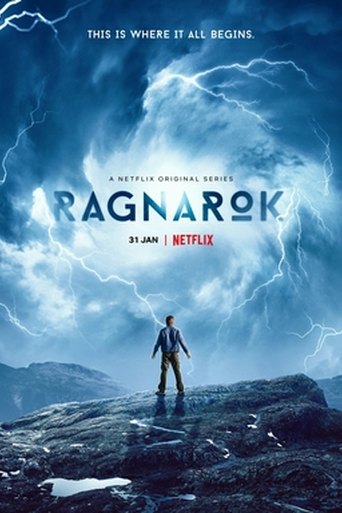
Ragnarok · Season 1 · Episode 6
S1E6 Episode 6
S01E06 makes Ragnarok feel personal by weaponizing consequences through friendships, even as some emotional turns arrive a beat too fast.
The hour stages a final push in Edda’s fight to keep the truth alive, then forces Magne’s myth to collide with human consequence. Ragnarok S01E06 treats Thor’s return less like a victory lap and more like a reckoning: love, loyalty, and inherited power all get tested at the same
Full episode analysis below. Spoiler-light verdict above.
Updated
Ragnarok S1E6: "The End of Everything" Review
Spoiler-light verdict above. Full episode analysis below.
### spoiler_free The hour stages a final push in Edda’s fight to keep the truth alive, then forces Magne’s myth to collide with human consequence. Ragnarok S01E06 treats Thor’s return less like a victory lap and more like a reckoning: love, loyalty, and inherited power all get tested at the same time. BollyAI’s read: the finale’s best move is making the climax feel earned through relationships rather than spectacle. Where it strains is the way exposition and chain-reaction consequences compress multiple emotional beats into the same stretch, which can blur how quickly characters change.
### review_body COLD OPEN (flat, charged) A town that always looked like it was holding its breath finally exhales all at once. The factory’s rot turns outward, not just as visible damage but as intent. In the same space where teenagers usually bargain for one more day of normal, the episode sets a grim clock and dares everyone to keep pretending they can control fate. Magne and Edda move under that pressure, and the writing makes one thing clear: this is not a “save the town” story anymore. It is a “choose what kind of person you are in the fallout” story.
THESIS S01E06 makes its myth feel personal by forcing the final hour to be about consequences for the living, not prophecy for the abstract. The writing anchors the apocalypse in specific relationships, even when the pacing occasionally rushes the emotional handoffs.
The Prophecy Stops Being a Poem
Ragnarok spends the season treating Norse myth like a language characters are slowly learning to speak, and this episode turns that language into instructions you can’t misread. Magne does not “discover his power” in a triumphant way. He commits to a role, then immediately learns the role has a price. The episode keeps returning to the same emotional math: if the past is real, then your choices now still matter, because consequences belong to you.
What the hour does well is keep the stakes human while still delivering mythic momentum. The climax is framed less as spectacle and more as moral pressure. Edda becomes the clearest expression of that thesis. She moves through the hour like someone who has already accepted loss, then chooses to act anyway. The episode’s most effective tension is not “will the plan work,” but “what kind of truth survives when people get hurt.”
The writing also leans into how prophecy can become a trap. When everyone believes something ancient must happen, they start treating living choices as chores. This finale punishes that laziness. It doesn’t let fate be an excuse, and that is why the myth lands instead of floating.
The Family Machine Eats Everyone Equally
The season’s villain is never just “giants.” It is the family system that trained the town to function like an extension of the factory. In the finale, the episode makes that structure visible as a machine: it processes people, converts trust into leverage, and calls it tradition. Herman and the ruling family’s control do not feel like background power at the end. They feel like a philosophy with teeth.
Here, Fjor and Laurits operate as variations of the same theme: how do you live inside a lineage that claims innocence? One learns through impact, one through observation, and both end up paying. The episode’s hard edge is that it does not treat the family as merely villainous. It treats them as competent, strategic, and socially embedded, which makes their final move feel like bureaucracy turning into violence.
BollyAI’s criticism is structural. The finale compresses several threads that have been slowly built across the season, and when the family machine accelerates, some character transitions can feel like they happen because the plot needs them to. The episode earns the darkness, but it sometimes rushes the emotional decoding. Still, the overall effect is coherent: the apocalypse is not a meteor. It is an institutional habit that finally reaches its end.
Friendship Becomes the Real Mythic Weapon
Ragnarok’s intimate scale is not just aesthetic. It is the way the show makes the myth emotionally legible. In this episode, the “hero” energy comes from how Magne and Edda and their circle keep choosing each other over myth. They do not save the town by being destined. They save it by refusing to let destiny erase agency.
The writing uses small relationship beats as engines. Magne is framed as someone who wants to be brave, but the hour insists bravery is not the same thing as recklessness. Edda is framed as someone who wants truth, but the episode shows truth without compassion can still become cruelty. Even when the plot whips forward, those dynamics keep pulling the story back into teen-drama territory. That is the show’s signature strength: the apocalypse doesn’t erase character. It sharpens it.
The finale’s emotional win is how it makes loyalty feel expensive. It is not “friendship fixes everything.” It is “friendship is what you cling to when nothing else is stable.” That approach makes the climax more believable than a pure power fantasy, and it is also why the last act stings. The mythic machinery may be ancient, but the pain is current.
The Ending’s Dark Craft: Fast, Then Earnest
Every season needs a final hour that converts setups into an argument. S01E06 does convert, but it does it with a two-speed rhythm. The middle races through consequence, then slows enough to land the emotional meaning. When the episode is at its best, it lets one image carry the verdict: the town’s industrial face finally matches the myth’s rot underneath.
BollyAI’s read: the craft choice here is deliberate. The hour builds toward an impact moment, then gives just enough quiet to make the aftermath feel like character, not just plot. That is why Edda and Magne feel like they belong to the episode’s conclusion. Their actions do not look like they were written after the fact. They look like they were always the point.
Where it drifts is in the density of resolution. Because Season 1 has six episodes, the finale has to tie off a lot of questions. When multiple reveals and reversals stack, the emotional clarity can blur. Not everything lands with the same weight, and a few beats risk feeling like “closing” instead of “turning.” Still, the ending’s darker choice is consistent: it does not let the audience leave with clean closure. It leaves a sense that the cycle continues, even if the characters now understand the cost.
Who Gets to Survive a Story Like This?
The clearest theme of S01E06 is selection. Ragnarok is a show about inherited power and inherited harm, and this hour makes survival feel like a moral outcome, not a narrative reward. The episode keeps asking a blunt question: when the old gods return, who do you become in the moment you realize there is no neutral option?
Magne is the center of that question, and the episode’s best decision is to treat his myth not as invincibility but as responsibility. Edda is the emotional counterweight. She forces the show to care about what the truth does to people. The ruling family’s role is the warning: if you treat fate like permission, you will eventually justify anything.
BollyAI’s honest verdict on the ending is mixed but pointed. The episode is brave in choosing a dark emotional direction, and it respects the season’s intimate tone. Yet the rushed closure of certain arcs slightly undercuts the impact of the turn for viewers who followed every earlier beat closely. Even so, the finale’s argument remains strong: Ragnarok is not interested in saving the town by changing the world. It is interested in changing the people who thought they were too young to matter.
The Verdict
Ragnarok S01E06 lands its myth by tying it to living relationships, especially the way Magne and Edda treat truth and responsibility as personal costs. The hour’s strongest craft move is its rhythm: it builds apocalyptic momentum through the factory’s institutional rot, then slows just enough for emotional consequences to feel like character choices. The downside is inevitable in a six-episode season: the finale compresses too many threads into the same forward sprint, and a few emotional handoffs feel slightly rushed. Still, the episode earns its darkness. It closes Season 1 not with tidy triumph, but with a moral reset that clarifies what the show is really about: inherited power is a curse unless someone pays attention, acts, and refuses to let prophecy replace agency.