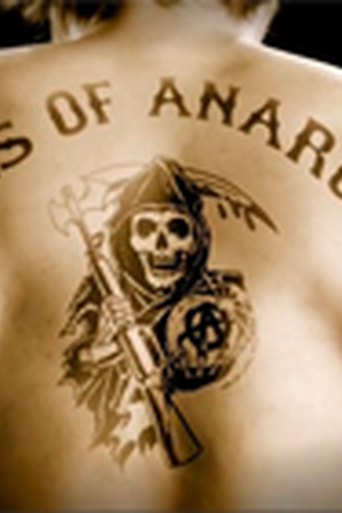
Sons of Anarchy · Season 2 · Episode 10 · 10 November 2009
S2E10 Balm
S02E10 treats legitimacy like camouflage, then proves SAMCRO’s machinery will convert any moral plan into control.
The club’s peace talk happens in the room where they least trust each other. Orders get phrased like favors, favors get paid like debts, and every choice has the same fingerprint. Outside, the world pretends this is politics. Inside, it is always commerce. When the hour moves fro
Full episode analysis below. Spoiler-light verdict above.
Updated
Sons of Anarchy S2E10: "S02E10" Review
Spoiler-light verdict above. Full episode analysis below.
### COLD-OPEN The club’s peace talk happens in the room where they least trust each other. Orders get phrased like favors, favors get paid like debts, and every choice has the same fingerprint. Outside, the world pretends this is politics. Inside, it is always commerce. When the hour moves from “repair” to “resolution,” it does it fast, with the kind of momentum that leaves the characters looking surprised they’re still the same people. BollyAI's read: S02E10 treats legitimacy like a target you can line up, then proves the gun was already in the frame.
-
### ## The Verdict That This Club Cannot Afford Clean Hands BollyAI's thesis is simple: this hour uses moral optics to trap SAMCRO, not to free it. The “legitimacy” angle keeps returning like a promise someone keeps breaking for practical reasons, and S02E10 sharpens the knife by showing how quickly good intentions turn into bad leverage.
SAMCRO’s leadership dynamic is the episode’s core mechanism. Jax Teller is still trying to imagine a path where the club survives without becoming its own excuse. But this is Sons of Anarchy, so the writing refuses to let him turn “better choices” into a new personality. When the hour funnels decisions through club procedure, it doesn’t elevate morality, it operationalizes it. That is the trap: once you treat ethics like a business plan, the first crisis becomes the justification.
Clay Morrow and Tig Trager embody the cost of that method. Clay’s calm is never neutral. It is a managerial calm, and the episode uses it to underline that ideology is not a belief system here, it is a control system. Tig is less philosophical but equally functional. He carries the episode’s mood of “do the work, keep the machine moving,” which is why any moment of vulnerability feels like an interruption, not a character beat. The hour lets you see the club’s internal logic as a kind of machinery: if one part hesitates, another part overcompensates.
Where S02E10 becomes genuinely tense is in the way it frames “resolution.” It does not resolve the season’s moral question. It resolves a tactical question, and then forces the characters to live with the moral fallout of winning the tactical battle. BollyAI's read: the episode lands its hardest punch by refusing to award the club catharsis for surviving the day.
-
### ## Power That Pretends to Be Procedure Procedure is the costume this show likes to dress power in, and S02E10 leans into the seam. The hour stages decisions as if they are inevitable meetings, as if they are just paperwork with muscle behind it. But the subtext stays violent: every “process” is just a more respectable way to say “we will enforce the outcome.”
John Teller looms more like a ghostly instruction than a character presence, not because the hour turns into flashback therapy, but because the season keeps circling back to what the Teller code is supposed to mean. This matters because S02E10 makes a specific argument about ideology. It does not treat racism or violence as random sins. It treats them as traditions that can be rebranded. That rebranding is where Zobelle’s threat becomes important to the season as a whole, even when the episode’s immediate focus is internal. The show has been building an antagonist whose cruelty feels systemic, and by the time you reach this point, SAMCRO cannot pretend it is fighting only for personal survival. It is fighting for whether it is going to be a business front for someone else’s brutality or a machine for its own.
Gemma Teller-Morrow is the emotional fuse in the hour. When the writing puts her near conflict, the episode makes sure the danger is not only physical. The danger is psychological and reputational. Gemma does not merely want the club safe. She wants it correct, controlled, and protected in a way that keeps her authority intact. That makes her choices both understandable and terrifying, because the episode insists that her “love” is also a kind of governance.
BollyAI's criticism, though: the show sometimes moves too confidently through moral turns that should feel harder. When the episode pivots from “this is complicated” to “this is the only way,” it can feel like the writing cashes emotional checks faster than it pays them. The advantage is speed. The disadvantage is that a couple of beats land more like verdicts than decisions.
Still, the craft payoff is clear. S02E10 proves that procedure does not soften power. It makes power look organized.
-
### ## Legitimacy as a Trap Door The season premise promises a tension: steering away from guns toward legitimacy, but dragging ideology and violence behind you. S02E10 treats legitimacy as a trap door. You step on it because it looks stable, and then the floor drops out.
Jax is the clearest vessel for that tension. His push toward legitimacy is not a naïve phase. It is an attempt to build a future that does not end in mutual destruction. But the episode underlines that legitimacy cannot exist as a standalone goal in a club built on coercion. The hour shows legitimacy being bargained for. It is negotiated, threatened, and finally used as cover.
This is where the hour’s momentum becomes a storytelling weapon. Instead of lingering in ethical debate, the episode pushes characters toward action that forces new alliances or hard separations. It is less interested in whether someone “believes” in legitimacy and more interested in who pays the cost when legitimacy requires sacrifice.
Ethan Zobelle functions as the season’s reminder that the outside world is not waiting to be convinced. The businessman’s violence is not messy. It is administrative. Even when he is not the focus in every scene, the episode’s structure keeps his presence in the background like an unseen creditor. The show is telling you: if SAMCRO wants legitimacy, it must survive the kind of legitimacy offered by people like Zobelle, people who see domination as an investment plan.
The episode’s most effective writing choice is that it refuses to let legitimacy be purely rhetorical. It becomes physical. It becomes immediate. And because it becomes immediate, it becomes dangerous.
BollyAI's read: S02E10 does not “deliver” legitimacy. It demonstrates why legitimacy, in this world, is just another way to say “who controls the story of violence.”
-
### ## The Club Chooses Speed Over Truth S02E10’s emotional engine is speed. The hour moves with the urgency of a decision that cannot wait for moral clarity. That urgency creates drama, but it also creates distortion. People interpret events through loyalty first, truth second, and the episode leverages that as both suspense and tragedy.
Clay and Tig drive the episode’s procedural tempo. Their scenes often feel like gears turning. They do not talk like people thinking. They talk like people already committed to outcomes. That commitment is a strength for the plot, because it makes every confrontation feel like it is about enforcement rather than negotiation. But it is also why the episode’s darker moments hit hard. When characters act this fast, you cannot pretend they are confused. Confusion becomes a costume.
Gemma adds a different kind of speed. Her moves carry the weight of long experience. She reads rooms quicker than most characters and she uses emotion like leverage. When the episode asks what Gemma would do to protect the people she loves, the answer is always strategy. The show’s choice is brutal, because it implies love and control are the same muscle in her body.
BollyAI’s strongest craft note here: the episode treats silence as a beat of decision. When characters with competing motives pause, the pause does not indicate uncertainty. It indicates calculation. That is why the hour feels tense even when the screen is not crowded with action. The drama is in what everyone knows and what everyone refuses to say.
This is not a “cooler-than-your-feelings” kind of thriller hour. It is a “your feelings are irrelevant to the machinery” kind of hour. And that is the show’s most consistent cruelty.
-
### ## A Season Pivot That Leaves a Moral Mark As a season-arc installment, S02E10 functions like a pivot from political firefighting to existential consequence. Season 2 has been tightening its thematic knot around institutions, ideology, and violence as systems. By this point, the show has already made one of the most difficult creative decisions it can make emotionally, and it continues to pay off that risk through harder choices instead of comfort.
The hour’s structure suggests the season wants two things at once. It wants you to believe SAMCRO can survive by adapting. And it wants you to understand adaptation as a kind of corruption, not a redemption. Zobelle’s presence as a racist businessman using territory as a front keeps undercutting any idea that the world outside can be negotiated with civility. If the “legitimate” option is still built on exploitation, then SAMCRO’s attempts at legitimacy become another front for the same underlying brutality.
BollyAI's read: S02E10 is where the season’s promise stops being a plan and starts being a question the characters cannot answer. The club can choose tactics. It cannot choose what it is.
-
The Verdict
BollyAI's verdict: S02E10 is a disciplined hour that turns legitimacy from a goal into a weapon someone else can seize. The episode earns tension by making moral language procedural and procedural choices violent, so the characters’ attempts to steer away from guns become just another way to arrange danger. The best part is the craft. The writing uses tempo, authority dynamics, and strategic silence to show power tightening its grip. The weakness is that a couple of moral pivots move with confidence that can blur how hard they should feel in the moment. Still, as a season turning point, the hour lands its argument: SAMCRO cannot clean its hands without first changing what it is willing to do to keep its people alive.