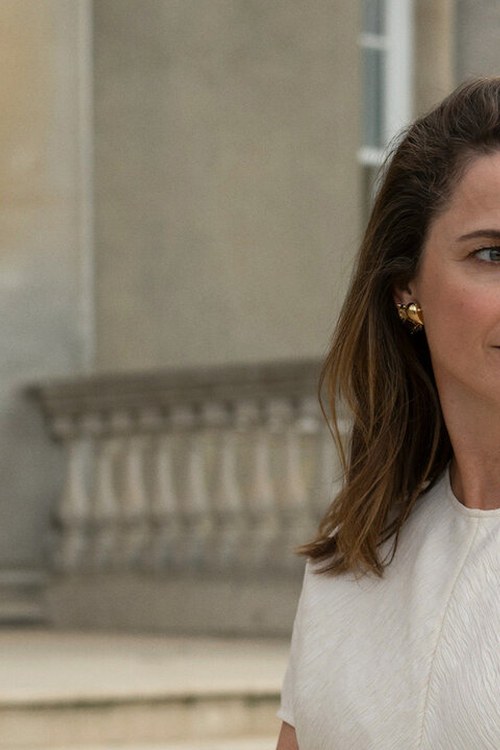
The Diplomat · Season 1 · Episode 1 · 20 April 2023
S1E1 The Cinderella Thing
An ambassadorship launch built like a thriller countdown, where Kate’s blunt competence fights a court that runs on leverage.
THE MOMENT Kate's first formal state dinner, where every piece of her training fails her in a different direction.
A naval crisis hits with the kind of speed that makes procedure feel theatrical and people feel replaceable. Kate Wyler is pulled into a world where everyone speaks in prepared phrases, and the episode’s first real shock is how quickly those phrases start demanding blood. She arr
Full episode analysis below. Spoiler-light verdict above.
Updated
Cold-Open: The room wants a legend
A naval crisis hits with the kind of speed that makes procedure feel theatrical and people feel replaceable. Kate Wyler is pulled into a world where everyone speaks in prepared phrases, and the episode’s first real shock is how quickly those phrases start demanding blood. She arrives to find the job is not just a job. It is a live wire. Decisions have to be made before anyone has finished pretending to be calm, and the hour keeps returning to one uneasy question: if diplomacy is performance, what happens when the performer is out of her depth?
Who Is This Hour Really About?
The episode sells Kate Kate Wyler as the lead, but it also spends time establishing that this story is about control. Kate is introduced as a blunt, policy-obsessed operator who does not charm her way out of problems. She works them. The “Cinderella” idea is funny until it is not, because the hour frames her ambassadorship like a costume change that comes with no training. She is literally and socially mismatched to the room she is supposed to command.
The clever part is how the writing makes her mismatch a structural strength, not a cute flaw. Kate’s straight lines become a liability in polite settings, yes, but also a promise. When everyone else navigates with soft edges, Kate’s bluntness acts like an alarm bell. She notices what others smooth over. This is why the episode’s tension lands so hard: Kate has the technical instincts to survive a geopolitical fire, but she has to learn the human choreography of a royal court made of briefings, parties, and power brokers.
And that is where the title earns its teeth. Cinderella does not just attend a ball. Cinderella transforms because the clock forces her to. This episode treats Kate the same way. The clock is the crisis, and it never stops ticking.
A Naval Attack That Turns Politics Into Panic
The episode’s thriller spine is a single escalating threat, treated with the most cinematic thing a political show can do. It makes the ambiguity feel physical. The hour uses the naval attack and the carrier in motion like a countdown you can see, not a rumor you wait to confirm. That matters because Kate’s job is not to be emotionally brave. It is to be correct under time pressure.
The writing also commits to an important pattern for the season: diplomacy is presented as coordination between competing institutional instincts. Everyone has a role. Everyone thinks their role is the one that can prevent catastrophe. Kate’s challenge is that she does not control the information pipeline, and the episode repeatedly shows how the wrong person being in the room can shift the outcome even without the “big villain” energy.
There is craft in how conversations are staged. Characters speak as if they are reading from a script because, in crises, they are. But the episode keeps letting Kate interrupt that comfort with policy clarity. When she presses, it is not because she wants power. It is because she wants the argument to be factual before it becomes political. BollyAI’s read: the episode turns procedure into suspense. The suspense is not “will war happen” as a vague cloud. The suspense is “what decision gets locked in while people are still negotiating who gets to speak.”
Marriage as Sabotage, Not Side-Plot
If the crisis is the engine, the marriage is the gearbox that decides whether the car moves forward or grinds itself to death. The show introduces Hal Wyler as charming and dangerously plugged into the same diplomatic ecosystem that Kate is trying to survive. He is not a cartoon. He is worse than that. He is plausible. He understands the social rules, and he uses them like tools.
The episode uses their relationship to define a second kind of threat. This one is not about missiles. It is about leverage. Hal’s presence in Kate’s new orbit means every conversation has an implied audience, every gift has a hidden price, and every political ally can become a personal trap. The season’s logline is clear about the danger, but “The Cinderella Thing” earns it by showing the immediate mismatch between Kate’s need for control and Hal’s comfort with influence for influence’s sake.
BollyAI’s read: the episode is at its sharpest when it makes the marriage feel like a second embassy. Hal’s behavior abroad is still an internal political act for the institution Kate is supposed to represent. The hour keeps hinting that Kate’s private life is not private, and that her spouse can turn the embassy into a stage for his own diplomacy. That is why the episode’s tension does not just live in the war talk. It lives in the way Kate is forced to manage reputation, not just risk.
The Court of Small Talk and Big Consequences
The episode’s most underestimated craft choice is how it treats social interaction as a security concern. Kate’s refusal to perform easy banter is not written as antisocial quirk. It is written as a signal that she is seeing the room differently. Her challenge is that diplomacy is often less about what is said and more about who gets to define the tone.
“The Cinderella Thing” makes room for the uncomfortable truth that Kate’s bluntness can make allies hesitate and enemies comfortable. There is a cost to being honest in a setting where everyone bargains in half-truths. The writing lets Kate step into social rituals that feel like auditions, and the suspense becomes whether her policy instincts can override the need to win hearts and signal loyalty.
This is also where the episode earns its title resonance. Cinderella is both invited and judged. Kate is installed and tested. The hour’s party-like texture, contrasted with the real-world threat outside, makes her transformation feel more like damage control than personal growth. The critique has to land somewhere, so BollyAI will say this plainly: the early episodes lean on an “outsider to insider” dynamic that risks feeling familiar. The show differentiates itself through Kate’s specificity, but the social-court setup can still feel like it has to prove it is relevant before it fully becomes its own engine.
Still, when Kate’s instincts start paying off, the episode sells the promise. Her bluntness becomes not just a personality but a method. The court can dress itself in politeness. Kate treats politeness as data.
The Verdict: A Crisis Hour That Makes Control the Real Plot
“The Cinderella Thing” is the season’s foundation in two ways. First, it gives Kate Kate Wyler a mission that is too big for her social footing, then insists that correctness matters more than charm. Second, it ties the geopolitical threat to a private one by making Hal Wyler a lever that can yank the embassy off-kilter. BollyAI’s read is that the episode’s best decision is to frame diplomacy as a system under stress, not a gallery of witty schemers.
The season-arc implication is simple: Kate’s initial placement will not become easier. It will become more politicized, more personal, and more dangerous as her competence collides with the institutions that want her to be ceremonial instead of effective.