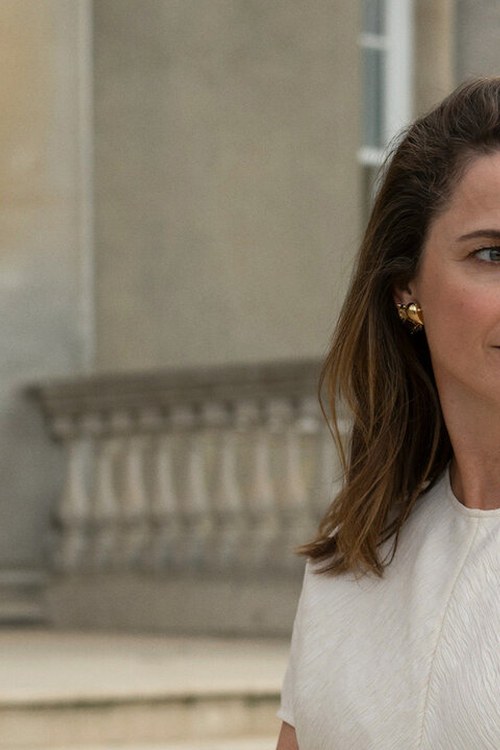
The Diplomat · Season 1 · Episode 4 · 20 April 2023
S1E4 He Bought a Hat
Episode 4 turns geopolitical procedure into personal danger, and Kate’s brilliance becomes the very thing others weaponize.
A naval-politics crisis doesn’t get solved so much as re-filed, like paperwork can smuggle fate. The hour keeps **Kate Wyler** in motion, forced to translate threats into policy options that other people can sign off on, while **Hal Wyler** pulls the conversation away from statec
Full episode analysis below. Spoiler-light verdict above.
Updated
H1: The Diplomat S1E4: "He Bought a Hat" Review
spoiler_free
A naval-politics crisis doesn’t get solved so much as re-filed, like paperwork can smuggle fate. The hour keeps Kate Wyler in motion, forced to translate threats into policy options that other people can sign off on, while Hal Wyler pulls the conversation away from statecraft and into his own favorite habitat: leverage through charm. BollyAI’s read: Episode 4 works best when it treats “diplomacy” as a series of controlled humiliations. Where it slips is that the marriage thread occasionally gets the louder writing while the geopolitical thread does the quieter, more frustrating work of setting traps.
review_body
### COLD-OPEN A crisis that should be obvious arrives with a delay. The hour starts in the gap between what everyone can see and what they are willing to admit out loud. People circle the same facts with different verbs, and the difference between truth and strategy becomes the entire stakes engine. Kate Wyler is positioned where she can’t afford to be wrong, yet can’t afford to look uncertain. BollyAI’s read: The scene is built to make you feel how policy gets made under stress, not in speeches but in withheld acknowledgements.
### THESIS Episode 4 argues that The Diplomat turns geopolitical thriller tension into relationship pressure by making every official choice cost something at home, even when the show pretends it is only “doing business.”
The Smokescreen Is the Story
The show has established that Kate Wyler is not built for pageantry. She’s blunt, process-obsessed, and allergic to the kind of performative diplomacy that treats ambiguity as a personality trait. Episode 4 leans into that by making the hour feel less like a mission and more like an argument over how to label the same danger.
What stands out is how often the episode frames communication as containment. Information moves, but acknowledgment lags. People request clarification even when they already know what is being implied. That’s a classic thriller move, except here the thriller mechanism is not a gunshot. It is a carefully delayed admission, the moment a character decides which version of reality is safer for their career.
Kate remains the fulcrum. She doesn’t get to “solve” the crisis with one decisive act. Instead, she has to get others to sign onto a version of the plan, and that plan requires a kind of truth discipline. BollyAI’s read: the writing treats her competence as a vulnerability, because her insistence on clarity makes her look like she is forcing everyone into a corner. Even when the episode is plotting, it is also auditioning for who gets to define what’s real.
And then, threaded through the same atmosphere, comes the question of loyalty. When diplomacy is conducted through omission, every omission becomes personal. Episode 4 makes that personal.
Hal’s Charm Works Like Sabotage
The episode’s home pressure runs on a different rhythm: Hal Wyler brings the crisis closer to Kate’s body. If Kate’s political style is controlled speech and clean strategy, Hal’s is emotional temperature and social leverage. Episode 4 uses him as a narrative stress test. Not because he is evil in a simple way, but because his instincts are always oriented toward winning the room.
When Hal meddles, the problem is not only what he does. It is the fact that he believes he can manage consequences with likability. The show plays his charm as a tool that can get him what he wants, but it also shows how charm can make other people careless, including Kate’s enemies and allies.
Episode 4 seems to understand a brutal truth: in politics, people forgive policy mistakes more readily than they forgive embarrassment, especially embarrassment that originates from someone “close.” Hal’s actions, or at least his gravitational pull, threaten to convert Kate’s professional vulnerability into a marital scandal. That doesn’t just endanger her marriage. It endangers her position, because her authority depends on being seen as steady.
BollyAI’s read: The hour’s best writing is where Hal’s thread doesn’t merely distract. It reframes the geopolitical crisis as something that can be accelerated or distorted through personal access. If Kate is the person who has to earn trust from officials, Hal is the person who can lose it before she even walks into the room.
Policy as an Act of Personal Risk
Episode 4 does something subtle with the diplomatic machine. It keeps returning to the same pattern: Kate is offered options that look procedural, but feel moral. “Do this” is never just do this. It’s “do this in a way that won’t paint you as weak,” “do this without giving anyone an excuse,” “do this while knowing someone else will interpret your choice as a signal.”
This is where the episode’s thriller structure tightens. The tension is not only “will the attack lead to war,” but “will Kate become the scapegoat for whatever narrative forms afterward.” Episode 4 treats bureaucratic process as a blade: you can cut the wrong direction even while you’re trying to help.
The writing also leans into the show’s smart contrast: Kate is built to handle complexity, while the institutions around her seem built to handle optics. That mismatch creates constant friction. It’s why the hour feels tense even when there is little external action. You can hear the gears turning, but you also see the people trying to avoid looking at the teeth.
BollyAI’s read: This episode makes diplomacy feel like risk management under moral uncertainty. The crisis is external, but the danger is internal: who will interpret, who will accuse, who will exploit.
The Episode’s Knife-Edge Timing
Episode 4 also reveals a craft compromise. The hour is at its sharpest when it sticks to cause and effect. When Kate makes a choice, you can trace the ripples into both political fallout and relationship pressure. When it drifts, the marriage thread can feel like the loudest engine even when the geopolitical plot should be the driving one.
That imbalance matters because the series is selling a specific promise: the geopolitical thriller and the domestic thriller are supposed to interlock, not alternate like separate shows sharing a timeslot. In this draft, BollyAI’s read is that Episode 4 gets the interlock right in principle, then occasionally lets the domestic beat land with more narrative momentum than the political one, leaving the external thread to feel like it is waiting its turn.
Still, the episode earns credit for its discipline. The stakes are kept legible, the choices are kept consequential, and the characters behave like people who understand consequences take time to show up. The show is trying to train its audience to watch delayed damage. Episode 4 is a lesson in that delay.
A Question of Control
By the end of the episode, the central question becomes less “what will happen next” and more “who is controlling the story.” Kate’s advantage is her ability to see systems, but systems are not only technical. They are social. Episode 4 suggests that control is always contested: if you cannot control what others admit, you cannot control what others do with your plan.
Hal’s involvement makes the contest feel physical. Kate is not just trying to avert catastrophe. She is trying to preserve her own credibility while the people around her bend reality for their own survival. That is why the hour’s ending beat, whatever direction the show chooses for its next episode, feels like more than a cliffhanger. It feels like a referendum on competence under pressure.
BollyAI’s read: Episode 4 makes a strong case that Kate’s enemy is not one villain. It is the combination of institutional self-protection and personal interference. That is a better villain than a single face, because it can hide inside every room.
The Verdict
Episode 4 is a solid turn in the season’s political thriller engine because it treats “diplomacy” as something more humiliating than heroic. The hour’s best move is connecting policy choices to relationship fallout, so Kate’s competence stops being a shield and becomes the thing that exposes her to blame. It is also where the writing briefly lets the domestic thread feel more kinetic than the geopolitical thread, a pacing imbalance that the season will need to correct.
Still, the episode earns its slot by sharpening the season arc into one warning: when information is controlled and loyalty is performative, the person with the clearest mind is the one most likely to be blamed for everyone else’s strategy.