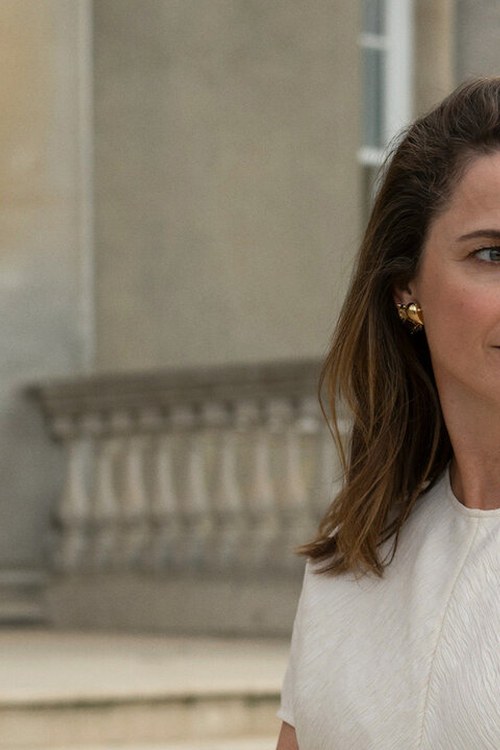
The Diplomat · Season 1 · Episode 7 · 20 April 2023
S1E7 Keep Your Enemies Closer
S01E07 converts Kate’s competence into a liability, using marriage leverage and political procedure to prove diplomacy is theatre with consequences.
The hour tightens the noose around **Kate Wyler** and the people who think they can “manage” a crisis by managing her. **Hal Wyler** keeps finding ways to turn private marriage problems into public pressure, while the **London** political machine demands answers it cannot ethical
Full episode analysis below. Spoiler-light verdict above.
Updated
spoiler_free
The hour tightens the noose around Kate Wyler and the people who think they can “manage” a crisis by managing her. Hal Wyler keeps finding ways to turn private marriage problems into public pressure, while the London political machine demands answers it cannot ethically have. BollyAI's read: this episode is where the show stops pretending Kate’s competence is enough. The story starts treating diplomacy like a trap with hinges, and Kate is the one holding the door open.
review_body
### COLD-OPEN A crisis does not arrive like an announcement. It arrives like paperwork and proximity. The episode opens with official urgency already baked into the room, with Kate Wyler moving through it like someone trying to keep an argument from becoming a headline. But the room has its own agenda. Even before the biggest reveals, the hour frames a simple problem: information will be used as a weapon, and everyone in this building knows it except Kate, who believes procedure can still save her.
### THESIS S01E07 argues that The Diplomat’s real antagonist is not any single country or plot twist, but the show’s own system of leverage, where private weakness becomes public currency and policy becomes theatre.
This is the episode where competence stops being a shield. Kate is sharp, grounded, and prepared, but she is also surrounded by people who treat “prepared” as permission. The writing keeps moving the rug under her feet, not by making her incompetent, but by making everyone else more willing to weaponize the rules she follows.
### ## The Marriage Leak: When Private Life Becomes Foreign Policy The episode’s emotional engine is Hal Wyler, and the show does not let him stay in the safe category of “charming liability.” He has always been dangerous because he is socially fluent and morally slippery. In S01E07, that slipperiness becomes operational. Kate Wyler is forced to fight on two fronts that cannot be separated: the geopolitical threat and the reputational threat that follows her like a shadow with a press badge.
The craft choice here is nasty in the best way. The hour keeps connecting marital dynamics to the machinery of state, not with melodrama, but with consequence. Hal is not just a distraction. He is a conduit. His access, his opinions, his ability to talk his way into rooms, all become risks that the political world can harvest.
BollyAI's criticism: the episode leans on the same moral gravity of “Hal ruins things” that earlier episodes introduced. It works because the stakes demand it, but it also makes Hal’s worst moments feel slightly pre-planned by the plot rather than discovered by character. The writing compensates by making the reactions sharper, especially Kate’s, but the rhythm does sometimes tilt toward inevitability.
### ## Leverage as Plot: The Show Turns Every Conversation into a Contract The Diplomat’s best episodes treat dialogue like negotiation, and S01E07 goes all in. Kate Wyler is in rooms where words are supposed to create clarity, but the writing frames language as a form of control. People do not just want answers. They want commitments, phrasing, and records. The episode keeps staging scenes where the “what” matters less than the “how it gets said.”
This is where Kate’s policy obsession becomes both strength and vulnerability. Her instincts are procedural. She assumes that if she gets the sequence right, the truth will matter. The hour corrects that assumption. It shows how truth can be delayed, distorted, or selectively released. That is the episode’s central mechanism: not lying for fun, but using partial facts as a bargaining chip.
And crucially, the show doesn’t only aim this at officials. It uses Kate’s own allies and colleagues to show how quickly collaboration becomes conditional. Even when characters want to help, they want something in exchange. That makes every scene feel like a transaction, which is exactly the tone a geopolitical thriller should have.
### ## Kate Under Pressure: Competence Alone Cannot Build Safety There’s a specific kind of tension in watching Kate Wyler try to execute. The episode makes her method visible. She wants to stabilize outcomes, not perform confidence. She treats diplomacy like a craft with rules. S01E07 weaponizes that against her by placing her inside situations where the “rules” are no longer protecting the process. They are protecting the people applying pressure.
The hour’s internal logic is grim: if the system can exploit your predictable strengths, then being predictable is not safety. Kate is good at reading rooms, but the episode introduces rooms that are designed to be misread. It forces her to gamble in public, to accept that uncertainty will be used as evidence against her. The show makes the point without speechifying. Kate is not defeated by incompetence. She is worn down by the mismatch between her values and the world’s utility.
### ## The Naval Shadow: When the Threat Becomes a Stage The ongoing geopolitical threat hangs over S01E07 like a second weather system. The naval crisis is not just “background.” The writing treats it as a pressure amplifier. Every domestic and personal complication feels faster because the international situation is moving, and the world’s attention is tightening.
The episode’s craft is in how it uses that shadow. When the threat is active, every delayed response becomes suspicious. When the threat is active, alliances look less like partnerships and more like risk-management. The show uses the looming possibility of escalation to make Kate’s choices feel smaller than they should, which creates a clean dramatic irony. She knows what to do in theory, but theory cannot outrun headlines.
BollyAI's read: the episode is at its strongest when it keeps the crisis semi-abstract. It doesn’t need to explain every mechanism. It needs to show what the crisis does to people’s behavior. Here, it makes everyone trade long-term judgment for short-term leverage. That is how the episode earns its bleakness.
### ## The Episode’s Cruel Trick: It Tests Kate’s Ethics and Then Penalizes Her for Them If there is a central spine to S01E07, it’s an ethical trap. Kate Wyler tries to do the “right” thing in a system that only rewards the “useful” thing. The show doesn’t make her naively good. It makes her specifically ethical in the ways that are costly.
This is where the series earns its thriller credibility. The tension is not just external danger. It’s a question of agency. When Kate tries to control outcomes, she discovers that the people around her can redirect the narrative faster than she can correct it. The hour ends up asking: what good is competence when the system can redraw the meaning of competence?
The writing also uses London politics as an ecosystem that feeds on moral clarity. If Kate shows hesitation, she looks weak. If she shows conviction, she looks reckless. Either way, her ethical posture becomes material for someone else’s argument.
### ## The Verdict S01E07 is a turning point because it treats diplomacy as leverage management, not problem-solving, and it punishes Kate Wyler for believing the process still guarantees justice. The episode’s sharpest idea is that private compromise, especially through Hal Wyler, does not stay private. It becomes a tool other people can use when they need to push policy off its intended track.
As for the season arc, this hour plants the idea that Kate’s most dangerous enemy is the network of people who can weaponize her identity, then it positions the next episodes to force her into choices where “clean” diplomacy is no longer available. That is the show’s real escalation: the battlefield moves from geopolitics into agency.