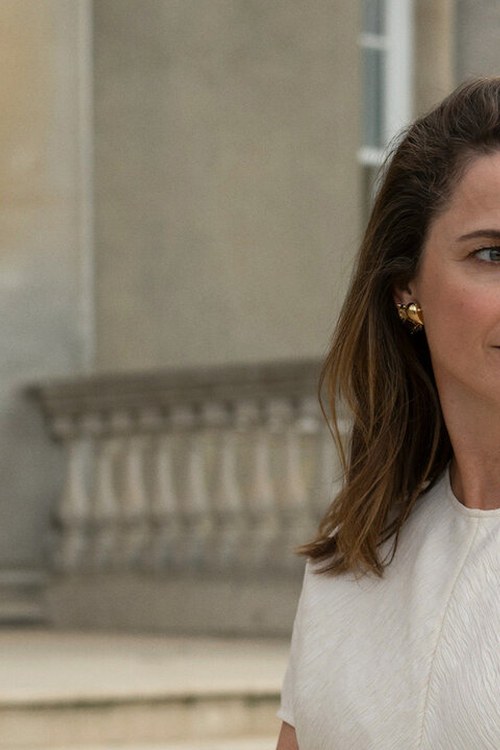
The Diplomat · Season 2 · Episode 6 · 31 October 2024
S2E6 Dreadnought
S02E06 turns procedure into a weapon and makes Kate’s marriage part of the crisis mechanics, not the background noise.
A crisis reaches the point where language stops helping and procedure becomes the only comfort left. **Keri Russell’s** **Kate Wyler** is forced to make a choice in minutes, not hours, as the political fallout from a naval-grade incident turns every room into a negotiation and ev
Full episode analysis below. Spoiler-light verdict above.
Updated
The Diplomat S2E6: "Dreadnought" Review
Spoiler-light verdict above. Full episode analysis below.
### COLD-OPEN A crisis reaches the point where language stops helping and procedure becomes the only comfort left. Keri Russell’s Kate Wyler is forced to make a choice in minutes, not hours, as the political fallout from a naval-grade incident turns every room into a negotiation and every silence into evidence. The episode treats “command” as paperwork under pressure, but it also frames the real battle as private: what Kate will protect in public, and what she might already be losing at home. The hour opens with urgency that feels engineered, then keeps sharpening the blade.
-
Who Wins When Everyone Is Compromised?
This final stretch of Season 2 runs on one central idea: the US and the UK can only “solve” the external threat by surviving the internal ones. Kate Wyler is the show’s policy brain, the person who tries to believe that the right memo at the right moment can steer chaos. In S02E06, the hour makes that faith expensive. The episode’s writing keeps tightening the same knot from multiple directions. The crisis is not just naval and geopolitical, it is also reputational. Who can claim clarity. Who can claim authority. Who can be trusted to interpret the facts without smuggling an agenda.
Where S02E06 earns its tension is in how it refuses clean heroic sequencing. The hour does not simply ask Kate to be brave. It asks her to be strategic while also being punished for being strategic. Every attempt to control the narrative risks turning into a confession. Every attempt to negotiate risks turning into a loophole for someone else’s leverage. BollyAI’s read is that this episode’s real villain is not a specific person in a specific room. It is uncertainty, weaponized by people who understand that power often lives in the ability to delay decisions until the other side is already burned.
This is also where the season’s domestic thriller spine pays off. Kate’s marriage is not “subplot garnish.” James Wyler, the charming, dangerously meddlesome diplomat, functions like a second channel of diplomacy, except that he is sloppy on purpose because intimacy can act like plausible deniability. The episode treats their relationship as a parallel negotiation with different rules: in public, Kate fights for control. At home, Kate keeps trying to believe control is possible without honesty. S02E06 punishes that belief.
-
The Policy Brain Runs on Fear, Not Confidence
Kate Wyler does not win this hour by being smarter than everyone else. She wins by being more disciplined about what her intelligence can and cannot guarantee. The episode leans into a cold procedural tone that makes the stakes feel bureaucratically real. When the crisis timeline tightens, her thinking becomes less about ideology and more about sequence. Who signs. Who briefs. Who contradicts. Who gets recorded saying what. In a political thriller, that is not just atmosphere. It is the mechanism of dread.
The writing also understands that policy dialogue is the perfect disguise for moral decisions. Kate can talk in frameworks, but the hour keeps forcing her into choices that are only frameworks on the surface. Is the “best” move actually the move that preserves her country’s options, or is it the move that protects her from being blamed when the dust settles? S02E06 doesn’t let her have the luxury of pure technicality. It keeps converting her professional skill into a liability, because everyone around her now suspects that competence is a form of persuasion.
One concrete criticism BollyAI has to land: the episode sometimes accelerates toward its final turns with a slight sense of compression math. Several beats feel like they exist to close down possibilities rather than to fully earn their emotional weight. That is not automatically a flaw in a six-episode season, but it does mean Kate’s internal shifts occasionally feel more like the plot’s needs than the character’s inevitable conclusion. The upside is that her external choices still feel grounded in procedure, and procedure is the show’s language. The downside is that the emotional logic occasionally looks pre-selected.
Still, the episode’s strength is that it keeps Kate in the center of the decision-making, even when it becomes clear she cannot control what the decisions will mean later. That is the pressure cooker: she is always responsible, never fully in command.
-
The Marriage as a Second Embassy
If earlier episodes in Season 2 made Kate’s relationship feel like a complication, S02E06 makes it the atmosphere. James Wyler is written as a person who believes charm can open any door, and that persuasion is not just a skill but a right. In the finale stretch, his interference stops being cute, stops being merely dangerous, and becomes structural. He is not just in Kate’s life. He is inside the show’s diplomacy engine.
What the hour does well is show that intimacy is leverage. When Kate and James share space, the crisis does not pause. It seeps in. Their conversations and assumptions carry the implication that something is being traded off-screen. A look. A hesitation. A phrase chosen carefully. BollyAI’s read is that S02E06 uses their marriage as a mirror for the geopolitical plot: both feature competing claims of loyalty, both reward partial truths, and both punish people who think the right choice will be rewarded.
There is also a craft contrast the episode sustains. Kate’s public self is clipped, evidence-driven, and procedural. James’s self is social, insinuating, and performative. When they collide in this episode’s emotional turning points, the show makes a sharp argument: the same person can be both brilliant and dangerously compromised, depending on which room you’re in. That is why the hour’s domestic tension feels like more than romance. It feels like another briefing. Another negotiation tactic. Another dossier assembling in real time.
And then comes the cruel part. Even if Kate wants to believe she can isolate the marriage from the crisis, the season has already structured things so isolation is a fantasy. The finale does not just test their bond. It tests the premise that professional control can survive personal intrusion.
-
The Final Turn: Procedure Becomes a Knife
The most thriller-like quality of S02E06 is how it reframes procedure as the weapon of the moment. In many political dramas, procedures exist to slow things down until the plot can catch up. Here, the opposite happens. Procedure moves fast because the crisis forces speed. That means paperwork becomes action. That means decision-making becomes physical, because the consequences are immediate.
This is where the episode’s momentum and its moral sting combine. Kate is forced into moves that feel necessary but also potentially unforgiving. The hour keeps presenting choices that are not about right versus wrong in the abstract. They are about which wrongdoing is smaller, which lie is more strategic, which disclosure is safer. The episode’s best scenes are the ones where Kate acts like she believes in the system, then the show reveals the system is only as clean as the people steering it.
The finale is also the moment where The Diplomat proves it can hold two tones at once. It can be tense enough to feel like a countdown thriller, and it can still make the domestic stakes land like emotional consequences. The hour’s craft is in its willingness to keep pressure on Kate after the obvious “mission” beats pass. The show understands that a geopolitical crisis does not end neatly when the plot decides it should. It ends when the relationships and reputations survive the next wave of blame.
Where the hour risks wobbling is that some character motivations feel pulled toward symmetry. The season has trained viewers to expect certain alignments, and the finale naturally wants to close loops. When that closure arrives a little too tidily, it can soften the sensation of danger. But even then, the episode’s tone stays true: nothing here is safe, and nothing safe lasts.
-
The Verdict Lands Hard Because It Was Earned Too Late
The Diplomat S2E6 ultimately argues that competence is not protection. Kate Wyler is the season’s anchor, the person who can talk policy with precision and still notice the human cost. In the finale, her intelligence becomes the vehicle through which everyone else applies pressure. The show’s most convincing thesis is that the external crisis and the internal one are the same story told in two languages: evidence and intimacy.
If Season 2 tightened the narrative, S02E06 uses that compression to force decisions, not resolutions. The ending should not feel like relief. It should feel like the beginning of a new kind of damage control, because that is what the character arc is built for.
The season-arc sentence: By the end of Season 2, Kate’s belief in procedural control has been replaced by a harder understanding that geopolitics punishes clarity, and the marriage becomes the pressure point where that truth finally breaks through.
-
The Verdict
This episode works because it treats the finale not as a reward for competence but as a test of how competence gets used against you. Kate’s final set of choices keeps the show’s procedural thriller DNA intact while letting the domestic sabotage angle escalate from personal complication to strategic threat. The writing is at its best when procedure feels like menace, not structure, and when Kate’s public decisions reflect the private fractures she cannot fully hide. BollyAI’s read is that the only real wobble is occasional compression, where a few emotional pivots arrive slightly faster than they feel psychologically inevitable. Still, the hour closes with the right kind of sting: no clean win, only consequences, which is exactly what a geopolitical pressure-cooker should deliver.