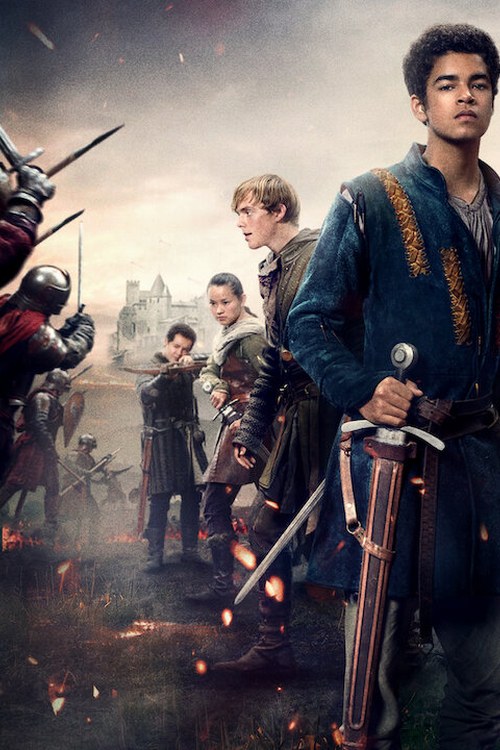
The Letter for the King · Season 1 · Episode 1 · 20 March 2020
S1E1 Storm Clouds Gather
A busy but sturdy premiere that becomes sharper once Tiuri's public trial turns into a secret mission.
THE MOMENT Tiuri makes a fateful choice inside the church vigil that costs him everything - and defines the entire series.
The premiere establishes Tiuri as an earnest underdog on the eve of his knighthood vigil before a chance encounter sets a continent-spanning quest in motion. The Dutch-English production design is handsome and the young lead likeable, even if the plotting leans on well-worn fantasy conventions.
Full episode analysis below. Spoiler-light verdict above.
Updated
The letter changes hands late, almost too late. Tiuri spends the hour being tested in public, first by training, then by status, then by the suspicion that his dream of knighthood may already be compromised. By the time Vokia tells him, "Take this letter. Take it," the premiere has stopped pretending this is only a boy's trial. The episode works best when it treats knighthood as a trap before it treats it as a prize.
The Trial Starts Before the Games
The first movement turns on a useful contradiction: Tiuri wants to become a knight on his own terms, but the world around him has already decided what he is allowed to be. The opening narration warns of a darkness that will take everything, which is heavy fantasy table-setting. The sharper beat comes smaller. Ragnall wakes someone because Master Tiuri is late and Bors is waiting. The destiny machinery is already running, and Tiuri is already behind.
That is the premiere's best early choice. Tiuri does not enter as a chosen warrior in full command. He enters under pressure. Time pressure. Family pressure. Social pressure. Arman is mocked for entering his fifteen-year-old son into the trials, which makes the knightly path feel less like a noble calling than a public gamble. The boy's ambition is no private matter. Everyone can see it, judge it, and laugh at it.
The arena material matters because it gives Tiuri a clear goal before the episode floods the board with prophecy, royalty, riders, and letters. He wants to earn the title without dishonor or fraud. That is a clean spine. The complication is that the episode is already designing a test that has nothing to do with the official one.
That split gives the hour its early tension. The formal trial asks Tiuri to perform competence in front of people who doubt him. The real trial asks whether he can hold onto his own sense of honor while every system around him turns honor into theater. The premiere is at its strongest when it understands that difference.
Royal Ceremony, Real Threat
The court sequence pushes the scale outward. Queen Alianor announces she will open the games with Crown Prince Iridian, and the premiere shifts from personal humiliation to public ritual. That pivot is necessary. The episode needs the knight trials to feel attached to a kingdom rather than a school sports day with swords.
The trouble is density. The training and court segments carry a lot of dialogue, and the episode sometimes front-loads names before the emotional hooks have settled. Queen, prince, games, darkness, Red Riders, hidden attempts, and a plan to crush anyone in the way all arrive in a tight stretch. The ambition is clear. The digestion is less clean.
Still, the Red Riders' order gives the hour a jolt. They are told to choose five and crush anyone in their way. That is useful villainy because it gives the plot a hard verb. Crush. The premiere needs that bluntness because its prophecy language keeps threatening to float above the ground. When someone later reports that an attempt to hide went wrong because "He almost took my head off," the danger gets a body. A head, specifically. Fantasy stakes work better when the threat has a blade close enough to make someone duck.
The ceremony also clarifies what Tiuri is up against. Knighthood is wrapped in pageantry, hierarchy, and royal approval. That makes it seductive. It also makes it easy to manipulate. The more polished the ritual becomes, the more exposed Tiuri looks inside it.
The Boy Who Hasn't Earned It
Tiuri's central contradiction lands around the idea of worth. He wants knighthood without dishonor, but the episode keeps pushing him into situations where others can treat his progress as unearned. That is a stronger engine than simple underdog plotting. The question is whether victory under these conditions would still mean what he needs it to mean.
The premiere uses the arena as a moral pressure chamber. Tiuri fights, but the fight is never only physical. The mockery around Arman entering him, the suspicion around whether he belongs, and the later sense that he is being used all tighten around the same wound. If Tiuri becomes a knight through someone else's arrangement, he loses the thing he is chasing.
That is why the episode's slower pauses before plot turns matter. The brief silences around major transitions give the premise room before the next order, warning, or chase barges in. When the episode trusts quiet, Tiuri becomes more than a fantasy protagonist being moved between stations. He becomes a boy trying to protect the meaning of his own ambition.
The flaw is that the hour sometimes declares the apocalypse louder than it shows Tiuri's fear of it. The personal material has texture. The cosmic material has volume. The best scenes arrive when those pressures finally collide.
The returning voices sharpen that personal angle. The father's item meant to stop them gives Tiuri a mystery that is not just about kingdoms and riders. It is about his own body and mind betraying him at the exact moment everyone is measuring whether he belongs. That private instability gives the public trial a nastier edge.
The Letter Turns Knighthood Inside Out
The late mission is the premiere's hinge. Vokia needs help to survive long enough to send the letter, and Tiuri becomes the person pulled into that urgency. The instruction is severe: tell no one and get it to the king. The proof ring turns the assignment into more than a desperate handoff. It gives Tiuri a portable burden, something that can identify him and doom him in the same breath.
This is where the episode earns its title. Until then, knighthood has been framed as something Tiuri must win through ritual. Once the letter enters, the show flips the test. Knighthood is no longer a badge awarded by observers. It is an action taken when no one useful is watching. That is a strong first-episode argument, and it gives the final chase more weight than a standard getaway.
The Red Riders' pursuit after the handoff also cleans up the premiere's rhythm. Dense talk gives way to command, motion, and panic. The offscreen pursuit ending with shouted orders to stop is a smart place to cut the hour's breath short. It leaves Tiuri inside the mission before he has had time to understand it.
The open loops are properly planted: whether he can deliver the letter to King Favian in Unauwen, whether the Red Riders get it, and what the returning voices mean. The father's item adds a private mystery to the public mission, which is the double pressure this story needs.
The key is that Tiuri's public goal becomes useless the moment the letter changes hands. The trial he prepared for cannot help him. The witnesses who mattered in the arena cannot protect him. The rules he wanted to follow have been replaced by secrecy, danger, and a command that allows no explanation. That reversal gives the premiere its shape.
The Verdict
"Episode 1" is a sturdy, busy premiere that finds its best shape in the final act. The early court and training material carries too much explanation at once, and the darkness prophecy is less interesting than Tiuri's immediate fear of becoming a knight in the wrong way. But once Vokia gives him the letter and the proof ring, the hour sharpens. The trial he prepared for becomes irrelevant. The trial that matters begins in secret, under pursuit, with silence as part of the command. As a season starter, it plants enough danger, mystery, and personal contradiction to justify the ride to Unauwen.