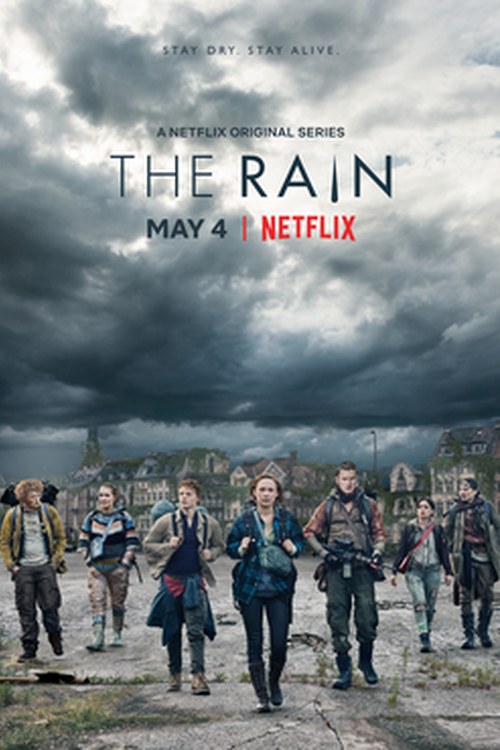
The Rain · Season 1 · Episode 1 · 4 May 2018
S1E1 Stay Inside
A tense bunker opener turns obedience into survival, even when its middle stretch lets the pressure leak.
THE MOMENT The rain falls and the warning broadcast cuts out - the apocalypse rendered as a small, terrifyingly domestic moment.
The premiere establishes the catastrophe with compact, unsentimental efficiency - the rain begins, the bunker seals, and the audience is inside with the siblings before the full horror is explained. The Scandinavian landscape carries its own menace before the virus mythology arrives.
Full episode analysis below. Spoiler-light verdict above.
Updated
The first order is simple. Dad tells Simone to go home and stay there. Rain is coming, news reports connect heavy rainfall in Vordingborg to symptoms, and the family is pushed underground before the hour has finished explaining its disaster. The bunker cleanses bodies, locks doors, issues commands, and turns safety into a room with no horizon. BollyAI's read: "Stay Inside" works best when it treats survival as obedience. It loses some edge whenever it pauses to explain the machinery behind that fear.
Safety Becomes a Locked Door
The premiere's cleanest idea sits in the title. Stay inside. The command arrives early, then keeps changing shape. At first it sounds parental, with Dad telling Simone, "Go home and stay there." Minutes later, it becomes institutional, carried through bunker systems and emergency warnings. By the time the directive says "STAY INSIDE," the episode has turned a domestic instruction into law.
That escalation gives the hour a sturdy spine. Rasmus wants the one thing the episode refuses him: outside. The danger is invisible enough to feel unfair, which matters. Rain is ordinary. Doors are ordinary. A child wanting air is ordinary. The show uses that normality well, because the horror does not begin with a monster entering the room. It begins with a family accepting that the room keeps them alive.
The bunker ritual sharpens the point. "Stand still while you're cleansed" is a chilling line because it makes protection feel like processing. Bodies must be managed before they can be saved. The premiere does not need to decorate the beat. A child in a sealed space. A command to stay still. A threat falling from the sky.
The hour works best when it keeps the rules blunt. Rain outside. Children inside. Dad absent. Mom trying to hold the panic down. The more direct the command, the more frightening the world feels.
Simone Learns the Weight of the Button
Simone is the episode's best anchor because her wants are clear and practical. She wants to find Dad. She wants to keep Rasmus alive. She wants the radio to work. None of that plays like abstract heroism. It is task after task, the kind that gives a disaster pilot forward motion without pretending the character already understands the world.
The radio beat matters because it lets Simone move from trapped daughter to active survivor. When she identifies herself and Rasmus over the signal, the episode opens a thin thread out of the bunker. The line is small, almost procedural, but the effect is large. Simone has stopped merely receiving instructions. She is sending one out into the dark.
That is where the hour begins to reveal its central pressure: responsibility has arrived before knowledge. Simone has enough information to be terrified and too little to make confident choices. Dad designed the bunker as protection, but his absence turns that protection into a puzzle. Mom wants calm and safety inside, but her death outside removes the last adult in the room. The children inherit systems they did not build.
The button logic is effective. Doors, overrides, radios, broadcasts, bunker protocols. Every action has a mechanical surface and an emotional cost. Simone trying to open doors during the emergency override near the end lands because the show has spent the hour making doors feel like moral decisions. Open one, and help might arrive. Open one, and death might step in with wet shoes.
The Outside Keeps Pulling
Rasmus gives the premiere its necessary friction. Without him, "Stay Inside" risks becoming a chamber piece about perfect obedience. With him, the bunker becomes a pressure cooker. He wants to check what is out there. Simone insists it is too dangerous. He goes anyway.
That contradiction is the hour's most human beat. Rasmus is not wrong to want proof. The adult world has collapsed into commands, warnings, and absences. Dad is missing. Mom is gone. The radio offers hope, then uncertainty. For a child, the door represents danger, but it also represents evidence. The episode understands that curiosity can be reckless without making it feel false.
The line "There's nothing out there" cuts hard because it arrives after the show has trained Simone and Rasmus to treat outside as a possible answer. A hospital pick-up location, radio contact, rescue attempts, emergency systems. The premiere keeps dangling pathways beyond the bunker, then stripping them down. At this point, outside remains a space the children cannot read.
This is also where the episode strains. The middle containment phase leans on information delivery, and the waiting stretches do not always carry the same charge as the early rush or the late emergency beats. The silence and despair matter, but the hour occasionally lets the bunker become a holding pattern rather than a tightening trap. The idea is strong. The tempo wobbles.
Grief Arrives Before the Rules Are Clear
Mom's death is a harsh structural choice because it removes comfort before the survival plan has settled. She is positioned as the person who wants Simone calm and safe inside. Once she is outside and gone, the episode stops being a story about children obeying parents and becomes a story about children managing the aftermath of adult decisions.
That is smart pilot construction. Dad's urgency brings the family into the bunker, but his absence leaves questions in his place. What exactly is the illness carried by the rain? How is it supposed to be stopped? Who is meant to guide the children through transitions between bunkers? The episode plants those questions cleanly because they are immediate survival problems, not lore decorations.
The repeated crying for help after an opened door gives the hour its most direct emotional language. No elegant speech. No grand explanation. Just voices asking for help in a place built to deny access. The bunker protects by refusing, and the episode keeps returning to that cruelty. Safety here has no bedside manner.
That is the premiere's strongest dramatic bargain. Every system that saves Simone and Rasmus also isolates them. The show does not need the rain onscreen at every moment. Once the children believe in it, every wall carries the threat.
The Verdict
"Stay Inside" is a solid, grimly efficient opener with one strong central rule: survival requires surrendering choice. The episode is sharp when it lets commands, doors, and radio static do the work. Simone's shift from protected daughter to forced decision-maker gives the hour a clean emotional engine, while Rasmus's need to step outside supplies the friction the bunker story needs.
The weaknesses are real. The midsection spends enough time delivering information and holding despair that the pressure dips before the late emergency override pulls it tight again. Still, the premiere plants its open loops with discipline: Dad missing, Mom gone, the rain unexplained, and the next bunker looming as a promise and a threat. As a season launch, it earns curiosity by making containment feel like action.
"The Rain offers a potent mixture of enticing mystery, propulsive action, and fascinating characters that aren't easy to pin down."
Collider