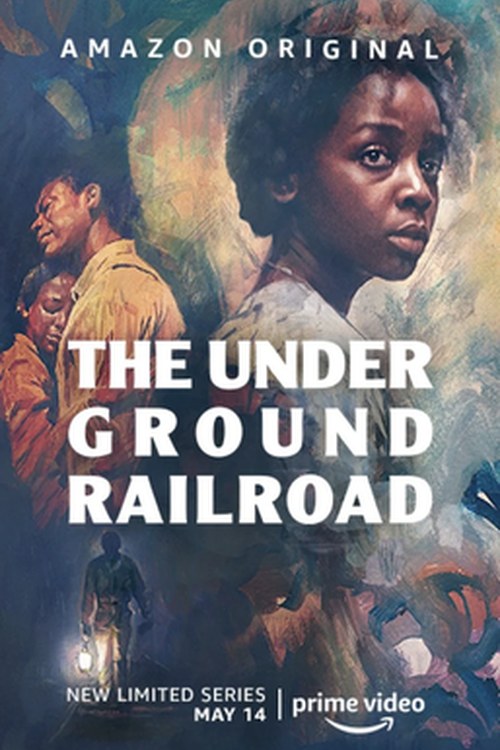
The Underground Railroad · Season 1 · Episode 1 · 14 May 2021
S1E1 Georgia
A brutal, ordered premiere where escape begins only after the plantation has made its logic impossible to unsee.
THE MOMENT The underground station emerges from earth as a real, functioning piece of infrastructure - Jenkins commits fully to the book's central metaphor and the image lands with extraordinary force.
The opener establishes the Randall plantation's quotidian brutality with documentary precision before Cora's escape transforms the episode into something visionary. Jenkins's camera holds on faces and spaces longer than comfort allows. The final thirty minutes introduce the railroad's fantastical conceit with no apology.
Full episode analysis below. Spoiler-light verdict above.
Updated
Cora begins with an inheritance so small it barely qualifies as one: apologies from her mother. That line gives “Georgia” its organizing wound. Caesar asks her to come north, yet the episode refuses to treat escape as a clean act of courage. It first maps the machinery that makes staying unbearable: literacy made dangerous, public ritual turned into threat, sex turned into policy, land reorganized to tighten ownership. BollyAI’s read: the premiere’s power lies in its order. It spends nearly an hour making the plantation a system, then makes the railroad feel less like magic than paperwork with a pulse.
Apologies as an Inheritance
The opening note about Cora’s mother matters because “Georgia” treats memory as something physical. Cora does not enter as an abstract symbol of endurance. She enters as someone already handed abandonment, explanation, and damage in the same breath. Caesar’s proposal, then, cannot play like a simple heroic invitation. When he asks her to leave with him, the episode places a dangerous idea in front of a woman trained to distrust gifts.
Caesar’s confidence has a different texture. He wants movement. He presses Cora to go north, then later speaks for them in the manifest. The hour lets that urgency push the plot, while keeping Cora’s resistance sharper. She refuses the idea that luck has protected her. Her history on the plantation is not sad background pasted onto an escape plot. It is the argument for escape.
That distinction gives the episode its spine. Freedom is not framed as a dream floating somewhere above Georgia. It is a practical answer to a life where even hope can sound like a trap. Cora has to be convinced, and the episode never makes her hesitation look weak. It makes it look learned. That choice is crucial. Her delay is not a narrative obstacle. It is a record of what bondage has taught her to fear.
The Plantation Makes Its Law Public
Terrance understands performance. His cruelty is administration with an audience. When he orders Jockey to bring forward a boy who can recite the Declaration, the scene turns American language into plantation theatre. The fear around that recitation is immediate because the words are never allowed to belong to the person saying them. Knowledge here does not protect. It exposes.
That is why Cora showing she can read lands with such charge. The identification of the book as Gulliver’s Travels gives the moment a strange, precise edge: imagination and travel exist on the page while the body remains controlled in the field. The episode does not over-explain the irony. It lets the contradiction sit there, sour and plain.
The early dialogue’s short exchanges help. The rhythm is clipped, suspicious, crowded with half-spoken danger. People talk as if every sentence could be overheard, misused, punished. The writing’s strongest move in this stretch is its refusal to separate intellect from risk. Reading is not a decorative sign of inner life. It is evidence. In Terrance’s world, evidence can become a sentence.
The public staging also clarifies the plantation’s social design. Power has to be seen. Terrance’s authority depends on turning every person nearby into witness, warning, or example. That is why the scene feels larger than one man humiliating one captive audience. The ritual teaches everyone where language is allowed to live and who can be punished for touching it.
Breeding as Policy, Terror as Administration
The hardest turn in “Georgia” is the way it connects bodily violence to plantation planning. A forced sexual assault sequence begins with voices reducing a person to limbs and compliance. The horror comes from the act and from the logic around it. Soon after, Terrance announces the end of north and south parcels and declares a single plantation. Control of land and control of bodies are placed in the same sentence of power.
His language gives the game away. Terrance speaks of “the propagation of the best stock,” and the ugliness is the point. He is not losing control when he says it. He is explaining the system as if it were reasonable. The episode pins him there: he wants obedience to look orderly while his order depends on dehumanization, punishment, and forced reproduction.
Cora’s refusal to be bred like cattle is the cleanest moral line in the hour. It does not soften the sequence. It gives her flight an exact target. She is running from a world where a man can turn violation into policy and call it management.
That specificity matters. “Georgia” does not reduce the plantation to generalized cruelty. It shows how cruelty gets scheduled, named, justified, and folded into property decisions. The episode’s violence is difficult because it has a purpose inside the system being depicted. Terrance does not need chaos. He needs rules that make domination sound efficient. The premiere understands that, and it keeps returning to procedure as the language of terror.
Silence Turns Flight Into a Ledger
The episode’s pacing changes once escape stops being an idea and becomes a process. The early scenes move through tight exchanges, but later passages make room for longer silences. That shift matters. “Georgia” understands that terror does not always arrive as noise. Sometimes it arrives as waiting, walking, listening, entering a space where the next instruction might save you or expose you.
On the railroad, Caesar provides names and Cora explains her Virginia and Georgia background. The manifest is a sharp structural device because it makes freedom pass through documentation. Names must be given. Histories must be spoken. Identities must be organized at the threshold of escape. The scene has motion, but it also has bureaucracy, which gives the underground passage a grounded strangeness.
Cora and Caesar speaking about scars that will never fade keeps the hour from mistaking movement for healing. The train can carry bodies away from the plantation. It cannot erase what the plantation has already written into them. That is where the episode earns its gravity. The railroad offers direction. It does not offer amnesia.
The image also works because the premiere delays it. By the time the machinery appears, the show has made the world above feel mapped, watched, and regulated. The underground space is wondrous, yet the manifest keeps it from floating away into fantasy. The bureaucracy gives the marvel weight. Even escape has an intake process.
The Escape Opens More Doors Than It Closes
As a premiere, “Georgia” is smart about what it leaves unfinished. The manifest does not settle whether Cora and Caesar will reach freedom. It sharpens the question. The wanted bulletin about a girl accused in the murder of a child adds another thread of danger, suggesting official language will follow and reshape the escape narrative. The uncertainty around Lovey keeps the cost of flight present after the railroad arrives.
This is also where the hour shows a small weakness. Caesar’s early insistence has force, but the episode gives Cora the richer interior contradiction. His urgency moves the story, while her refusal, fear, and self-definition carry the emotional weight. That imbalance does not break the premiere, though it makes him feel more functional in the opening stretch than he needs to.
Still, the construction is strong. The episode does not rush to the wonder of the railroad. It makes the ground above it unbearable first. By the time the escape machinery appears, the image has earned its charge. The train is not a release valve for the episode’s brutality. It is the next stage of danger, with new rules and new records waiting at the platform.
The Verdict
“Georgia” is a punishing, controlled premiere that argues through structure. It begins with inheritance, moves through public cruelty, exposes forced reproduction as policy, then turns escape into a record of names and scars. The craft is strongest when it lets systems reveal themselves through procedure: a recitation, a book, an announcement, a manifest. Its one notable limitation is Caesar’s thinner shading beside Cora’s more precise wound, but the hour gives their flight moral and dramatic force. As the season’s opening chapter, it plants clean questions without pretending the first train ride can solve the damage that made it necessary. BollyAI’s read: 8.8 out of 10.
"Momentous, rhapsodic film-making that pushes television to places it has never been."
Daily Telegraph