1899 · Season 1 · Episode 8 · 17 November 2022
S1E8 The Key
A smart, crowded hour turns the ocean into a lie and makes Maura’s exit feel personal, coded, and unstable.
The episode ends the puzzle by making it personal. The ship does not just drift toward answers. It drags every character’s need to be right behind it, then asks what remains when “meaning” stops working.
Full episode analysis below. Spoiler-light verdict above.
Updated
Alfred enters the hour as a fear before he becomes an idea. Someone worries he will be trapped. The child’s answer cuts cleaner than the warning: how can she watch him grow? That is the cruel hook of “Episode 8.” Escape has moved past corridors, hatches, and keys. The fight now runs through memory, code, and ownership. Maura says Eyk is her husband and the boy found on the Prometheus is her son. The episode’s sharpest move is making that sound less like a revelation than a system error speaking in a human voice.
The Prison Learns to Smile
The hour opens by framing captivity through care. Alfred should not be trapped in a prison, yet the next question is intimate, almost domestic: how can she watch him grow? That pairing matters. “Episode 8” is strongest when it understands that the simulation’s horror does not need a monster in the doorway. It needs a promise that sounds like protection.
That idea returns when a voice claims the mother fooled everyone and says she can get them out. The line plants a slippery offer. Liberation comes from the same world enforcing confinement, so every promise of exit carries infection. The episode keeps pressing that contradiction. The force trying to keep someone inside also talks in the language of rescue. Forgetting becomes the prison’s lock. Staying becomes its reward.
This is where Maura gives the hour its spine. Her claim that Eyk is her husband and that the boy from the Prometheus is her son turns mechanics into damage. The episode is packed with explanation, but this beat lands because it ties the reveal to a relationship, not a diagram. Maura is chasing a family shape the simulation has broken, rearranged, and fed back to her as mystery.
The Ocean Gives Up the Act
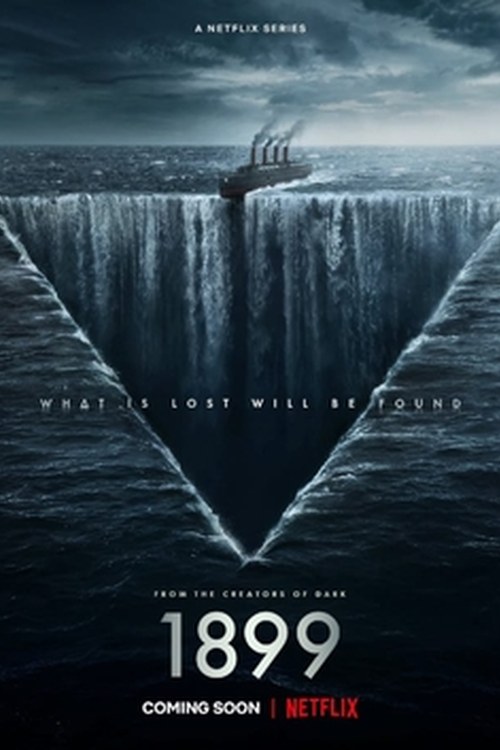
The bluntest reveal is also the necessary one: the ship is not real, and the ocean outside is not real either. That rewrites the visual contract of the series. The voyage has always carried dread because a ship at sea has nowhere to hide. Here, the dread sharpens because the sea itself becomes part of the trap. The horizon stops promising distance. It becomes wallpaper with teeth.
This is the hour’s cleanest conceptual escalation. The episode attacks the premise under everyone’s feet. Once the ocean is false, every earlier act of navigation looks newly pathetic. Running, searching, steering, waiting for rescue, all of it belongs to a game whose board was lying from the start.
The weakness sits beside the strength. The truth-reveal stretch is dialogue-heavy, and urgency sometimes turns into verbal traffic. Characters need to say what the world is, what it was, and what it has become, and the episode stacks those exchanges close together. The information matters, but the delivery occasionally sands down the shock. A false ocean is a huge image. The hour explains it when it should let the image breathe.
The Body Remembers the Lie
The smartest rule in “Episode 8” is that deleted memories do not erase bodily response. Someone warns that even when memory is wiped, the body still reacts to triggers. That gives the episode a way to make trauma functional without reducing it to exposition. The characters may lose access to the story, but the story keeps access to them.
It also helps the episode escape a common simulation trap. If everything can be rewritten, nothing matters. If the body still reacts, the rewrite has limits. Fear, recognition, pain, and instinct become residue the system cannot fully clean. The hour needs that rule because it is surrounded by unstable objects: false ships, false oceans, hacked architecture, changed code, corrupted structure. In that chaos, the body becomes a witness.
Maura’s push toward the exit gains weight under this rule. She is not asking everyone to trust a clean memory. She is moving through damaged signals, trying to separate trigger from truth before the system buries them together. The episode’s emotional logic works best here. It understands remembering as a physical revolt against control.
The Code Starts Swinging Back
Once Sir says someone hacked the mainframe and is changing the simulation’s architecture, the episode shifts from revelation to sabotage. That is the right escalation. The hour has spent enough time explaining the prison. Now the prison starts changing shape while people are still inside it.
The code-change beat gives the final act its pulse. The simulation is corrupted, and that corruption becomes the episode’s weather. The action and sabotage cluster that follows has a different rhythm from the earlier explanation scenes. The show stops drawing the map and starts tearing holes in it.
Still, the pacing is uneven. The episode runs from dense truth exchanges into dense system-crisis beats, leaving limited room for silence to do its work. A story this dependent on identity and memory needs pauses where a revelation can bruise. “Episode 8” sometimes moves on before the bruise darkens. That momentum keeps the hour tense, but it also makes a few emotional turns feel processed rather than lived.
The brother’s control remains a live danger because the episode frames him through speed and access. If he can change the architecture, escape is a race against a puzzle being rewritten under everyone’s hands.
A Ring Where the Key Used to Be
The wedding ring holding the exit code is a sharp final object because it collapses the hour’s systems and bonds into one image. A ring carries intimacy and code. It belongs to Maura’s personal truth, and it belongs to the machinery trapping her.
That swap also deepens the problem of the earlier tools. The pyramid and key have lost their certainty, and the episode leaves a pointed question behind: how will the ring work if the previous instruments are useless? It is a good unresolved beat because it asks whether the idea of a door still means anything inside a corrupted simulation.
The episode also keeps the doors uncertain after the truth is shown. That is useful tension. Too much of the hour explains, but this part withholds cleanly. Where are the doors? What changed after the truth arrived? How fast can the controller be stopped? Those questions give the ending an engine.
The ring is the hour’s best final metaphor. The exit is no longer hidden in a cold device alone. It sits in something tied to vow, loss, and identity. For a show built on false rooms, that is a strong place to put a door.
The Verdict
“Episode 8” is a strong, overloaded closer to this leg of 1899’s puzzle. Its best ideas have force: a fake ocean, a body that remembers what the mind loses, a prison that sells itself as rescue, and an exit code hidden in a wedding ring. The hour earns its score when those ideas collide through Maura’s need to recover truth before the simulation rewrites the ground again. It loses force when characters explain too much in tight clusters, especially across the truth-reveal and sabotage stretches. The result is tense, clever, and cramped. As a season-arc movement, it pays off the ship’s unreality while planting sharper questions about control, corrupted code, and whether escape can survive a system changing its own rules.