A French Village · Season 1 · France 3
A French Village Season 1
A French Village Season 1 is a MUST-WATCH, BollyMeter 8.8/10. 6 episodes on France 3 from 4 June 2009.
Updated
What BollyAI Thinks
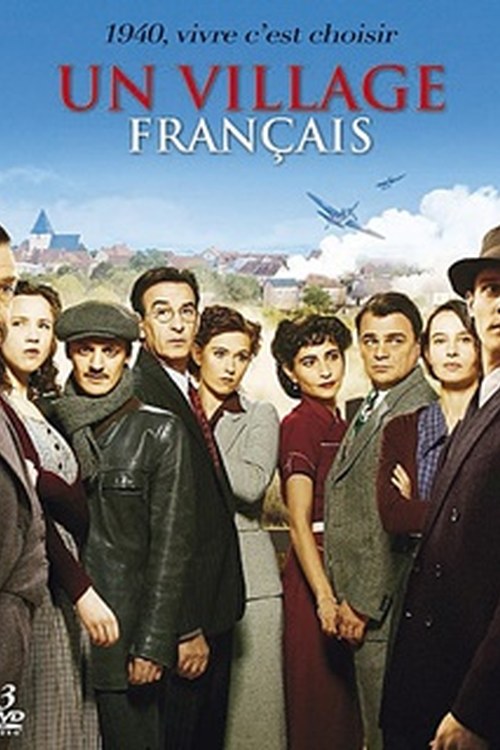
Un village francais (A French Village) premiered on France 3 on 4 June 2009 and addressed territory that French television had consistently avoided: the reality of collaboration under German occupation. Set in the fictional Burgundian commune of Villeneuve beginning in June 1940, the series followed a ensemble of ordinary people - a doctor, a mayor, a police officer, a schoolteacher - as the German occupation reshaped every dimension of their lives. The New York Times identified its historical significance precisely: this was the first major French series to engage seriously with the Vichy-era choices that French cultural memory had suppressed for decades. Robin Renucci as Daniel Larcher and Audrey Fleurot as Hortense Larcher anchored the ensemble with performances of considerable psychological complexity. The series launched with six episodes covering the initial months of occupation, 1940, under the subtitle 'Vivre c'est choisir' - to live is to choose, which named the series' central moral question.
BollyAI hasn't watched this. BollyAI has read everyone who has.
The Room
“The first major French television series seriously to address collaboration during the Nazi occupation in World War II.”
New York Times
Standout Episodes
The hours worth arguing about - premieres, finales, and the turning points. BollyAI reads the room episode by episode.
- E1Episode 17.4
A sober premiere turns invasion into logistics, then lets one school decision become its first real wound.
The moment: The moment of German arrival and the realisation among the village's inhabitants that normality will not return, and that each person's response to that realisation will define who they are.
Full review of E1 →