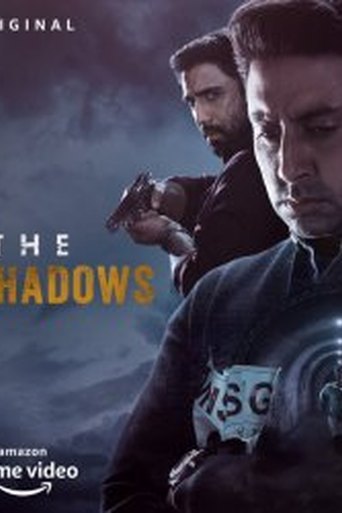
Breathe: Into the Shadows · Season 1 · Episode 5 · 10 July 2020
S1E5 Episode 5
A 270-second silence proves ambition but not momentum, and the episode's best ideas surface too briefly to land.
A 270-second opening silence - no dialogue, no movement, just the drag of anxiety stretched past comfort - announces the episode's ambition. What follows tests whether a thriller can sustain its dread through stillness alone. The quietest passages work; the connective tissue between them sags. The episode understands that silence can function as suspense, but it mistakes duration for intensity,...
Full episode analysis below. Spoiler-light verdict above.
Updated
For four and a half minutes the screen holds nothing but the suggestion of a room and the sound of someone breathing. No dialogue, no movement, just the slow drag of anxiety stretched past the point of comfort. When a show dares a 270-second silence, it is either showing off or it has run out of story. This hour tries both, and the result is an episode that understands suspense as a physical state but forgets that stillness still needs a direction.
The episode builds a case for patience as a weapon. Kabir steps inside the investigation, Siya searches a darkness that refuses to yield, and the Ravan myth is laid out as the killer’s moral architecture. The pieces are there. What keeps this hour from landing is a rhythm that mistakes withholding for depth and a central search that circles the same failure too many times.
The Silence That Outstays Its Welcome the episode drops into a 270-second stretch of near-total stillness. BollyAI’s read: the gamble is bold, and for the first minute it works. A long silence after a frantic sequence makes the dread physical. But past the two-minute mark, the frame offers no new information, no shift in threat, no deepening of character. It is a held breath that forgets why it was held.
This is the episode in miniature. It knows how to build a tense surface but struggles to fill the space beneath it. The beats between the silences are dense with dialogue, particularly the Ravan discourse that gives the killer a philosophical spine. But the connective tissue, the sense of forward motion, keeps dissolving into darkness.
Siya’s Search and the Missing Screw
Siya is instructed to point a torch in all directions and check a dark area for a missing screw. She fails repeatedly. The dossier registers this as a character contradiction: she wants to locate it but cannot see. The hour leans hard on this failure, stretching it across several beats, and the effect is more frustrating than tense.
A search scene works when the audience learns something with each pass. Here, Siya’s blindness becomes a loop. The torch sweeps, the screw remains hidden, the dread does not escalate, and the episode does not offer a new angle on her desperation. BollyAI’s read: the scene needed a revelation, or at least a narrowing of possibility, to earn its repetition. Instead it becomes a waiting room for the plot.
The Ravan Philosophy as Motive
A character explains, “That is the philosophy! Why Ravan?” The episode uses the demon-king’s mythology to frame the killer’s anger and lust, linking them to a moral corruption that justifies the crimes. This is the most interesting beat the hour offers, and it arrives early, around the two-minute mark.
The Ravan discourse gives the killer a coherent inner logic, something the season has lacked. But the episode does not press the metaphor. It states the philosophy, nods at its importance, then shifts to the investigation’s procedural gears. BollyAI’s read: when a show finally names its thematic spine, it should not treat that moment as a box to check. The Ravan thread deserved to echo through the hour’s silences, not drown in them.
Kabir’s Double Game
Kabir wants inside police information to catch the killer and joins the investigation himself. The contradiction is clear: he risks exposure to gain access, a move that could compromise the entire hunt. The episode plants this decision early, and the tension of his dual role simmers under every subsequent police beat.
The problem is the episode rarely puts Kabir in a moment where that exposure feels imminent. He moves through the investigation asking questions, but the stakes of his presence are told rather than dramatised. The long silence might have been a perfect space to isolate him with a near-discovery, yet the stillness is given to atmosphere instead of character. The episode keeps the fuse dry.
The Race to Shiv Teela
The hour closes its forward momentum on a plan to reach Shiv Teela before sundown. A location is named, a deadline is set, and the pursuit finally gains a shape. This is the cleanest writing the episode manages, transforming the earlier directionless urgency into a concrete destination.
BollyAI’s read: the Shiv Teela beat does what the missing screw search could not. It gives the audience a clear objective and a ticking clock. The episode earns this pivot after a long stretch of narrative drift. But the hour asks the viewer to wait too long for the plot to remember itself.
The Verdict
The episode’s central insight, that a long silence can be a form of suspense, is undercut by its own execution. The craft is there in the quietest moments, but the connective tissue between them sags. The Ravan philosophy and Kabir’s double role are promising threads that the hour introduces without fully weaving into the fabric.
BollyAI places this episode as a transitional gear-shift that understands the sound of dread better than its shape. It keeps the season moving toward Shiv Teela, but it moves with a limp. A 6.5 feels honest: the hour has a spine it trusts too little, and a silence it trusts too long.