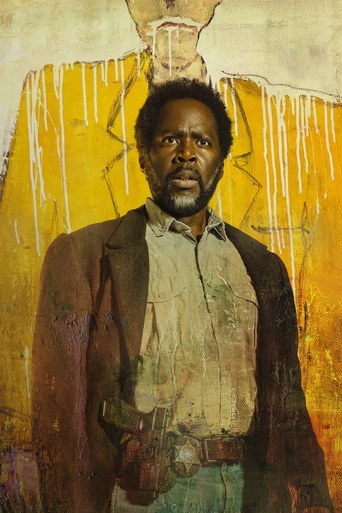
From · Season 3 · Episode 8 · 10 November 2024
S3E8 Thresholds
“Thresholds” makes safety feel contractual, and the hour’s best scares come from choices that invite the town closer.
THE MOMENT Julie finally naming what the ruins did to her: ever since I woke up, I hear people screaming. And it won't stop.
The episode opens on a small domestic act with big supernatural gravity: someone chooses comfort, closes a door, and the air around that decision turns wrong. The room does not get safer after the latch clicks. It gets quieter. Not peaceful quieter, but listening-quiet, like the
Full episode analysis below. Spoiler-light verdict above.
Updated
From S3E8: "Thresholds" Review
Spoiler-light verdict above. Full episode analysis below.
### COLD-OPEN The episode opens on a small domestic act with big supernatural gravity: someone chooses comfort, closes a door, and the air around that decision turns wrong. The room does not get safer after the latch clicks. It gets quieter. Not peaceful quieter, but listening-quiet, like the town is holding its breath and waiting for you to notice what you just invited in. “Thresholds” makes the case fast. The horror is not only in what comes through. The horror is in what your hands decide counts as “safe.”
The Episode Turns Every Door Into a Contract
This hour’s thesis is simple and mean: “Thresholds” treats every boundary as a moral test, and the scariest monsters are the ones you cooperate with. The episode keeps cashing that theme through small actions. Someone walks up to safety and instead of ignoring the sound, they bargain with it. The show’s best horror trick is that it makes the supernatural feel like a bureaucracy. There are rules, but the rules are not just for survival. They are for consent.
Donna has already spent this season rewriting the town’s meaning like an indictment. Here, her attention shifts from “what happened” to “what people are still doing with what happened.” Her presence is about accountability, but the writing gives her accountability with texture, not speeches. She keeps bumping into that same question the town loves: if you know better, why do you still act like you do not?
Victor anchors the emotional math. He is not a plot device here. He is the episode’s reminder that memory can be a trap as much as it can be a map. In earlier stretches, the show used his fragments like clues. In “Thresholds,” it uses them like pressure. The past is still being used against the people in the present, and Victor keeps trying to decide whether that use can be stopped by saying the right thing at the right time.
Elgin and Fatima (as a pair, even when the episode splits them for pacing) are where the “contract” idea gets teeth. The episode doesn’t just ask whether you stay inside. It asks whether your hope will let you open up to something that calls itself help. The show’s horror is at its sharpest when it makes “wanting” feel dangerous.
Pacing as a Weapon: The Town Learns Your Habits
Most mystery thrillers build suspense by hiding answers. “Thresholds” builds suspense by watching patterns. The town responds like it has read the characters the way you read a lock. The episode uses that to create a very specific kind of dread: you can feel the episode studying your expectations. It sets up a moment that looks like a normal escalation, then it lands on the quietest possible wrongness. Not a jump scare, a posture shift. People act like the rule still applies to them. The town disagrees.
The most effective craft move is the episode’s rhythm. It gives you a beat of procedural clarity, then it slides a human complication underneath it. You get the sense that everyone is trying to manage a system, and the system manages them back. The writing leans into the horror of routine. If you have lived in a trapped town long enough, you start treating the trap like weather. That is when it gets dangerous, because you stop treating it like a threat.
Tabitha and Jim are not just “leads” in this hour. They are the episode’s nervous center, the ones the show uses to ask what “escaping” even means when the environment has learned how you decide. Their scenes carry that season-long insistence that hope is not free. It has terms. The episode keeps circling those terms: where your mind goes when you think you have earned a breakthrough.
Threshold Logic: Fear Is Choice, Not Accident
“Thresholds” makes an uncomfortable point and then refuses to soften it: fear is not only something you feel. It is something you do. That applies to opening doors, to speaking truths, to trusting the wrong signal. The hour works because it keeps attaching the supernatural to agency. When a character hesitates, the hesitation is not portrayed as weakness. It is portrayed as leverage. The town uses the pause to ask, “Will you choose the boundary or will you cross it?”
This is where the episode’s seasonal DNA shows. Season 3, by the show’s own pattern, has been shifting from lore-delivery to consequence-delivery. The episode feels like part of that pivot. It does not simply add new rules. It makes the older rules hurt more, because now you can see how personal they are.
Donna is written as someone who has already decided to stop being passive. But “Thresholds” refuses to reward her with clean control. It keeps putting her in situations where her instincts are right and still insufficient. She can see the trap. The trap still works because survival is not just knowledge. It is timing, restraint, and sometimes saying no when your body wants yes.
Victor gives the emotional counterweight. His “truth” is not always comforting. Sometimes his truth is just another door. If you step through it, you get a different kind of danger. The episode understands that memory is not a neutral record. It is a living thing that the town can exploit.
The Door-Slot Moment That Makes the Title Mean Something
A good horror episode earns its title by making the word feel physical. “Thresholds” does that by structuring its most memorable beats like crossings. The episode does not treat these crossings as plot checkmarks. It treats them like moments of consent.
Even when the specifics are murky in a casual watch, the architecture is clear. A character approaches a boundary with a familiar need. They think the boundary exists to protect them. Then the episode makes the boundary behave like a living rulebook with teeth. That is the terror here. The town does not just punish disobedience. It punishes assumptions.
That is why the hour’s emotional turns land. When Elgin and Fatima share space with the town’s logic, the writing makes the supernatural feel like it is negotiating through their vulnerabilities. “Thresholds” is not afraid to show tenderness as dangerous when it becomes an invitation.
And the episode’s closing movement, in keeping with the show’s pattern, is not merely a cliffhanger. It is a statement about the season’s stakes. The town is not just keeping people. It is testing whether the people can be kept from within.
The Betrayal of Timing: When Truth Arrives One Beat Too Late
To be fair, the episode has one consistent weakness: it leans hard into dread at the cost of some clarity. Not confusion in the “mystery” sense. Clarity in the cause-and-effect sense. A couple of decisions feel more like momentum choices than consequence-earned choices. The episode is at its best when it makes you feel the weight of agency. It is slightly less convincing when it asks you to accept that the town got what it wanted simply because the scene needed to escalate.
That criticism is not a dealbreaker, but it is the one place “Thresholds” shows the seams of its pacing strategy. The hour wants you to experience dread as inevitable, and when the characters react with perfect sensitivity, the inevitability starts to flatten the drama. The town’s power is believable. The timing of how quickly it demonstrates that power can feel a touch pre-scripted.
Still, the episode earns its emotional residue. “Thresholds” does not just ask you to fear the monster at night. It asks you to fear the moment you decide what counts as safe.
The Verdict
“Thresholds” is a craft-forward horror episode that turns the show’s central idea, the trapped town, into something more intimate. It makes the boundary itself the antagonist. Doors, promises, confessions, and even memories become the mechanism of control. The episode’s strongest work is how it links supernatural rules to human consent, so the scares feel like consequences instead of accidents. The weakest part is that a few escalation beats arrive with momentum first and cause-and-effect second, briefly softening the episode’s logic.
Season-arc payoff lands in the same direction as the whole season: less hoarding answers, more forcing characters to live with what they now understand. This hour pushes that by making “crossing” the point, not just escaping.