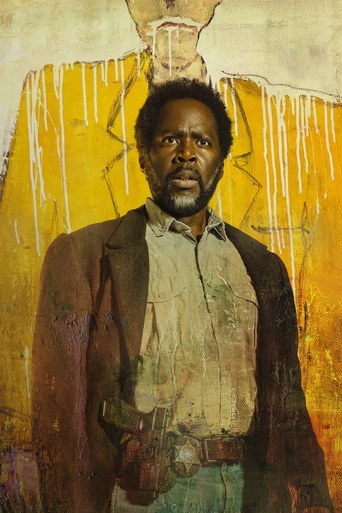
From · Season 3 · Episode 9 · 17 November 2024
S3E9 Revelations: Chapter One
This hour cashes out confession like currency. Truth does not free anyone, it triggers the town’s logic and tightens the noose.
THE MOMENT Victor swinging an axe at the bottle tree and the Boy in White appearing with one instruction: do not cut down that tree.
A man drags a confession across a room full of shadows, trying to make truth sound like mercy. It never does. The hour locks onto what people say when escape is no longer possible, and it treats every spoken name like a key turning in the wrong lock. The town does not punish lies
Full episode analysis below. Spoiler-light verdict above.
Updated
From S3E9: "Revelations: Chapter One" Review
Spoiler-light verdict above. Full episode analysis below.
### COLD OPEN A man drags a confession across a room full of shadows, trying to make truth sound like mercy. It never does. The hour locks onto what people say when escape is no longer possible, and it treats every spoken name like a key turning in the wrong lock. The town does not punish lies. It punishes unfinished admissions. And the closer the characters get to the sentence they have been avoiding, the more the night feels like it has been listening back.
### Spoiler-care line Spoiler-light verdict above. Full episode analysis below.
Who This Hour Makes You Fear More Than the Monsters
BollyAI’s read: this episode is less about uncovering a single “big secret” and more about proving that the town feeds on the gap between what characters know and what they can finally say. The title sounds like a start. The episode plays like a rule. Every revelation is framed as an ethical act, not just a plot one, and the horror comes from how expensive the truth becomes once it leaves the mouth.
This is also why the hour lands with a specific kind of dread. Donna has spent the season acting as the town’s rough conscience. She doesn’t “solve” the mystery. She enforces the survival contract. Here, the enforcement turns inward. The show keeps asking what Donna’s authority is actually guarding, and whether it is covering grief or channeling it. Victor is the season’s other fulcrum, and this hour uses him like the series uses its symbols: as a human filing cabinet of warnings. But he does not hand out a clean myth. He gives language the town can weaponize.
Then there is Julie, positioned between past and future in a way the show never fully lets you forget. Her arc is often about signals and patterns, but this episode makes the pattern feel personal. The monster problem is always surface-level for From. The deeper problem is that characters keep bargaining with information. They want answers that do not cost them anything. “Revelations” refuses to play that game.
Confession as Currency, Not Catharsis
The episode’s sharpest choice is structural. It treats confession like currency that can be spent, stolen, or refused. This is not the cozy kind of truth-telling where everyone exhales. It is the kind where the room changes temperature the moment you commit to what you have been trying not to name.
BollyAI’s read: the writing in this hour focuses on the moment a character stops negotiating with their own guilt. That negotiation is the real monster. When Donna tries to hold things together with rules, the episode shows the limit of that method. When Donna’s certainty starts to look like a costume, the show makes her face the emotional invoice she has been postponing. The horror is psychological in the same way a lock is mechanical. You cannot out-think it once it snaps shut.
Victor’s contribution is the opposite rhythm. His revelations do not arrive as exposition dumps. They arrive as fragments assembling under pressure. The show’s memory grammar is what makes him important. He is not the “wise” character. He is the character forced to remember on behalf of everyone else, which means every recall is also a burden. The episode lets Victor’s admissions land without giving them comforting closure. He says enough to sharpen the threat, not enough to make it conquerable.
The hour also leans hard on the season’s craft promise: dialogue built on confession. The show stops hoarding explanation and starts paying its emotional debt. That is the season-level evolution, and this episode is where it becomes visible in the writing’s tempo. Scenes do not just advance plot. They advance moral positioning. Who is willing to say what? Who is trying to control the shape of the truth? Who is asking for answers like they are medicine?
The Town Answers Back: Revelations That Don’t Set You Free
From has always used the town as an active participant, but this hour makes the interaction feel more literal. Revelations here do not function as exits. They function as triggers. The town does not reward clarity. It exploits it. The episode turns the act of knowing into a form of vulnerability.
This is where Julie becomes essential, because her arc is built on interpretation. She is used to receiving signals and trying to decode them into something survivable. But in “Revelations: Chapter One,” the series makes decoding feel dangerous. The more she connects pieces, the more the town seems to adjust its behavior around that connection. Her fear is not just of monsters in the dark. It is of becoming correct in a system that punishes correctness.
Meanwhile Victor and Donna embody two forms of agency the town cannot tolerate. Donna represents practiced resistance, a belief that structure can hold back chaos. Victor represents narrative control through memory, a belief that if you preserve the story, you can prevent the repeat. The episode argues that the town does not fear resistance or memory. It fears the moment the humans stop hiding behind either.
And that is why the hour feels like it is bracing for something worse than a creature. The dread comes from the sense that the town has a logic, and human admissions give it better material than fear ever could.
The Craft of Escalation: Small Truths, Sudden Weight
“Revelations” doesn’t escalate with spectacle. It escalates with emphasis. The pacing tightens around words and silences, and the episode’s tension comes from how long it takes for people to commit to the confession they already know they need to make.
BollyAI’s read: the episode is careful about where it places its urgency. It does not shove exposition into every scene. It builds pressure by repeating emotional postures: deflection, denial, the half-said sentence. Then it cashes that pressure out when a character finally chooses between self-protection and honesty.
This choice is the craft. The hour uses restraint to make each revelation feel heavy. When the show allows a character to speak the thing they have been avoiding, the scene stops being about the past. It becomes about the present consequence. That is why this feels like “Chapter One” rather than a standalone answer. The title promises a sequence, and the episode respects that by revealing enough to change the tone, not enough to solve everything.
There is also an honest friction in the writing that keeps it from feeling like pure momentum. Some turns arrive with the clarity of a delayed exhale. That can make the suspense feel slightly traded for momentum, because the episode chooses certainty over prolonged doubt. It lands emotionally, but it shortens the runway for tension in a few places, as if the hour is more interested in paying the confession debt than in extending the suspense lease.
The Season-Arc Payoff: This Is the Episode Where the Show Stops Flinching
Season 3, as a whole, feels like the show finally started grading itself. Craft gets sharper. Dialogue gets more deliberate. Where earlier seasons treated the mystery like a sealed vault, this season treats it like a bill coming due. “Revelations: Chapter One” is aligned with that shift.
Donna’s growth through grief, Victor’s movement from warning collector to truth-teller, Julie’s interpretive burden. They all converge on one idea: the town is not only supernatural. It is relational. The horror is what happens when communication becomes impossible, or worse, when it becomes weaponized.
This episode uses confession to connect character arcs to the larger system. It makes the town’s “logic” feel less like a puzzle box and more like a mechanism that runs on human denial. The more characters stop pretending, the more the mechanism responds. That means the revelations do not exist for the viewer’s satisfaction. They exist because the story needs the characters to stop bargaining with their own survival.
The Verdict
BollyAI’s score is based on craft, not reception. This episode earns its “Revelations” label by treating truth as a hazardous substance. The writing tightens around confession, and the hour’s best scenes show that the town does not defeat people with claws. It defeats them by making honesty cost more than fear. The one flaw is timing: a few revelations arrive with the certainty of a conclusion rather than the tension of a question, which briefly shifts suspense into momentum. Still, the episode’s emotional architecture fits the season’s direction, and its “Chapter One” structure signals that the full payoff is staged, not dumped. If season 3 is about paying what it owes, this is the installment that hurts in the right places.