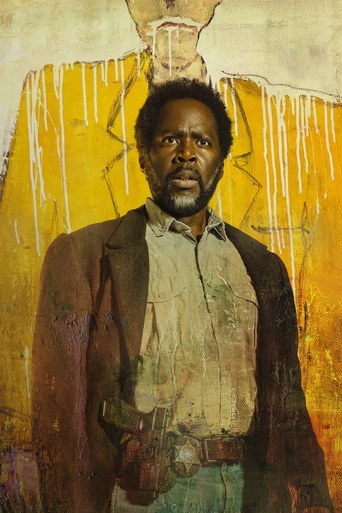
From · Season 3 · Episode 10 · 24 November 2024
S3E10 Revelations: Chapter Two
The finale treats confession as force, not comfort, turning hard-earned truth into an immediate, punishing choice.
THE MOMENT The reveal at 55:42, the season's whole architecture in eleven words. The fandom argued about it for a year; the line itself is delivered almost gently.
The hour opens on a confession that does not feel like relief. It feels like a door being forced open from the inside. Someone finally says the sentence they have been avoiding all season, and the air in the room changes. Not because the truth is comforting, but because it makes
Full episode analysis below. Spoiler-light verdict above.
Updated
From S3E10: "Revelations: Chapter Two" Review
Spoiler-light verdict above. Full episode analysis below.
### COLD-OPEN The hour opens on a confession that does not feel like relief. It feels like a door being forced open from the inside. Someone finally says the sentence they have been avoiding all season, and the air in the room changes. Not because the truth is comforting, but because it makes the rules visible. When the episode pivots into its final chapter mode, the writing stops asking who will survive the night and starts asking who will survive what the story demands they admit.
### ## The last confession is also the trap By the time Victor, Donna, and Ethan (the episode’s emotional center of gravity) collide with the season’s overdue answers, “Revelations: Chapter Two” is not interested in tidy payoff. BollyAI’s read: this episode treats revelation like a physical object, heavy enough to bruise the people who hold it.
The season has trained everyone to treat truth as something you ration. This finale flips that behavior. It makes truth the thing you cannot control, so the characters react like they are being robbed, not enlightened. Donna’s long role as the town’s operating system becomes the clearest indicator. She is not just a protector. She is a person who has been carrying a methodology built on loss. When that armor is called what it always was, the show stops letting leadership equal certainty. Her confrontation does not “solve” the threat. It names the human cost of living inside a machine.
And Victor is the emotional hinge. He has always been the keeper of fragments, the person whose knowledge came late and came sideways. Here, his narrative function changes from witness to translator. BollyAI’s point: the hour earns its tension by making the most important information arrive as speech, not spectacle. The episode trusts the horror of language. Saying the wrong sentence can get you killed, but refusing to say any sentence at all gets you used as fuel.
### ## A town that answers back The episode’s structure behaves like a conversation that turns into a courtroom. It is not a random pile of clues. It is an argument organized around consequence. Ethan and Victor provide the human scale for that, while Donna functions as the adult version of the same question. What do you do when the thing you thought you were controlling is actually controlling you?
“Revelations: Chapter Two” also makes a smart choice about what kind of horror it wants at the end. Instead of leaning purely on monsters, it leans on the mechanism that lets monsters keep their job. Every answer points back to the town’s rules and the people’s habits. That is why the final minutes feel less like escalation and more like accounting. The episode revisits what the settlement is built on: rituals, boundaries, and the quiet assumption that endurance equals victory.
BollyAI’s honest criticism: the episode can feel briefly overpacked with “important” information, especially as multiple strands converge at once. When the hour piles too many revelations onto the same emotional beat, some of the tension turns into comprehension. You start to understand, then immediately have to understand the next thing. The show corrects course by ending on action that is grounded in character, not in plot convenience. Still, the middle stretch asks the audience to carry the weight of several answers without enough breathing room between them.
### ## The show finally pays the cost it has been hiding S3 as a whole has shifted from scavenging clues to spending them. This finale is where that shift becomes visible. BollyAI’s read: the episode is less interested in “who figured it out” and more invested in “who had to pay for figuring it out.”
That is the craft reason the confessions land. They are not exposition dumps. They are admissions of what grief looks like when it becomes policy. Donna is the clearest embodiment of this. She runs the town like someone who cannot afford to be wrong, yet the story keeps revealing that her certainty was never about proof. It was about survival through routine. When the episode reframes her armor as grief that learned to speak, it makes her leadership feel tragic instead of heroic.
Victor, meanwhile, pays with selfhood. His relationship with truth is the show’s metaphysical question in human form: does knowing change the maze, or does the maze change the knower? In “Revelations: Chapter Two,” the answer is uncomfortable. The town does not care whether Victor’s facts are correct if the facts do not lead to a different kind of choice. That distinction is the hour’s spine. Knowledge alone is not a key. The key is what you do after you accept the thing you feared was true.
### ## Pacing as a weapon: revelation, then rupture This is where the episode’s craft choices show up in the stopwatch. The writing builds toward revelations with a sense of pressure, then releases that pressure in sharp bursts. BollyAI’s point: the episode uses rhythm to mimic the town’s threat. You get a moment of clarity, then the show yanks the ground away.
The opener confession functions like a match. After that, the hour treats dialogue as a countdown. When multiple characters speak with urgency, it reads as convergence, but the episode never forgets that the characters are still afraid. The fear is in the body language and in what is avoided. Even as truths are stated, the show keeps asking whether anyone is actually ready to live inside those truths.
The last act is the payoff, but it is not a clean victory. The “chapter two” framing signals continuation, and the hour leans into that. It resolves some questions, then turns others into new problems. That is good storytelling in a series like this, because “From” thrives on the feeling that the town is always a step ahead. The finale sustains that feeling by ending on rupture, not on closure.
### ## A finale that argues for a harder kind of hope Under the supernatural machinery and looping roads, the episode’s real thesis is about hope as labor. BollyAI’s read: “Revelations: Chapter Two” does not believe in hopeful endings. It believes in hopeful behaviors.
That is why the emotional center is not a single big twist. It is the pattern of confession transforming into responsibility. Donna stops being a symbol and becomes a person who has to choose what her grief will do next. Victor stops being only the storehouse of history and becomes the translator of consequence. Ethan grounds the stakes in the kind of innocence that is already complicated by knowledge.
And the show keeps the horror honest. The smiling creatures, the open door, the forest’s secret. This finale does not need extra monster beats to make the point. It makes the point through rule recognition. The town does not win because it is stronger. It wins because it turns people into predictable versions of themselves. The episode’s best moments fight that predictability by forcing character choices that cost something immediate.
The Verdict
“Revelations: Chapter Two” is a finale that earns its title by treating truth like a physical pressure, not a trivia prize. It delivers the season’s overdue sentences through confession, reframing leadership, knowledge, and grief as interconnected survival systems. The hour’s strengths are structural. It paces revelations like threats, then lets action land as a response to what the characters admit. BollyAI’s honest critique is that the episode occasionally compresses multiple important understandings too tightly, risking momentum loss between beats of comprehension. Still, the last act pivots back to character-centered rupture, and that keeps the horror meaningful. As a season-arc closing step, it pays the cost of waiting and plants the next question: when the town demands honesty, what does it take to choose a different ending?