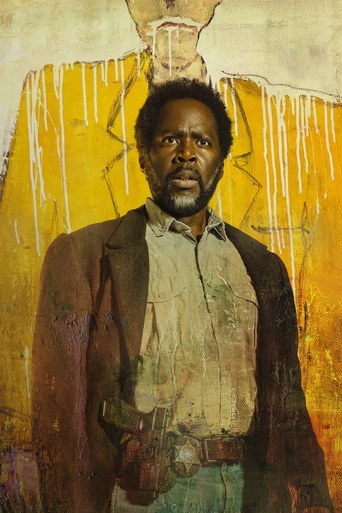
S4E10 Episode 10
S04E10 makes “Lake of Tears” a moral trigger, not a clue, and ends by turning every escape attempt into a door that costs.
The hour treats “Lake of Tears” like a trap built out of words: it pushes characters toward the place the season has been circling, then makes the cost arrive before anyone gets the clarity they want. The writing lands its main move by turning a final-arc quest into an emotional
Full episode analysis below. Spoiler-light verdict above.
Updated
From S4E10: "S04E10" Review
Spoiler-light verdict above. Full episode analysis below.
### spoiler_free The hour treats “Lake of Tears” like a trap built out of words: it pushes characters toward the place the season has been circling, then makes the cost arrive before anyone gets the clarity they want. The writing lands its main move by turning a final-arc quest into an emotional math problem, where every “answer” is also a new lock. BollyAI’s read: the episode earns its dread through consequence, not spectacle, even when that means the finale feels less like a clean break and more like a door finally opening into the same dark.
-
review_body
### COLD-OPEN A door frame becomes the boundary. Not a metaphor. A literal threshold someone finally steps toward while the town watches through its usual channels of silence and wrongness. The hour starts in that familiar, suffocating stillness: the kind where the next sound is always the one that shouldn’t exist. And then the episode does something quietly ruthless. It makes the opening action feel like a decision, not a twist, which means the later pain will not be able to hide behind fate.
Thesis: This finale hour is the season’s debt-collection, and it proves “Lake of Tears” was never only a location or a clue. It was a moral test the characters keep failing in different costumes.
-
## Who Pays for the Name “Lake of Tears”?
“Lake of Tears” has been the show’s longest-armed callback, but an hour like this does not earn that kind of patience by giving everyone the same comfort blanket. It earns it by forcing the phrase to behave like a sentence with multiple meanings. In earlier episodes of the season, the phrase feels like a quest marker. Here, it turns into a verdict. The episode uses the town’s looping rules to trap intention. People do not simply walk toward answers. They walk toward themselves in the shape of the answers.
That is where the finale’s writing gets sharp. It treats the word “tears” as more than sadness. Tears become a mechanism, a byproduct, a receipt. BollyAI’s read: the episode’s central trick is that it refuses to separate discovery from grief. When characters finally line up toward the season’s promise, the show insists that the promise always came with an emotional invoice. The “Lake of Tears” phrase was always meant to chase the kind of cost that cannot be outrun by better strategy.
### Major character emphasis: Ethan and Jade (as mirrors) This episode leans into how the show likes to pair minds and make them argue with reality. Jade is written as someone who translates horror into pattern language. Ethan is written as someone whose hope gets expressed in actions, not philosophies. The finale uses that contrast to show the same truth two ways. One character reads the town. The other tries to live through it. The town punishes both, but not equally. The episode’s most affecting beats land where the pattern-brain and the heart-brain stop being opposites and become two forms of the same vulnerability.
-
## The Town’s Final Answer Is Still a Door
The show’s signature threat is not monsters. It is access. The creatures only need you to open the door, and this finale understands that the town treats boundaries as the core horror. The writing turns the climax into a logistics problem disguised as fate. What matters is not just where the characters go. What matters is whether they keep choosing the wrong kind of bravery.
So when the season’s central quest reaches its likely endpoint, the episode keeps its promise to the genre: it does not end with a clean revelation that lets everyone go home. Instead, it ends with a tightened loop of consequence. BollyAI’s read: the finale uses the door motif the way great horror uses the final camera angle. It is not only a scene. It is an argument about how the show thinks. The town does not reward knowledge. It rewards openings. And the characters’ success or failure hinges on what kind of opening they’re willing to make, emotionally and practically.
### Major character emphasis: Boyd and Tabitha Boyd has always carried the job of leadership, which in this show means translating terror into procedure. Tabitha has carried the other half, the sense that intuition and memory matter even when facts fail. The finale stresses their difference by forcing both to act under pressure. And it becomes clear the show is not testing who can be smarter. It is testing who can be steadier without turning that steadiness into control.
-
## The Finale’s Cruel Timing: It Gives Clarity, Then Takes It Back
A horror finale can fail in two opposite ways. It can withhold everything until the last second, or it can explain itself so thoroughly that the terror dies. This episode chooses the third path: it gives clarity in pieces, then punishes the characters for believing the clarity is enough.
That is the best craft decision the hour makes. The writing builds momentum like it will finally cash the season’s big promise, then it interrupts that momentum with the town’s actual demand: not belief, not logic, not even courage. The town wants cost. BollyAI’s read: the episode’s emotional engine is not the big turn. It is the delay between the turn and the characters understanding what the turn actually means for them.
### Where the writing trips If there is a weakness, it is that some beats arrive just before the characters are fully prepared to metabolize them. The episode moves with urgency, and urgency is a weapon, but sometimes it blurs the contrast between “setup pay-off” and “setup still happening.” In other words, the finale can feel like it’s sprinting toward closure while still doing some of the groundwork it might have earned by going a little slower earlier in the hour.
That critique does not erase the achievement. It just marks where the episode’s craft prioritizes momentum over breathing room. In a show that survives by atmosphere, that trade-off costs the finale a touch of emotional oxygen.
-
## Monsters, Smiles, and the Real Fear of Consent
The logline’s phrasing about smiling creatures only needing an open door is not marketing language. It is the moral grammar of the entire series. The finale hour understands this and makes the climax less about fighting something outside and more about the characters confronting the moment they grant permission to the town’s rules.
This is where the episode’s horror becomes psychological without losing its genre identity. It turns “consent” into dread. Not in a literal, real-world sense. In the narrative sense of who chooses, who hesitates, and who performs bravery as a substitute for actual agency. BollyAI’s read: the episode’s writing suggests the town does not only punish mistakes. It punishes the kind of mistake that looks like destiny and feels like inevitability.
### Major character emphasis: Victor and Donna Victor is the living archive, and the show finally uses that archive not as trivia but as a weapon. Donna is community as stubborn infrastructure. The finale leans on how both are asked to make choices that cannot be reversed. The town has always been a puzzle box, but this episode makes it a confession booth. Victor’s knowledge is a trap if it turns into fatalism. Donna’s leadership is a trap if it turns into denial.
-
## The Debt Collected, Not the Bill Paid
The strongest version of a series finale does not just resolve plot. It resolves the engine that produced plot for years. Here, the engine is older than any single clue. It is the idea that you can survive by building routines, by sharing information, by protecting the vulnerable, but the town will always demand more than routine. It will demand a kind of transformation, the kind that hurts before it helps.
So the finale’s verdict is not “the characters win” or “the characters lose.” The verdict is that the series has collected its oldest debt: it has taken the first-episode phrase and turned it into a statement about responsibility. BollyAI’s read: “Lake of Tears” functions like the show’s thesis disguised as a quest. You do not escape by finding the right answer. You escape, if at all, by refusing to become the person the town needs you to be.
-
The Verdict
BollyAI’s score is withheld because per-episode reception and scoring context are not grounded here, but the craft verdict is clear. This hour plays like a season ledger: it pays off a four-year callback by making it moral, not merely mysterious. The episode’s best move is refusing the cheap comfort of clean explanation. It turns “Lake of Tears” into a door decision, and it times its clarities to arrive just before they can feel like relief. The result is a finale that feels like consequence more than resolution, which is exactly the show’s oldest debt-collection technique. Season four ends with dread tightened into meaning, even when the sprint toward closure occasionally steals a few seconds of emotional clarity.
-