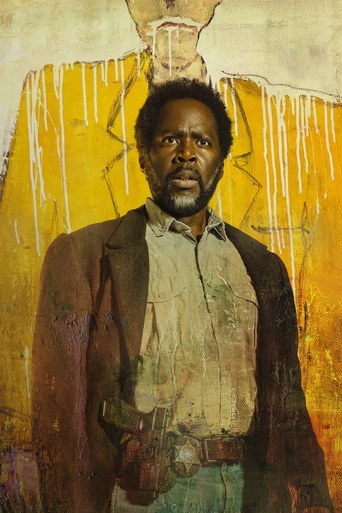
From · Season 4 · Episode 9 · 21 June 2026
S4E9 The Calm Before
The Calm Before is FROM at its most precise: patient enough to let you love everyone before it takes the door away.
THE MOMENT In the tunnel, crowbar finally under the slab, five words arrive in the wrong voice: 'You know, you really shouldn't be doing that.'
Preparations are complete. The plan is in motion. Farewells are said without anyone admitting that is what they are. Something has been waiting for exactly this moment.
Full episode analysis below. Spoiler-light verdict above.
Updated
FROM Season 4 Episode 9 Review: The Calm Before
Spoilers ahead for FROM Season 4 Episode 9, "The Calm Before."
"The Calm Before" understands that panic is not always FROM's most frightening register. Sometimes the nightmare sharpens when everyone becomes competent. Fatima has a heart rate of 19 beats per minute and still walks through the world like biology has been quietly fired. A daylight creature has crossed Chloe's talisman line, stolen Ethan's drawings, and killed Jim. Boyd answers with the only sentence the episode needs: "We're getting those fucking bones." BollyAI's read is simple: "The Calm Before" is built on a single horror principle - the most frightening thing FROM can do is let everyone prepare precisely and tenderly while a counter-operation runs in the background, also precisely, also tenderly.
Preparation As A Form Of Terror
The genius of "The Calm Before" is that it stages readiness like a curse. This is not an episode about the town flailing. It is about the town aligning itself into purpose: ropes, ladders, chains, shutters, assignments, contingency conversations, grim faces lit by the knowledge that morning has to mean something. That precision is what makes the hour sickening. FROM has always loved confusion, but this episode finds something colder than confusion: organization in a place that may have already accounted for organization.
The episode opens with impossibilities stacked like evidence. Fatima's 19 beats per minute is not just a creepy medical detail. It is the body becoming an argument against reality. The creature entering Chloe's house in daylight, passing the talisman, stealing Ethan's drawings, and killing Jim announces that the rules have not merely changed. They may have been bait all along. So when Boyd decides the answer is to retrieve the bones, the line lands less like bravado than a man forcing a shape onto chaos.
That is the episode's bleak elegance. Every practical action carries emotional weight. Every emotional scene has operational value. There is almost no wasted motion. The community prepares because preparation is the only dignity they have left. The show, in turn, makes that dignity terrifying by cutting against it with the sense that something else is also preparing. Not louder. Not faster. Not more dramatically. Just better hidden.
The title is not ironic in the cheap sense. The calm is real. The tenderness is real. The competence is real. That is exactly why it hurts. FROM spends the hour letting human beings behave at their best, then quietly suggests that the town's enemy may be doing the same.
The Bottle Tree Becomes A Faith Crime
The Bottle Tree has never felt more like a sacred object than when the episode decides it might need to be destroyed. Victor learns it will come down and reacts with the panic of someone watching adults smash the last remaining altar in a ruined church. The Boy in White told him it was important. For Victor, that is not trivia. That is scripture. He physically tries to intervene, and the sight of Boyd handcuffing him to the station is one of the episode's crueler images: a child survivor, aged into a man, shackled because the adults have finally chosen action over omen.
Tabitha's argument is brutal because it is correct in the only way FROM allows anyone to be correct. "We don't know who the Boy in White is or what he wants." That sentence punctures seasons of instinctive trust. It does not prove the Boy in White is evil. It does something more sophisticated: it makes faith procedurally unsafe. Victor is not foolish for clinging to the dream. Tabitha is not heartless for questioning it. The episode traps both positions in the same room and lets neither win.
Boyd's earlier plea to the Man in Yellow at the Bottle Tree deepens the spiritual ugliness. "There are good people here. Get these people home." No thunderclap. No answer. No bargain. Just the silence of a system that may not recognize goodness as leverage. Boyd is not negotiating with a villain here. He is addressing a structure, and the structure does not blink.
That is why the Bottle Tree sequence feels less like a plan than a sacrilege performed under necessity. FROM makes destruction seem both logical and obscene. Victor in the cell, still holding the dream, becomes the episode's moral splinter. If the plan works, perhaps he was wrong. If the plan fails, perhaps everyone else has just helped the town amputate something it needed to survive.
The Guilty Go Below, The Children Stay Above
Tabitha insisting that only she and Jade go into the tunnels is the episode's sharpest act of narrative judgment. The talisman shows two figures, and she reads that sign not as invitation but as indictment. "We're the ones who failed to save those children." That is not hero language. That is penance language. FROM has always been strongest when its mythology is inseparable from guilt, and here the descent is framed as a moral payment rather than an adventure beat.
Boyd's acceptance matters. He has every reason to force himself into the mission. He is the town's reflexive shield, the man who tries to stand between horror and everyone else until his body starts keeping the score. But Tabitha's point cuts through him: Boyd's kids are above ground. This is not his debt in the same way. The episode makes him step back, and in doing so gives him one of his harder choices. Command, for once, means not going.
That restraint echoes in his scene with Kenny. Boyd benches him by invoking Kenny's own previous plea: "You asked me to stand down when I wanted to test the totem. I'm asking you to stand down now. Please." It is smart continuity, but more importantly, it is emotional accounting. FROM remembers that leadership is not just orders. It is the weaponization of trust, history, and love when no clean option remains.
The toast with the last of Father Khatri's bourbon is almost unbearable in its quietness. The show does not need to overplay it. The bottle itself carries the dead into the room. The gesture says what the episode keeps saying: the living prepare with the help of the lost, while never knowing whether memory is anchor, trap, or both.
Possession Learns To Whisper
The episode's counter-operation has a face, and it is chilling precisely because it does not behave like a monster trying to impress anyone. Sophia, the entity inhabiting a body, reveals a constraint that instantly reorganizes the threat map: "I can only take the form of people who have died here." That is a clean rule, and clean rules in FROM are dangerous because they invite tactical thinking. The town is making chains. The entity is clarifying grammar.
Her coercion of Clara is the hour's most elegant horror beat. It is not theatrical possession, not a screaming set piece, not a body-breaking circus. Sophia threatens violence, gets Clara to give her hand, and the violation happens with awful neatness. Quiet. Precise. Almost polite. The episode understands that a soft-spoken monster can be more frightening than a roaring one when the monster already knows the plan.
That last detail is the blade: Sophia knows only Tabitha and Jade are going into the tunnels. She wants Clara as an operative. This is the counter-operation made visible, but not fully exposed. The humans believe they are narrowing the variables. The enemy has been narrowing them too. It has watched, learned, selected, and moved a piece into position.
This is where "The Calm Before" most strongly proves its thesis. Tenderness and precision do not belong only to the survivors. The evil here is not chaotic. It is not merely hungry. It can wait. It can speak in rules. It can choose the right person, apply the right pressure, and leave almost no blood on the floor. FROM's horror has often come from what is outside the house. Here, it comes from the realization that the house's interior logic may already be compromised.
The Night Works With Its Eyes Closed
The communal night preparation is the episode's most beautifully cruel stretch. Rope ladders and chains are made while the creatures gather outside. The shutters stay closed. Work continues. The town does not defeat fear. It outworks it for a few hours. That is a very FROM kind of courage: not clean, not triumphant, not even especially hopeful, just stubborn enough to keep tying knots while the dark presses its face to the walls.
The music choices sharpen the contradiction. "Que Sera Sera" appears around the five to six minute mark as communal underscore, turning preparation and last conversations into something like a doomed village ritual. The song's fatalism could have been too cute in a lesser episode, but here it becomes poisonous because the characters are doing the opposite of surrendering. Whatever will be, will be. But they are still building the ladder.
Later, Jackson Browne's "Doctor My Eyes" plays over the night vigil, and the title alone feels viciously apt in an episode obsessed with seeing and not seeing. The town can see the creatures outside. It cannot see the operative inside. It can see the Bottle Tree. It cannot see what breaking it will invite. It can see Fatima's impossible vitals. It cannot yet see what the impossible body means.
The Fatima scene with the "family remedy" herbal drink belongs in this same atmosphere of domestic menace. The insistence that she drink it fresh turns care into pressure. The show plays it quietly, which is exactly right. Boyd telling Kristi privately that the best thing they can do is get Fatima out, and that tomorrow has to work, is not optimism. It is triage disguised as hope. The whole town is doing that now.
The Voice Under The Stone
Morning arrives with the clean geometry of a ritual. The Bottle Tree is chained. The surface crew is ready to pull. Tabitha and Jade descend into the tunnels. The episode does not rush this because the slowness is the point. Every prepared element from the night before becomes part of a single held breath. Above ground, force. Below ground, guilt. Between them, a tree that may be map, lock, lure, or wound.
The burial site and giant rock slab are perfect FROM objects: simple enough to understand physically, impossible to trust mythologically. Tabitha and Jade begin prying with crowbars, and the rock starts to lift. On a purely mechanical level, the plan is working. That is the terrifying part. "The Calm Before" does not end with failure announced from the heavens. It ends at the exact moment human effort appears to be making progress.
Then the voice arrives: "You know, you really shouldn't be doing that." Then: "Jade..." Cut to black.
The essential detail is that this is not Jade speaking. The register is wrong entirely. Polite, watching, waiting. Not panicked. Not improvised. Not human in the way the scene needs human to sound. The final voice belongs to the episode's other operation, the one that has been moving in parallel while the town mistook preparation for initiative. It is the sound of being expected.
That ending works because it does not simply spring a surprise. It confirms the hour's design. While Boyd prayed, Victor resisted, Tabitha assigned guilt, Kenny stood down, Fatima was tended, Clara was compromised, and the town tied its ropes, something else was arranging the board. The last voice is not a jump scare. It is a progress report from the enemy.
Verdict
"The Calm Before" is one of FROM's strongest late-season constructions because it weaponizes competence. The episode lets its people prepare with intelligence, grief, love, and discipline, then reveals that the opposing force may be equally disciplined and far less sentimental. Boyd's command decisions, Victor's shattered faith, Tabitha and Jade's guilty descent, Sophia's quiet possession of Clara, and the community's shuttered night work all serve the same central horror idea: preparation does not guarantee control.
The final voice is the episode's perfect finishing cut. Not because it explains the mystery, but because it gives the mystery posture. Something has been watching with patience. Something has been waiting for the slab to move. Something says Jade's name with the calm of a host greeting an expected guest.
"The Calm Before" earns its title. The storm is not coming because the town failed to prepare. The storm is coming because it did.