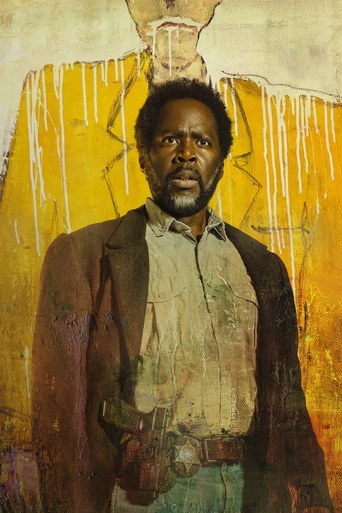
From · Season 4 · Episode 8 · 14 June 2026
S4E8 Heavy Is the Head
Heavy Is the Head makes leadership a medical condition and the plan a trust test with no safety net.
THE MOMENT Tabitha finds the RV decorated with Ethan's drawings. The Man in Yellow warns her: the bones could free them or unleash something that has no name yet.
Boyd is asking for something to quiet the noise in his head long enough to get everyone else through tomorrow. The plan has two teams, perfect timing, and no margin for error. The Man in Yellow has been watching.
Full episode analysis below. Spoiler-light verdict above.
Updated
From S4E8: "Heavy Is the Head" Review
Spoiler-light verdict above. Full episode analysis below.
### The Crown No One Wants to Wear The weight of "Heavy Is the Head" is distributed unevenly, and that is the point. Boyd Matthews has always carried leadership like a man unsure whether the job belongs to him or has simply accumulated around him. This episode makes the unease physical. Boyd seeks medication to suppress hallucinations - a gunshot sound on loop - and asks Kristi to hand him something that quiets the noise long enough to think. The image holds: a sheriff medicating his own perception so he can keep everyone else's intact.
FROM's eighth episode of its fourth season is not an action hour. It is an accounting hour. The community is building toward its most coordinated plan yet, and that ambition reveals every fault line the show has been quietly drawing since the season premiere. Jade's two-team strategy - a surface crew pulling the Bottle Tree by its roots while a chamber crew digs up the bones beneath - requires timing, trust, and the willingness to accept catastrophic loss if the math goes wrong. Episode eight spends most of its runtime asking whether these people are actually capable of trusting each other that precisely.
### Fatima as a Reckoning the Show Has Earned The repercussions of Fatima's most harrowing season-three moment arrive in this episode in the form of black veins forming across her lower stomach. It is the kind of visual FROM uses carefully: not gore for its own sake, but the body as evidence of a debt the town refuses to forgive. The detail arrives without fanfare, and the episode respects it enough not to over-explain it.
What makes Fatima's thread work in "Heavy Is the Head" is that it does not allow Boyd or the audience to treat her condition as a subplot. Her deterioration runs on a parallel track to the planning scenes, inserting itself as a reminder that every hour the community spends strategizing is an hour she may not have. FROM's structural intelligence shows here. It refuses to let optimism accumulate without immediate cost.
### Jade's Plan as a Trust Experiment The two-team coordination Jade proposes is essentially a trust experiment dressed up as a logistics solution. The plan only works if above and below are synchronized - if the people pulling the tree know exactly when the people in the tunnel need them to move, and vice versa. There is no margin. In a community this traumatized, that margin is the whole question.
The episode earns its tension not through the plan itself but through the way the characters sit with it. Boyd's hesitation is not strategic. It is moral. He can model the plan's success. He cannot model what it means to ask more people to risk what they have already lost. The writing gives that tension the space it needs without turning it into a speech. FROM's best leadership scenes have always been the ones where decisions happen at oblique angles, in silences between lines.
### Boyd's Haunting Is Its Own Argument The gunshot hallucination Boyd carries into this episode is doing double duty. On one level, it is a trauma symptom, the sound of a decision he may have been planning when season four opened, replaying at unpredictable intervals. On another level, the show is using it to argue something about leadership under extreme constraint: that the mind responsible for everyone else's safety is not exempt from coming apart.
Boyd asking Kristi for something to suppress the sound is a character beat with long range. It marks a threshold. He is choosing function over truth about his own condition, and FROM trusts its audience to understand that this is also a moral position, not just a survival tactic. A man who medicates his own perception to stay useful to others is making an argument about what leadership costs. "Heavy Is the Head" says the title is not metaphor. It is medical.
### The Man in Yellow Arrives With Ethan's Drawings The episode's climactic scene is the one that earns the hour its weight. Tabitha follows what she believes is a call from Thomas to an RV, and finds it decorated with Ethan's drawings. The Man in Yellow has been watching. More than that, he has been collecting. The use of Ethan's drawings as staging - turned from a child's innocent instinct into a deliberate seduction - is as cold a piece of staging as the show has managed this season.
The warning the Man in Yellow delivers to Tabitha is the episode's thesis in dialogue form: unearthing the children's bones could free the community, or it could unleash something that cannot be described in terms they currently have. FROM gives the Man in Yellow the cruelest possible quality in this scene - apparent sincerity. He is not mocking. He is warning. Whether that warning is protection or manipulation is the question the episode leaves open, and it is the right question to leave open at this point in the season.
BollyAI's read: the scene works because the show resists letting Tabitha react definitively. She processes it. That pause is the episode's real ending.
### The Verdict "Heavy Is the Head" is the kind of episode a serialized horror drama needs at this late stage: it does not accelerate into spectacle, it tightens the human cost of the plan already in motion. Boyd's medicated leadership, Fatima's body as collateral debt, Jade's coordination as an act of forced trust, and the Man in Yellow's chilling ambiguity add up to an hour that makes the finale feel genuinely expensive. The crown weighs what it weighs.
-