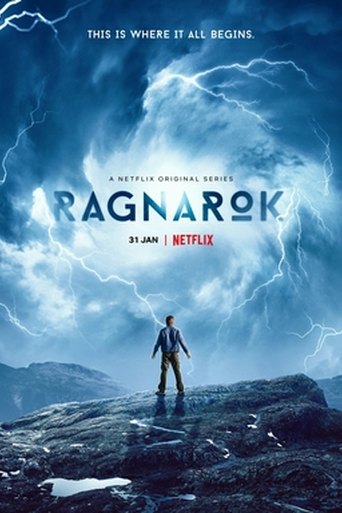
Ragnarok · Season 1 · Episode 2
S1E2 Episode 2
Episode 2 turns Thor into a teen pressure system and makes the factory’s secrecy feel like the real supernatural threat.
The town’s machinery keeps working, even as the air looks wrong. A small act of defiance turns into a larger one because the people around it do not treat “pollution” like an accident. They treat it like a habit, like a managed condition. In the same breath, the show tightens its
Full episode analysis below. Spoiler-light verdict above.
Updated
Ragnarok S1E2: “S1E02” Review
Spoiler-light verdict above. Full episode analysis below.
### COLD-OPEN The town’s machinery keeps working, even as the air looks wrong. A small act of defiance turns into a larger one because the people around it do not treat “pollution” like an accident. They treat it like a habit, like a managed condition. In the same breath, the show tightens its myth logic: the dangerous thing is not just what the factory does, it is what it keeps from being seen.
The Thesis: The Hour Tests Whether This Myth Will Feel Like a Teen Story or a Lecture
BollyAI’s read: Episode 2 locks in the series’ core trick by making Norse mythology behave like teen pressure. The “Thor” premise does not arrive as a superhero announcement. It arrives as confusion, bodily consequences, and secrecy inside a town where everyone has a role. The writing then uses that pressure to grow the environmental allegory from background texture into a mechanism of control. The episode has weaknesses, but the direction is clear: Ragnarok is building a conspiracy where the mythology is the language, not the detour.
Who Gets to Tell the Truth in a Town Built on Silence?
The episode keeps returning to a blunt question: if the town runs on information control, who has the power to define reality. The factory-owning family is positioned as the local gravity. Their influence is not just financial. It is social and emotional, the kind that tells teenagers what they are allowed to notice. The show’s best move is how it frames secrecy as a daily inconvenience rather than a cinematic twist. People speak around things. They redirect conversations. They protect routines that should not be trusted.
That matters because Episode 2 is where “myth in a town” risks turning into “mystery with exposition.” Ragnarok instead treats truth as a relationship problem. When Magne and the people close to him are pulled between loyalty and suspicion, the narrative makes suspicion feel like a social cost. BollyAI’s read: this is why the allegory works. Pollution is not presented as a lecture topic. It is presented as the atmosphere of a lie that everyone has to breathe.
The School of Pain: Thor’s Signs Look Like Puberty With Teeth
If Episode 1 teased the Thor idea, Episode 2 turns it into a lived sensation. The writing gives the myth a teen-shaped delivery system: stress triggers something physical, emotion becomes a cause, and confusion becomes dangerous. That is the series’ strongest craft alignment. Norse prophecy could have been delivered as lore. Ragnarok delivers it as bodily consequence and near-mistake escalation.
BollyAI’s read: this is where the show earns empathy without softening the danger. The episode builds “powers” the way teen stories build identity. You do not simply learn who you are. You learn what happens to you when you try to become someone else in a place that punishes deviation. Even when the episode leans into supernatural beats, it keeps the emotional stakes grounded. The myth is not an escape from adolescence. It is adolescence, exaggerated, forced to manifest.
The Factory Isn’t Just a Setting, It’s a Character With a Family Face
Episode 2 expands the conspiracy by tightening the family and factory connection. The show makes the industrial space feel intimate. It is not merely “where things are made.” It is where people are shaped into loyal workers, obedient relatives, and manageable outsiders. The mythological presence under that system is hinted rather than announced, but the writing makes the allegory’s logic plain: the environment is being altered on purpose or at least maintained through willful blindness.
BollyAI’s read: the craft here is contrast. The town is visually ordinary, almost drab, but its habits are predatory. The episode uses small interactions to imply that the family’s power flows through routine. That is scarier than a villain monologue. It tells Fjor-type authority figures (and anyone who benefits from them) that the town’s sickness is structural. This is not “something went wrong.” It is “something is kept working.”
Momentum With One Uneasy Trade-Off
Ragnarok’s pacing in Episode 2 generally feels purposeful, but there is a trade-off. The episode wants to keep the mystery tight while also planting myth seeds. When both goals compete, the hour can momentarily drift into mechanism explanation. The writing then tries to recover by refocusing on character reactions. Still, the show occasionally spends too long clarifying “how” without fully earning “why it hurts right now.”
BollyAI’s read: this is not fatal. It is a growing pain of a series choosing slow burn. But the episode would land harder if it trusted one or two beats more and let silence do more work. Ragnarok often shines when it lets suspicion simmer, not when it sharpens it with extra scaffolding.
The Verdict: A Controlled Spark That Chooses Teen Pain Over Lore Delivery
Episode 2 strengthens Ragnarok by making its mythology feel like the emotional physics of adolescence. The hour argues that the Thor connection is not a plot ornament. It is a pressure system, and the factory family is the human mechanism that turns that pressure into control. The episode is most effective when it treats pollution as atmosphere and secrecy as a relationship problem, not a slideshow topic. Where it falters, it does so in the usual slow burn risk: the episode sometimes pauses to translate its conspiracy machinery instead of letting character choices carry the full weight.
One season-arc sentence: By the end of Episode 2, the series has committed to an origin story where prophecy and ecology evolve together, and where the first real “superhero” test is who Magne can trust.
The Veredict
BollyAI’s score read is withheld for this draft. BollyAI’s read: Episode 2 is a strong second step that deepens the town’s control structure and makes the myth feel personal, even when it occasionally slows to explain the mechanism.