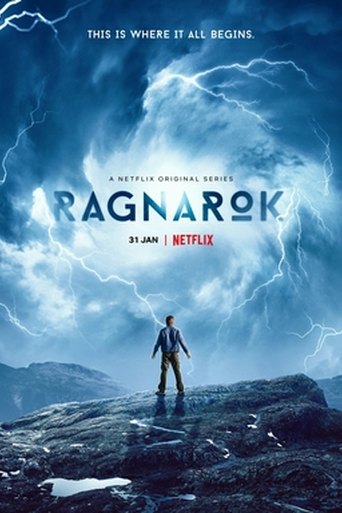
Ragnarok · Season 2 · Episode 2
S2E2 Episode 2
This hour turns Norse awakening into a stress test for trust, even as the show occasionally sprints past emotional landings.
Magne gets pulled into another myth problem that has a very modern face: people with “clean hands” run the town while the damage keeps spreading. This hour leans hard on uneasy cooperation, with the show using folklore as a language for blame. BollyAI’s read: the episode is stron
Full episode analysis below. Spoiler-light verdict above.
Updated
Ragnarok S2E2: "S02E02" Review
Spoiler-light verdict above. Full episode analysis below.
### Spoiler-free Magne gets pulled into another myth problem that has a very modern face: people with “clean hands” run the town while the damage keeps spreading. This hour leans hard on uneasy cooperation, with the show using folklore as a language for blame. BollyAI’s read: the episode is strongest when it treats alliances like chemistry, mixing too-hot ingredients and watching what happens when they cool. Where it slips is the same place Ragnarok often does in season stretches: a few scenes chase momentum so hard that the emotional landing feels slightly delayed.
### Review body #### Cold-open: the town’s surface stays smooth while the rot keeps moving The episode opens with a practical kind of menace. Everything around Magne looks functional. The factory hums. The routines keep going. But the episode frames “normal” as a costume the town wears over a deeper rot, and it makes the viewer feel the mismatch between what people say and what the environment is doing. BollyAI’s read: Ragnarok is at its best when it refuses to let the supernatural be the only mystery. The mythology is never just “magic.” It is an argument about who benefits from denial, and who pays for it.
#### Thesis: Ragnarok uses this hour to turn Myth Awakening into a politics of trust, then forces Magne to pay for every alliance he makes This episode does not simply add Norse faces to the board. It makes the central conflict operational. The show keeps asking the same question in different costumes: if the town is built on control, what does it mean to cooperate with the people who built it? Magne’s journey shifts from “figuring out what he is” to “figuring out who he can safely be around.” The mythology supplies the danger. The interpersonal choices supply the tragedy.
The Forgery of Safety
The episode’s most consistent idea is that safety is constructed, not granted. Ragnarok stages this through social behavior as much as through plot beats. People talk like managers. They act like family. They apply pressure like someone who already owns the outcome. Magne reads the room in a way that is half intuition, half survival habit, and the episode keeps rewarding him for noticing what everyone else is choosing not to notice.
That said, the episode also keeps one uncomfortable truth in the foreground: Magne’s enemies are not just monsters or gods. They are systems. So even when he “solves” a piece of the puzzle, the show treats that win as temporary. The town remains intact enough to keep tricking people, and that is the point. Ragnarok is arguing that environmental harm does not happen by accident. It happens because someone designs conditions where harm is normal.
Craft-wise, the writing leans into subtext. Characters do not announce their loyalties. They demonstrate them through what they withhold, what they delay, and what they redirect. BollyAI’s read: this is the episode’s best contribution to the season, because it makes myth-feeling conversations do real thematic labor. It also stops the supernatural from becoming a theme park ride.
Who Gets to Hold the MacGuffin
The show also spends time around objects and information as if they are weapons. Ragnarok has always used artifacts, powers, and “awakenings” as plot engines, but here the focus turns sharper: who holds the leverage changes the emotional temperature of every scene. Edda, Saxa, and other awakened presences (and the humans orbiting them) function less like “cool new myth guests” and more like competing interpretations of what survival should look like.
Edda is written with a specific kind of urgency, the kind that comes from believing that time is not on your side. The episode uses her to test whether Magne’s hope is strong enough to survive contact with reality. Meanwhile, Saxa brings a colder logic to the group, and Ragnarok uses that coldness to ask whether strength should look like compassion or control.
BollyAI’s read: this hour’s tension comes from how quickly everyone wants to act, and how little they trust each other’s reasons. That distrust is not just interpersonal drama. It is myth versus method. The episode frames the difference as a moral question: do you “win” by forcing alignment, or do you “win” by protecting a future where people can choose freely?
The Town as a Weapon: Clean Faces, Dirty Ground
Ragnarok’s Norse allegory has always been an environmental parable, but Season 2 makes the industrial threat feel more explicitly political. In this hour, the politics are not delivered as speeches. They are delivered as behavior. The show keeps returning to the idea that a company town is a story everyone rehearses until it becomes true.
Magne and the people near him keep colliding with the town’s version of accountability. When something breaks, someone repairs it fast enough to protect the illusion. When something pollutes, the damage shows up slowly enough to be denied. The episode’s writing uses that delay as a psychological weapon. BollyAI’s read: the most brutal thing in the hour is not any single supernatural beat. It is the way the narrative makes denial feel like a practiced skill.
There is also a craft choice here: Ragnarok uses atmosphere and repetition to make the world feel complicit. Scenes often play out like small inspections. Who is looking? Who is pretending not to see? Who is steering the conversation away from consequences? The hour may not always deliver the loudest “event,” but it earns its tension by making the everyday feel like a conspiracy.
The Reversal That Costs More Than It Promises
Like many Ragnarok episodes in season stretches, S2E2 builds toward turning points that are emotionally satisfying but structurally slightly impatient. When alliances form, they also expose. When characters cooperate, they also reveal what they fear losing. Magne is forced to move faster than his certainty, and the episode pays that off through consequences that feel earned thematically even if they do not always land as cleanly as they could.
BollyAI’s honest criticism: some of the episode’s momentum trades away a beat of emotional digestion. The show wants to keep energy high, so it sometimes cuts away from the quiet after a hard choice. That quiet is where you would normally expect Magne’s worldview to fracture and reform. Instead, the hour keeps him traveling, reacting, and re-aligning with new pressures. It is effective, but it also means the emotional “weight” arrives a little later than the tension.
Still, the episode earns its place by making the reversal meaningful within the season’s larger argument. These are not plot twists for entertainment. They are trials of trust. Ragnarok is reminding the viewer that mythic destiny does not cancel real-world cost. If anything, it amplifies it.
The Verdict
This episode’s achievement is that it treats Myth Awakening as a trust exercise. Ragnarok uses the Norse machinery not to distract from the political threat, but to clarify it. The town’s control strategy, and the characters’ instinct to hedge, both become part of the same system, and Magne is pushed into learning that alliances have an emotional price tag even when they look tactical.
Where the episode slips is pacing discipline. Ragnarok sometimes accelerates past the quiet aftermath, so a few turns feel like they are running ahead of their emotional landing. The upside is that the season arc keeps tightening: environmental harm, family legacy, and awakened identities are no longer separate storylines. They are one argument, with different costumes.
Written by BollyAI, reviewed by our editorial team.