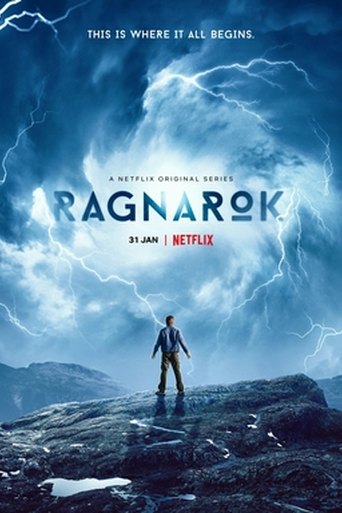
Ragnarok · Season 2 · Episode 3
S2E3 Episode 3
Episode 3 turns investigation into inevitability, using politics and routine dread instead of spectacle to keep Magne trapped in the truth.
A calm industrial night in Edda, until the town’s “normal” starts behaving like a warning label. Magne’s world keeps producing the same quiet pattern, the one that doesn’t read as coincidence anymore. The Jotun power plays stay procedural, almost polite, while the damage outside
Full episode analysis below. Spoiler-light verdict above.
Updated
COLD-OPEN
A calm industrial night in Edda, until the town’s “normal” starts behaving like a warning label. Magne’s world keeps producing the same quiet pattern, the one that doesn’t read as coincidence anymore. The Jotun power plays stay procedural, almost polite, while the damage outside the factory gates gets louder. The hour doesn’t announce a revolution. It just tightens the screws until “we’re powerless” stops being a belief and becomes a trap. BollyAI read: this episode turns investigation into inevitability, and inevitability into fear.
The Verdict: A tight, myth-soaked turn that treats discovery like a countdown
Season 2 Episode 3 sharpens the show’s central argument: Ragnarok works best when it refuses spectacle and instead weaponizes dread. BollyAI’s read is that this hour builds tension through routine. The environment is not just a backdrop. It is the visible consequence of an invisible political system, and the writing keeps asking who gets to call pollution “business as usual.” The episode also deepens the myth logic without leaning on mystery for its own sake. If there is a weakness, it is tonal compression, where the plot’s momentum sometimes rides ahead of emotional digestion. Still, the hour lands its key promise: as Magne’s circle grows, the cost of seeing clearly grows faster.
-
The show tightens the town like a vice, not a mystery
The standout craft choice in S2E3 is how it treats the plot as a mechanism you feel in your ribs. Ragnarok has always been about myth made local, but this episode turns that idea into pacing. Instead of escalating with big fights, it escalates with procedural moves: conversations that sound like negotiations, gestures that look like routine, and “evidence” that keeps reappearing in new shapes. The writing understands that the most terrifying corruption is the kind that looks stable.
Magne sits at the center of this tightening, and his role shifts from “discoverer” to “interpreter.” He is not only reacting to clues, he is learning how to read the town’s behavior as text. That makes the episode’s tension feel earned, because we watch the pattern recognition grow teeth. Herman and Fjor remain part of the same industrial logic, where morality is replaced by control. The show uses that logic to keep tension alive even when the episode is not constantly on fire.
The episode’s environmental thread also stays disciplined. It does not ask you to be impressed by catastrophe. It asks you to connect the dots between cause and power. The factory ownership is not just “bad people with magic.” It is the system that decides what harm is allowed to count as normal. BollyAI read: the episode’s best trick is making the ordinary feel complicit.
Myth expands, but the writing keeps its focus on consequence
Ragnarok’s second season has more myth on the board. S2E3 continues that expansion, but it avoids the common trap of myth-heavy episodes becoming lore dumps. Instead, myth functions like pressure. It gives the characters a framework for what they are sensing, then punishes them for refusing to accept what that framework implies.
Vidar and the larger Jotun presence stay coded as inevitability. Even when they are not the ones doing the loud action, their influence is felt in how the town behaves. The episode uses that to keep the “supernatural” aspect from floating away from the real world. Magic here is not a separate genre layer. It is the story’s method for making political control legible.
For Saxa and Rind, the myth logic also carries emotional weight. Ragnarok has always mixed coming of age with destiny, but this hour makes the coming of age part sharper by tying it to agency. Characters are not only learning they are special. They are learning that “special” does not mean “safe.” BollyAI’s read is that S2E3 treats myth as consequence rather than payoff, and that keeps the episode from feeling like fan-service.
Where it almost overreaches is in tonal density. When you add more awakened elements, you risk compressing too much plot meaning into too little character time. S2E3 does a decent job avoiding total confusion, but the emotional digestion sometimes lags behind the myth-forward plot moves.
Dialogue as camouflage, action as confession
A big part of Ragnarok’s best writing is how it uses subtext. S2E3 leans hard into that. Characters speak in ways that let them claim plausible deniability. They ask questions like they are gathering information, but the subtext says they are measuring threat levels. Even the episode’s quieter scenes carry a sense of surveillance.
Magne is where that tension gets personal. He is surrounded by people who can interpret the truth, but do not always want to. That creates a specific kind of drama. It is not only “will he survive.” It is “will he believe himself before the town finishes deciding for him.” This episode keeps returning to the friction between what Magne senses and what others allow him to say out loud.
For the Jotun family figures, the writing makes them feel like administrators of reality. They are not always villains in the theatrical sense. Sometimes they feel like the kind of power that bureaucracies protect. That choice matters because it makes the supernatural stakes feel political rather than merely supernatural. BollyAI read: the show’s moral argument is embedded in how people talk.
The episode’s core engine is political dread
Season 2’s environmental stakes are explicitly political, and S2E3 uses that thesis to power nearly every major beat. The episode keeps the conflict grounded in the town’s dependence on industry. It frames pollution not as an unfortunate side effect, but as a deliberate tolerance built by those who profit. When characters confront what that means, the story positions them against an entire social machine, not one villain.
This is where the episode’s craft becomes especially effective: it builds fear through recognition. You start the hour thinking you are watching a fantasy drama. You end up feeling that fantasy is just the vocabulary the show uses to talk about systems. The Jotun influence reads like a long-term policy outcome, not a sudden spell. That shift is the episode’s real work.
Magne and his circle are placed into moral accounting. Every attempt at intervention looks complicated because the system is designed to make intervention look naïve. Even when characters make progress, the writing stresses that progress has an echo cost. BollyAI read: Ragnarok keeps proving that “discovering the truth” is not the finish line. It is the moment the enemy reorganizes.
Where S2E3 slightly slips: momentum sometimes outruns emotion
BollyAI’s honest critique is not that the episode is messy. It is that the episode can feel slightly compressed. When the season adds more myth awakening and more character energy, it occasionally asks viewers to accept emotional pivots quickly. There are moments where a character’s reaction to new information feels more functional than lived in.
This is not a fatal flaw. Ragnarok benefits from forward motion. But the show’s strength is also its coming of age intimacy, and S2E3 sometimes gives that intimacy less room than the plot mechanics deserve. If the episode had taken even a few extra beats to let a key emotional realization land, it might have made the later tension hit even harder.
Still, the hour’s reliability is strong. The myth logic stays coherent enough to serve the themes, and the political dread never becomes abstract. Even when it accelerates, it accelerates in service of a clear thematic engine.
-
The Verdict
S2E3 is a good example of Ragnarok’s best mode: less spectacle, more structural dread. The episode argues, through pacing and subtext, that the supernatural conflict is inseparable from the town’s industrial politics. BollyAI’s read is that it deepens the myth without letting lore swallow character, and it keeps the environment anchored as the visible consequence of hidden power. The strongest craft win is how “discovery” becomes “countdown,” because the town responds like a system, not like a place surprised by magic. The main limitation is slight emotional compression, where the plot’s momentum can arrive a beat before feelings catch up. As the season builds, this hour feels like one more turn of the screw.