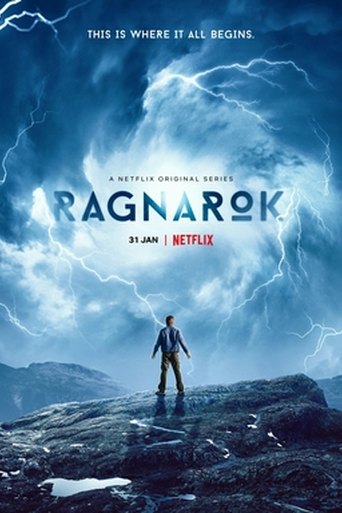
Ragnarok · Season 2 · Episode 4
S2E4 Episode 4
Ragnarok S2E4 uses myth as evidence, tightening the pollution allegory into a political moral test Magne cannot dodge.
The factory finally feels like a character, not a setting. When the show points a camera at the smoke and sludge, it stops being “a problem the town has” and becomes “a thing the town is.” In the middle of that, Magne is still trying to do something decent with a power that keeps
Full episode analysis below. Spoiler-light verdict above.
Updated
Ragnarok S2E4: "Episode Title Unknown" Review
Spoiler-light verdict above. Full episode analysis below.
### Spoiler-care line Spoiler-light verdict above. Full episode analysis below.
### COLD-OPEN The factory finally feels like a character, not a setting. When the show points a camera at the smoke and sludge, it stops being “a problem the town has” and becomes “a thing the town is.” In the middle of that, Magne is still trying to do something decent with a power that keeps arriving like bad timing. The episode treats Norse myth as a language the town uses to hide a political truth, and then forces Magne to speak it out loud.
The Verdict That Won’t Let You Look Away
This hour is strongest when it refuses myth as spectacle and treats it as evidence. Ragnarok S2E4 keeps turning environmental damage into moral accounting, and it pays off that theme through character decisions that cost people something real, not just their schedules. The writing can feel a touch impatient with smaller emotional beats, especially when the season’s cast expands and scenes compete for air. But the episode’s best move is its insistence that “awakening” is never neutral. If you gain power in this town, the cost shows up elsewhere, and the show keeps locating that cost in the body of the community.
The Factory as a Monster, Not a Backdrop
Ragnarok does a lot of things with Norse imagery, but this episode leans into the most grounded horror. The industrial setup is not just where fights happen. It becomes the mechanism that explains why certain people get to pretend everything is fine. That matters because Season 2 already widened the cast of mythologically awakened figures, and bigger myth energy can easily dissolve into action.
Here, the writing resists that drift. It frames pollution like a system with directors, not weather with bad luck. Even when conversations are about destiny and prophecy language, the episode keeps returning to what the town produces, what it releases, and who benefits. The effect is that Magne’s supernatural arc never floats away from the allegory. He is not battling monsters in the sky. He is battling a machine that has learned how to survive public scrutiny.
Magne is the emotional bridge between the myth vocabulary and the political reality. He reads the world correctly, but he keeps paying for reading it correctly, because the adults around him also want answers, just not consequences. The show’s trick is that Magne’s choices feel like they should be heroic, yet the episode makes heroism look like a form of risk management. You can feel how he is trying to be the kind of Thor the world needs. Ragnarok keeps proving the world does not make it easy to be needed.
Who Actually Gets to Lead When Everyone Has a Prophecy?
A lot of Season 2 is about awakening characters into a shared mythic conflict, but the episode drills the real question underneath it. When multiple figures claim relevance to the prophecy, leadership stops being “who is strongest” and becomes “who controls the narrative.”
The hour uses that uncertainty to sharpen its character web. Magne is positioned as the one trying to make a moral choice, while other forces treat myth as leverage. This is where the episode’s structure works hardest. Instead of stacking new powers, it stacks competing motives. Each time a scene reveals how someone thinks, it also reveals what they are hiding.
Lina (as the emotional pressure point in Magne’s orbit) functions like the show’s compass. Even when she is not driving the supernatural plot, her presence keeps the stakes human. Ragnarok refuses to let the “bigger myth” become an excuse for neglecting the interpersonal fallout. The problem is that with an expanded ensemble, the episode sometimes spreads emotional attention thin, landing some transitions a little too quickly. That can make a few scenes feel like they are doing double duty: advancing plot, setting emotional terms, and re-teaching the allegory’s rules all at once.
Still, the episode’s best moments come from the friction. When prophecy speech meets ordinary self-interest, the writing gains bite. It becomes clear why the town’s ruling family has survived so long. The episode suggests they do not merely own a factory. They own the story people are allowed to believe.
The Season Escalates the Environmental Stakes Into a Political Act
Season 2 turns the pollution story explicitly political, and S2E4 makes that shift feel less like exposition and more like inevitability. The episode treats environmental harm as something that is maintained through decisions, not accidents. That choice is central to Ragnarok’s allegory logic. It is never simply “the world is poisoned.” It is “someone keeps poisoning it, and the community adjusts.”
The writing uses that to keep momentum even during character-heavy scenes. You can often tell what a conversation is really about by where the subtext points. When people talk around the evidence, the show shows you the evidence anyway, or at least the consequences of ignoring it. That creates a clean cause and effect engine. Supernatural beats then become moral accelerants, not diversions.
In this ecosystem, the Jotun family functions like a confidence scheme with fangs. Their mythic legitimacy does not make them noble. It makes their violence feel institutional. Ragnarok’s drama turns on how quickly charisma can become policy, and how smoothly tradition can disguise cruelty. This episode leans harder into that than some earlier hours, emphasizing control structures rather than just individual villainy.
That is why Magne’s conflict keeps sharpening. His awakening is not just a personal tragedy. It is a public threat to a system built on denial. The episode makes that clear without needing to lecture.
Myth Reframed as Proof, Not Destiny
Ragnarok’s Norse elements can sometimes play like set dressing, but S2E4 recodes them as mechanics of accountability. The episode does not just tell viewers what the myths mean. It shows how myth language becomes a tool for manipulation, and how it can also become a tool for resistance.
Thor’s reincarnation concept, specifically, is handled with a kind of tactical restraint. The show treats “the chosen one” premise as dangerous in a town where choice has been made irrelevant by corporate power. When fate appears, the episode asks what fate prevents. It also asks who benefits from fate sounding inevitable.
This is where the episode’s craft earns its runtime. Instead of turning every myth reference into a “watch this cool thing” moment, it uses those cues to structure character decisions. A supernatural event becomes a moral test with immediate social consequences. People do not just react to magic. They react to what the magic reveals about the people around them.
The best example of this tonal strategy is how the episode frames conflict outcomes. Ragnarok keeps insisting that the mythic battle will be won or lost in ordinary human choices: who hides information, who tells the truth, who sacrifices someone else to preserve their own myth.
The One Place the Episode Gets Thin
For all its strengths, the episode has a weakness: it occasionally accelerates emotional beats in order to service the ensemble’s myth plot needs. Season 2’s cast expansion is a real creative opportunity, but it also creates a problem of balance. Some character motivations get established fast and then immediately move into action, which can dilute the “felt” part of certain turns.
Magne still carries the emotional center, but when the episode adds urgency elsewhere, his internal adjustments can feel slightly under-lit. The show’s allegory is clear, the villain logic is consistent, but a few smaller moments risk becoming functional instead of intimate. This is not a derailment, just a softness at the edges.
The good news is that the hour’s strongest theme compensates. Even when pacing trims emotional mileage, the episode never trims moral clarity. The factory is still poisoning the town, the adults still normalize it, and the myth still works as a lens for who is telling the truth.
The Verdict
Ragnarok S2E4 is an episode that understands the difference between fantasy pressure and ethical pressure. It takes the town’s industrial harm and turns it into a political allegation, then attaches that allegation to character decisions that can’t be undone. The writing’s best move is reframing myth as proof rather than destiny, so every supernatural beat points back to consequences in the real world. Where the episode stumbles, it is mostly in pacing compression, letting some emotional adjustments run a little fast to keep the myth conflict moving.
As a season-arc beat, the episode does the groundwork for the bigger reckoning by tightening the connection between awakening, control, and environmental collapse. It suggests that the final clash will not be decided only by who has power, but by who finally stops treating harm as background noise.