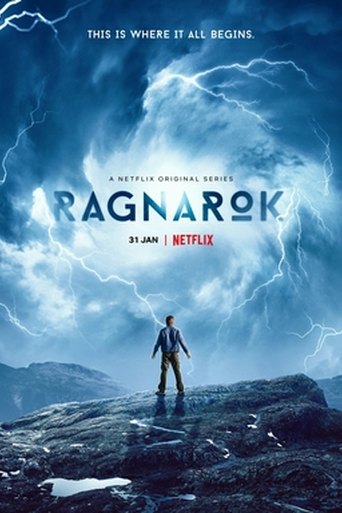
Ragnarok · Season 2 · Episode 5
S2E5 Episode 5
This hour turns Thor into a deadline and pollution into plot, making every “plan” feel like another compromised choice.
The hour keeps Magne’s myth on a tight leash, then lets the environment do what prophecy cannot. A plan forms in the glow of the industrial world, but the show frames it like a countdown, not a solution. Every time **Magne Seier** thinks he is choosing, the town answers with cons
Full episode analysis below. Spoiler-light verdict above.
Updated
Ragnarok S2E5: "S02E05" Review
Spoiler-light verdict above. Full episode analysis below.
The hour keeps Magne’s myth on a tight leash, then lets the environment do what prophecy cannot. A plan forms in the glow of the industrial world, but the show frames it like a countdown, not a solution. Every time Magne Seier thinks he is choosing, the town answers with consequences already baked into the air, the water, and the family money. By the time Fjor and Saxa regroup around the chaos, the episode’s real villain is no longer just the Jotun bloodline. It is the system that learned to call poison “progress.” BollyAI’s read: this is an episode about responsibility arriving late, and paying early.
The Betrayal That Comes as Maintenance
This hour’s most important trick is that it treats betrayal like something ordinary. Not a melodramatic knife-in-the-dark betrayal, but an ongoing pattern that looks like routine until it becomes impossible to ignore. The episode keeps returning to the idea that the Jotun influence is not simply “villains being evil.” It is the architecture of the town. Edda and Magne both circle the gap between myth and mechanics, and the writing keeps pushing you to notice how easily moral clarity can be postponed when survival runs on infrastructure.
The big tension sits between what Magne wants to believe and what the show forces him to witness. He can fight the supernatural, but the episode keeps reminding him that the supernatural is riding on something tangible. The town’s machinery does the dirty work, the family’s authority turns harm into policy, and everyone adapts, because adaptation is what industrial towns do best. The episode does not need to shout that the Jotun line has been poisoning the environment for years. It makes that poisoning feel like the default weather.
BollyAI’s read: the betrayal is the maintenance schedule. The episode’s cruelty is in the timing. It shows you how long it took to name the wound. Then it asks how fast the characters can do anything with the diagnosis.
Thor as a Deadline, Not a Destiny
Season 2 works hardest when it turns “reincarnation” from a cool label into a ticking clock. This episode continues that pattern by making Magne act like someone who has to earn the right to be Thor. The show keeps him from lounging in power fantasy. Even when his myth-self would allow a bigger, louder move, the writing pulls him back toward choices that cost him socially, strategically, and emotionally.
This is also where the character writing sharpens. Magne is not a prophecy puppet. He is a teenager dealing with the classic coming-of-age problem: you think you have time until you realize you never did. The episode uses that to keep his “destiny” from becoming a cheat code. He must negotiate with allies who have their own wounds, and those negotiations keep failing in small ways before they fail in big ones.
BollyAI’s read: the Thor framing is not about destiny. It is about deadlines. The episode treats power as a responsibility system, one that breaks the person carrying it if they refuse to look directly at what they are protecting.
Saxa and Fjor: Symmetry With Teeth
For a season that expands the cast and myth pool, the show still knows how to make small character alignments feel dangerous. Saxa and Fjor are the episode’s sharpening stones. Where earlier episodes used them for momentum, S2E5 uses them for calibration. Their presence changes the stakes of every plan because they do not just add firepower. They add uncertainty. They complicate trust.
The writing gives them moments where loyalty feels conditional, not because the characters are unreliable on purpose, but because the situation itself is unstable. When you mix awakened myth figures with an industrial town’s political reality, you do not get clean allegiances. You get deals, grudges, and survival math. This episode’s chemistry comes from how the show makes those negotiations feel like they are happening inside everyone at once.
BollyAI’s read: the episode’s best trick is symmetry. If Magne is learning what power demands, Saxa and Fjor are showing what survival has already demanded of them. Their teeth show in the way they refuse to pretend that the cost is theoretical.
The Town as a Character, With a Smell You Can’t Unlearn
The environmental allegory is the series’ spine, and this episode leans into it by making pollution less like background and more like a plot engine. The industrial setting is not just where things happen. It is how the show argues. S2E5 pushes the idea that harm spreads through systems, and systems recruit people into complicity. Even when the supernatural beats fire, the writing keeps returning to consequences in the air and water, the kind that do not stop when the fight scene ends.
This is where the episode’s pacing earns its tension. The structure repeatedly sets up confrontation, then shifts the focus back to what the confrontation cannot fix: the slow, persistent damage. That choice can feel heavy, but in Ragnarok it is also the only honest move. The show cannot resolve an allegory with a single thunder strike. It has to let the damage keep talking.
BollyAI’s read: the episode makes the town feel like a living threat. The “myth” is the costume; the pollution is the monster.
A Political Myth: When Plans Become Public
Season 2 has pushed the conflict into explicitly political territory, and this episode shows how that politics changes behavior. Instead of treating the Jotun family as simply a supernatural enemy to be defeated, the writing treats them as power holders who understand messaging, timing, and leverage. The plan in S2E5 is never purely tactical. It has to survive public reality.
The episode leans into the idea that myth-making is also propaganda. People do not just fear giants. They fear losing jobs, losing safety, losing social standing, losing the narrative that makes their lives make sense. Ragnarok keeps pointing out that the Jotun family’s ancient influence is effective because it is supported by modern compliance. This is why the episode’s most meaningful victories are never total. They are partial, fragile, reversible.
BollyAI’s read: the hour argues that political power is a kind of magic. It bends people before it breaks them.
The Verdict
Ragnarok S2E5 is a well-aimed escalation that trades spectacle for accountability. It keeps Magne from skating on destiny and instead makes the Thor arc feel like a deadline he has to meet without excuses. The episode’s strongest move is treating betrayal as maintenance, the kind that looks normal until you measure the cost. It also deepens the series’ political allegory by showing how supernatural conflict runs on real-world leverage, silence, and messaging.
Where it lands the cleanest is in the way the environment becomes narrative pressure, not scenery. The season arc sentence: this hour tightens the loop between myth and industry so the finale cannot be a simple fight, it has to be a reckoning.