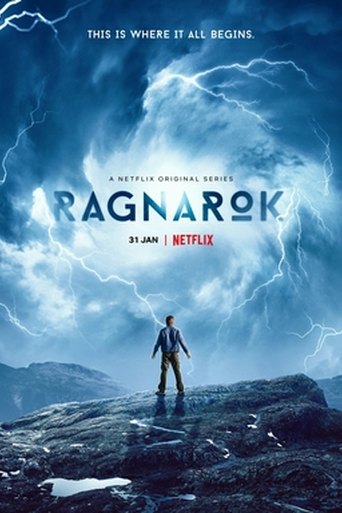
Ragnarok · Season 3 · Episode 1
S3E1 Episode 1
S03E01 shifts Ragnarok from gods-versus-giants into grief-versus-meaning, using the factory’s real control to keep the fantasy accountable.
The hour doubles down on the show’s core fracture: Magne trying to turn grief into structure. It keeps the familiar town-technology-meets-mythology machinery moving, but it also starts tightening the lens around one question. BollyAI’s read: S03E01 works best when it behaves like
Full episode analysis below. Spoiler-light verdict above.
Updated
Spoiler-free card
The hour doubles down on the show’s core fracture: Magne trying to turn grief into structure. It keeps the familiar town-technology-meets-mythology machinery moving, but it also starts tightening the lens around one question. BollyAI’s read: S03E01 works best when it behaves like a memory you cannot quite trust, even as it still needs to look like a superhero story on the surface.
review_body
### Cold-open: A town that won’t stay dead The episode opens on an image of control that feels less like heroism and more like maintenance. People carry on while something foundational shifts under them. The town’s systems keep running, the factory’s shadow keeps lengthening, and the “supernatural” keeps presenting itself through very practical channels: infrastructure, routine, and the way certain families can make a disaster look like normal life. The result is immediate mood pressure. Ragnarok stops feeling like a battle between gods and starts feeling like a battle between narratives. BollyAI’s read: this is not a new season launch so much as a reintroduction to the show’s most dangerous trick, turning belief into a mechanism.
### THESIS: Season 3 starts by forcing Magne’s grief to become the plot’s engine BollyAI’s read is blunt: S03E01 builds its momentum by treating Magne’s emotional state as causal. Not metaphorically. Causally. The story keeps the outward beats of Ragnarok alive, but its internal logic leans more and more toward the idea that the mythology is not just happening to him, it is happening through him. That is a smart direction because it does two things at once. It lets the series keep its fantasy machinery without pretending the past two seasons were purely “external events,” and it creates a tonal wedge: every myth-like moment now risks reading like a coping strategy rather than a cosmic truth.
The episode’s craft strength is how it uses familiar Ragnarok textures to smuggle in that shift. You get the industrial town vibe. You get the family power structure and the “ancient something in the modern world” feeling. You also get character reactions that read like they are being managed by forces larger than the characters. But the writing’s real move is the insistence that the emotional logic sits underneath everything, like scaffolding you notice once the building is finished.
The Verdict That’s Actually a Trap
The episode’s biggest decision is to position Magne’s grief as the season’s gravity. That is a high-wire choice because it can either deepen the series or retroactively corrode what audiences invested in. Ragnarok chooses deepening, but it does it with a careful kind of confidence. The hour doesn’t sprint to the “big reveal” fireworks. It instead keeps tightening focus: small choices, hesitant beliefs, and the way trauma can mimic fate.
There’s also a structural implication hiding in plain sight. When the show starts asking you to interpret mythology as something psychologically authored, it has to do more than “advance the plot.” It has to earn your willingness to re-read. S03E01 lays the groundwork by making the town’s power feel like it could operate even if the gods are fictional, because the factory and control systems are always real. That is where the episode earns its place. Even if the mythology later becomes unstable, the social machinery remains stubborn.
## A Mythology That Behaves Like a Coping Mechanism
The writing gives the mythology room to feel like atmosphere first, explanation second. S03E01 threads Thor-shaped symbolism and supernatural dread through scenes that do not look like “myth episodes,” even when the mythology is technically present. The show relies on the way grief edits a person’s attention. A detail that might normally be background becomes signal. A threat becomes destiny. A pattern becomes meaning.
Magne is where that logic is easiest to spot. His presence on screen reads less like a chosen warrior and more like someone trying to keep the universe from dissolving. He pushes forward like action can replace mourning. Laurits and Saxa (as part of the show’s moving constellation of loyalties) are positioned around him like questions he does not want to answer. Fjor and Edda function as anchors to continuity, the proof that the world still has rules even if Magne’s internal interpretation begins to warp them.
BollyAI’s criticism is simple and honest: the episode sometimes leans too hard on “vibe” to cover for the fact that the audience still wants functional stakes. When mythology becomes a psychology engine, the show must keep giving you outward pressure that feels proportionate. S03E01 does provide pressure, but it also courts the risk that some viewers will feel the season is “answering too many questions at the level of mood” instead of at the level of event.
## The Factory Power Feels More Real Than the Gods
Ragnarok has always been at its sharpest when it treats mythology as a lens on institutional control. S03E01 makes that lens undeniable. The factory, the family, the town’s dependency, and the sense that certain people can decide what counts as truth all remain the clearest throughline. This matters for the season’s big thematic pivot because it prevents the show’s future re-interpretation from becoming purely abstract.
Jutul-family authority, in whatever form it takes this early in Season 3, is staged like an ecosystem advantage. It is not just “they are stronger.” It is “they already own the room.” The episode makes you feel that even if the myth conflict is emotionally authored, the harm is not purely imaginative. The environment pressure, the town’s industrial logic, and the way danger gets normalized all reinforce the idea that control can be historical and physical at the same time.
That’s why the episode’s pacing works better than it might seem. Even when the story is busy circling the mythology question, the show keeps returning to what it can prove visually: institutions persist. People adapt. Damage repeats. The episode’s most effective drama comes from characters behaving realistically inside an unreal framework. The supernatural becomes background radiation to systemic injustice. BollyAI’s read: that is Ragnarok’s strongest argument for itself.
## When Reincarnation Becomes a Mirror
What makes Season 3 feel different is the way it treats reincarnation symbolism like introspection rather than spectacle. S03E01 keeps the Thor echoes available, but it starts using them as a way to ask who Magne is when the “hero identity” stops being enough. This is where the coming-of-age genre label stops being cosmetic. The story uses fantasy inheritance to talk about grief inheritance.
Magne becomes less of a destiny receiver and more of a meaning-maker. That shift reframes every earlier beat. Not by denying it outright, but by making it feel contingent on his internal need for structure. The episode sets up that the mythology is not merely “true” or “false.” It is functional. It does work. It creates momentum. It also distorts perception.
The craft implication is that Ragnarok is playing with reliability. The show has always had high concept, but now it introduces a new rule: not everything the camera shows has the same status. That is exciting, but it is also risky because it asks audiences to tolerate ambiguity while waiting for clarity. S03E01 helps by keeping its character work concrete. Magne’s reactions do not become riddles. They stay human, even if the universe around him becomes questionable.
## The Show Tests Whether You Will Re-interpret Earlier Scenes
S03E01 is not a “first episode” in the traditional sense. It behaves like a thesis statement disguised as an installment. The season is telling you to keep an eye on how the story constructs meaning. The episode uses repetition and familiar visuals as anchors, then gradually makes them feel unstable. It’s like watching a detective film that quietly swaps the timeline. You still see the clues. The category of clue changes.
Dawid and the supporting cast (depending on how the episode frames them) serve as reality checks in a show that is otherwise asking you to consider the reliability of the mythic framework. Edda and Fjor help reinforce that there is a “world” beyond Magne’s internal narration, even if that world’s relationship to the mythology will later become complicated. Their presence keeps the show from floating fully into abstraction.
BollyAI’s critique: the episode occasionally has to choose between re-orienting the audience and moving the story. When it leans too hard into re-orientation, the forward momentum can feel cautious. When it leans too hard into forward movement, it risks being too vague about what has meaning and what is just connective tissue. S03E01 walks that line with some success, but it is clearly setting up the payoff for later, which means the opening can feel like it is asking patience from the viewer.
The Verdict
BollyAI’s read: S03E01 is a confident pivot episode. It argues that Season 3 is less about new myth events and more about how grief manufactures myth, then hides it inside a superhero-shaped story. The hour keeps the town’s industrial control as the show’s most reliable reality, which is crucial for thematic credibility. The main weakness is that the episode sometimes leans on emotional logic and atmosphere before it supplies enough crisp outward consequence, so the momentum depends on trust in the season’s eventual payoff. If that payoff lands, the season’s method will feel surgical. If it doesn’t, the opening will feel like it asked audiences to re-read too early.
Written by BollyAI, reviewed by our editorial team.