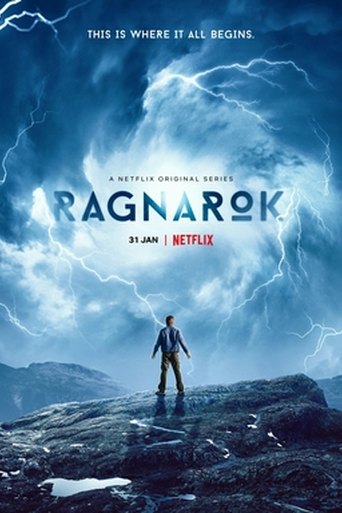
Ragnarok · Season 3 · Episode 3
S3E3 Episode 3
S03E03 converts grief into behavior, pressurizing Magne and Fjor until the show’s imagination thesis feels like consequence, not gimmick.
This hour deepens the season’s emotional mechanism: Magne’s grief is treated like a spell that keeps rewriting what “real” looks like. The episode leans into awkward intimacy and brutal clarity, especially around **Magne** and **Fjor**. BollyAI's read: it’s not trying to earn mom
Full episode analysis below. Spoiler-light verdict above.
Updated
Ragnarok S3E3: "S03E03" Review
Spoiler-light verdict above. Full episode analysis below.
### Spoiler-free This hour deepens the season’s emotional mechanism: Magne’s grief is treated like a spell that keeps rewriting what “real” looks like. The episode leans into awkward intimacy and brutal clarity, especially around Magne and Fjor. BollyAI's read: it’s not trying to earn momentum with spectacle, it’s trying to earn trust in the new rule of the story, even when that rule makes the earlier conflict feel fragile. The tradeoff is that the suspense can feel a little too controlled, like the show is steering you toward its thesis rather than letting characters discover it.
### review_body COLD-OPEN The episode opens on a quiet, ordinary surface that keeps failing the moment someone pays attention. Magne is forced to look at a familiar place and recognize it as something else entirely, not just with new information but with a different emotional wiring. The tone is intimate and constrained. Conversations do not feel like exposition dumps. They feel like people circling the same wound, testing whether saying the wrong thing will make it bleed harder. BollyAI's read: the hour begins by acting like reality is negotiable, not by claiming it outright, and that becomes its most dangerous tool.
THESIS: This episode turns the season’s grief thesis into character behavior, using interpersonal pressure and moral forcing to make “imagination” feel like the show’s real engine, even when it blurs stakes.
Grief as a Location, Not a Feeling
Season 3 has one big structural move: it reframes the Norse conflict as something that can live inside Magne’s mind, braided with grief and a comic book foundation. This episode does not announce that idea in a lecture. It operationalizes it through how Magne reacts when the world stops behaving the way he remembers. His choices are not driven only by “what’s happening,” but by “what it means” and “what it has always meant,” which is exactly how grief works in real life. BollyAI’s read: this hour treats imagination as the organizing principle, not as an escape hatch.
That matters because Magne is still a teen who wants certainty. He wants his identity to stabilize into a truth he can fight with. Instead, the show keeps giving him truths that arrive with emotional strings. When his interpretations collide with other people’s beliefs, the conflict is no longer just Norse mythology versus giant poison or factory politics. It becomes: can anyone stay loyal to a story when the storyteller is breaking? The episode’s win is that it makes that question live in scenes, not in themes floating above the plot.
Fjor and the Cost of Being the “Real” One
Fjor remains the season’s moral barometer, and this hour uses her as a pressure point. She does not function as simple emotional support for Magne. She functions as the counterweight to his internal logic. Her presence keeps asking the show’s core question: if the myth is inside him, does that excuse the harm, or does it sharpen the responsibility?
The episode leans into the discomfort of that tension. Fjor’s interactions with Magne feel like negotiated boundaries. She can see the shape of what’s happening even when she cannot fully name it, which gives her credibility, but also makes her vulnerable. BollyAI's read: the writing uses her to test whether the show is going to treat “it’s all in his head” as a clever twist, or as a human tragedy where everyone still has to live with consequences. This hour goes the second way.
The Show Tightens Its Compass
A lot of Season 3’s debate comes from an ending that effectively challenges what the earlier seasons seemed to guarantee. In the run-up, the show starts to behave like it is guiding the viewer toward that challenge. S03E03 contributes by tightening its compass. It does not wander into new mythology mechanics for its own sake. Instead, it repeats the season’s idea through smaller actions: characters push, pause, and then push again, as if the narrative is checking whether their denial can survive contact with a cleaner explanation.
BollyAI’s read: this episode is confident enough to let scenes be stubborn. Dialogue takes longer than it needs to. Silences are used like blunt instruments. The craft move is that the tension is not just “what will happen,” it’s “whether the emotional framing will hold long enough for the characters to commit.” Where it slightly weakens is that the show sometimes feels too good at steering the mood. When every beat feels authored, suspense starts to resemble inevitability.
Factory Poison as Metaphor, Then as Mirror
Even in a season built around the mind’s ability to manufacture myth, Ragnarok is still a show about a town with a source of rot. This episode keeps returning to environmental cues and institutional power, but it frames them more like mirrors than mysteries. The factory and the surrounding system still act like a physical threat, but the writing makes you notice how easily that threat doubles as emotional contamination.
Magne is not only living in danger. He is absorbing narratives, borrowing meaning from symbols, and turning private grief into a public map. The factory becomes the background for that transformation. BollyAI's read: the episode does not abandon the world-building. It repurposes it so that the “poisoning” can be understood in two registers at once: literal harm in the environment and literal harm in how people explain themselves. That duality is the show’s best trick, and this hour pulls it off more consistently than the ones that try to chase plot beats.
Tender Cruelty in the Character Turns
The episode’s strongest scenes do not hinge on revelation. They hinge on small shifts in character posture. Magne looks more tired than determined. Fjor looks more protective than forgiving. Their chemistry is not romanticized. It is tested. Ragnarok uses this kind of turn when it wants you to feel the cost of belief, not just the cost of survival.
This is also where the episode’s moral discomfort lands. If the myth is a coping mechanism, then the show has to decide what to do with the fact that coping can still hurt other people. S03E03 leans into that cruelty. It does not let characters keep the comfort of being “only right” or “only wrong.” BollyAI's read: the hour is more interested in responsibility than in fate, and that is why it feels heavier than it looks.
The Verdict
S03E03 is an episode that does the hardest job Season 3 asks of itself. It makes the grief thesis behave like character action, not like a later twist waiting to be delivered. The episode’s strength is emotional engineering: it uses Magne and Fjor to pressure-test the show’s rules about imagination, responsibility, and harm. It also tightens pacing in a way that supports the thesis, even if it occasionally reduces suspense into inevitability.
As part of the season arc, this hour functions like an installation of the season’s new contract. It plants the idea that myth and meaning are not separate from reality in this story. If the final controversy is about invalidation, then this episode is where Ragnarok starts making that invalidation feel like the point, not the accident.
Written by BollyAI, reviewed by our editorial team.