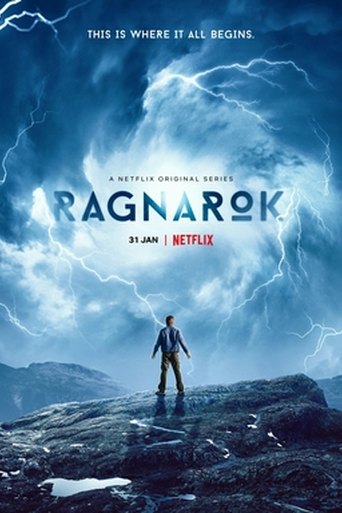
Ragnarok · Season 3 · Episode 5
S3E5 Episode 5
S3E5 turns grief into an operating system, tightening relationships and trust until the mythology feels less magical and more dangerous.
In the quiet aftermath of the season’s biggest emotional bargain, Magne **tries to build something like certainty out of damage**. The hour doesn’t chase spectacle. It chases consequence, the kind that settles into rooms and relationships long after the “big” choice. While the to
Full episode analysis below. Spoiler-light verdict above.
Updated
Ragnarok S3E5: "S03E05" Review
Spoiler-light verdict above. Full episode analysis below.
### COLD-OPEN In the quiet aftermath of the season’s biggest emotional bargain, Magne tries to build something like certainty out of damage. The hour doesn’t chase spectacle. It chases consequence, the kind that settles into rooms and relationships long after the “big” choice. While the town’s rot keeps breathing, the writing narrows its lens to what grief does when it stops being a feeling and starts acting like a plan. BollyAI’s read: this episode is about control, and how quickly it turns into bargaining.
Magne’s Dream of Order Meets the Mess It Created
The season’s twist pressure in Ragnarok has already landed: Magne’s interior logic is not just a character trait but a storytelling mechanism. So S3E5 behaves like a continuation of that thesis. It pulls the fantasy skin tight over the emotional bone and asks a simple question: if mythology can be a coping tool, what happens when that tool starts shaping outcomes instead of merely explaining them?
BollyAI’s read: the episode uses that question to make Magne’s “coming of age” less heroic and more administrative. He is no longer only choosing between right and wrong. He is choosing between narratives. Every time he tries to lock the conflict into a clean pattern, the show answers by showing collateral. Not explosions. Not convenient defeats. Smaller costs. Conversations that don’t land. Plans that survive for a minute and then fracture under the weight of reality.
Magne is still the emotional engine, but the hour treats him like a system under strain, not a chosen one. The show’s Norse-flavored language keeps reappearing as metaphor, and the metaphor keeps getting sharper. It is not “destiny,” it is “meaning.” It is not “magic,” it is “how grief edits the world until it looks survivable.” That editorial instinct is the episode’s real villain: it wants control more than it wants truth.
The Factory’s Curse Isn’t Just Environmental. It’s Relational.
Ragnarok has always made the industrial town feel like a mythology engine: factories, family power, and old structures eating the present. In S3E5, the curse shifts from being only environmental to being social and psychological. The toxins the show hints at are still part of the horror, but the more brutal idea is that the family’s influence contaminates how people relate to each other.
The episode leans on the controlling gravity of the town’s power structure. The factory-owning family is presented less like a clear villain organization and more like a persistent weather system. It shapes what people think is possible, what they fear, and what they choose to hide. BollyAI’s read: this is where S3E5 does good work in the “drama” lane. It lets the supernatural scaffolding serve character behavior instead of replacing it.
Fjor and Saxa-adjacent dynamics (and the broader social circle around Magne) feel like they exist to test how much honesty a person can afford when the town’s institutions reward compliance. If earlier episodes used the environment as an external threat, this one makes the town itself feel like a containment unit. The writing’s tension is that you cannot “fight” an atmosphere without becoming affected by it.
BollyAI’s criticism, straight: the episode sometimes risks making these power dynamics feel like variations of the same mood instead of new information. When the conflict is already emotionally loaded by the season’s bigger framing, the show needs to justify each beat with either a decisive character shift or a new piece of mechanism. S3E5 does earn its tone, but it spends a little too long reverberating before it pivots.
Who Gets to Be Real When the Myth Might Be Manufactured?
Season 3’s most controversial move, as the series has already made clear, is the possibility that the mythology is tied to Magne’s internal world. That means S3E5 lives in a strange interpretive space. It has to keep the story moving while also undermining the story’s own surface certainty.
BollyAI’s read: S3E5 handles this by staging emotional reality as the only stable constant. If the show can’t guarantee the external truth of its supernatural events, it can still guarantee the internal truth of what those events do to people. So the episode pushes characters to react as if something matters. And because the season has put doubt in the air, every reaction becomes more charged. Not “Will the prophecy happen?” but “What kind of person does doubt make you?”
Magne is the center of that moral math. His choices are framed as attempts to control grief, but the hour reveals how controlling grief turns into controlling others, even when Magne thinks he is doing the opposite. That is the episode’s most adult move. It refuses to let “protecting someone” stay pure. It asks what protection becomes when it is actually fear wearing a cape.
That same instability ripples through the episode’s conflict logic. The writing uses the myth’s imagery as an emotional UI. But the emotional UI doesn’t always translate cleanly into plot progress. S3E5 occasionally feels like it is asking the audience to keep re-decoding what they are watching. That can be thrilling when the decoding leads to clarity. Here, it mostly leads to pressure.
The Episode Chooses Emotion Over Payoff, Then Pays in Anxiety
There is a craft decision hiding inside S3E5’s pacing: it wants to make the viewer feel trapped in aftermath, not rewarded by answers. The hour is structured like a middle act that refuses the comfort of a middle act. It builds tension through restraint, holding scenes a beat longer than necessary, letting silence and hesitation do the heavy lifting.
BollyAI’s read: this is a legitimate strength, especially in Ragnarok’s coming-of-age context. Coming of age is not only learning what the world is. It is learning what to do when the world will not give you a clean story. S3E5 treats emotional uncertainty like a physical obstruction.
At the same time, the episode flirts with a weakness. When the season already carries an “ending-question” cloud, audiences are hungry for concrete movement toward resolution. S3E5 gives a lot of emotional movement and not quite enough structural propulsion. That can make it feel like a bridge that needed a longer ramp or a sharper landing. It keeps momentum, but not always forward momentum.
Still, the episode’s insistence on character pressure is what makes the season feel like it is building toward something more ambitious than typical fantasy TV. The show is trying to make anxiety itself the climax device, not merely the road to a climax.
Tender, Then Merciless: Ragnarok’s Most Consistent Trick
Ragnarok’s best episodes tend to do a two-step: they soften the emotional ground, then they make the story kneel on the ground it softened. S3E5 repeats that trick. It lets you sit with feeling, then it turns the screws on the cost of that feeling.
BollyAI’s read: the episode’s cruelty is not random. It is thematic. If grief is shaping reality, then relief is dangerous. Relief tempts the characters into believing their own edits. So S3E5 becomes a lesson in how even good intentions can become self-deception.
That is why the episode’s tonal swings matter. Magne is not simply “sad.” He is strategizing while sad. And the show makes sure the strategy carries moral weight. You can see it in how conversations stall, how choices narrow, how the fantasy framing keeps forcing ethical questions back onto the characters instead of letting them hide behind mythic distance.
The hour’s final stretch (leading into the season’s endpoint) leans into dread rather than catharsis. It positions the next episode not as a simple continuation, but as an emotional reckoning. Whether that reckoning lands cleanly for every viewer depends on the audience’s relationship with the season’s meta-framing, but craft-wise, S3E5 is coherent. It does not change the rules it already introduced. It enforces them.
The Verdict
S3E5 is a tense, emotionally rigorous installment that treats mythology as an editing tool and grief as a controlling system. The episode’s strongest work is relational: it makes the town’s industrial power feel like contamination of how people trust, protect, and lie to themselves. The episode is at its best when it uses restraint and hesitation to pressure character ethics instead of chasing supernatural payoff.
The weakness is simple but real. In a season already operating under interpretive doubt, S3E5 sometimes prioritizes mood over new mechanism, leaving the forward plot feel slightly stalled even when the emotional stakes are clear. Still, it earns its place as the kind of episode that tightens the noose before the finale, making the ending feel less like a twist and more like an outcome.