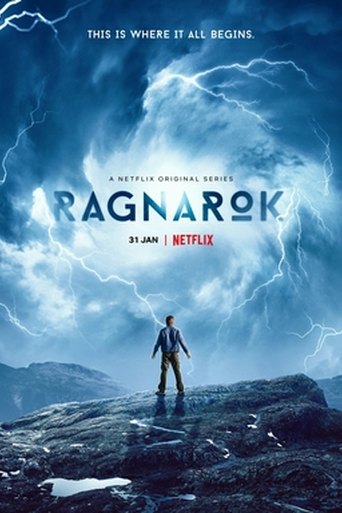
Ragnarok · Season 3 · Episode 6
S3E6 Episode 6
S03E06 turns myth into grief logic, but its late reframing fractures earlier trust more than it restores it.
The season culminates with Magne and everyone around him being forced to admit the story they lived inside was not stable. This hour leans hard on the twist architecture established in the back half of Season 3, using grief, invention, and consequence as the real engines. BollyAI
Full episode analysis below. Spoiler-light verdict above.
Updated
spoiler_free
The season culminates with Magne and everyone around him being forced to admit the story they lived inside was not stable. This hour leans hard on the twist architecture established in the back half of Season 3, using grief, invention, and consequence as the real engines. BollyAI's read: it is a dramatic landing built from emotional logic, but it pays for that ambition with narrative whiplash. The finale lands the “meaning” but makes some earlier trust feel optional.
review_body
### COLD-OPEN A quiet, decisive moment turns into a public reckoning, as Magne’s idea of what Thor is supposed to do collides with what the people around him can actually endure. The hour does not rush toward a single clean victory. It stacks confession, cost, and withdrawal into the same container, so the ending feels less like an action climax and more like the last page of a book being slammed shut.
### THESIS This finale is structured as a grief machine that converts myth into responsibility, but the show’s late reframing makes parts of the earlier seasons feel like they were built to be undone rather than completed.
### ## The Myth Gets Reclassified as Coping Ragnarok has always used Norse imagery like a pressure gauge. In Season 3, it finally explains the metaphor it has been running on for years. By the time Magne reaches the end of the line, the mythic conflict is treated less as an unstoppable external prophecy and more as a psychological response with a shadow consequence. That shift is not merely a “twist reveal.” It is a rewrite of what earlier scenes were doing.
This episode leans into that reclassification by forcing characters to behave as if the stakes were never only magical. The environment, the corruption, the social structure of the town, the family at the center. Those elements are still physically treated as “real” in the world. But the logic behind them is framed as something that can be internal, made, and then weaponized by belief and loss. BollyAI's read: the show is trying to make the point that myths do not have to be literally factual to have real effects. That thesis is emotionally coherent. It is also narratively risky, because it turns “what happened” into “what it meant,” and some viewers hear those as the same thing only when the story is willing to pay both.
### ## The Finale’s Cruel Order: Confess First, Then Break A lot of finales build tension then detonate. Here, the hour detonates by rearranging priorities. Magne does not get the comfort of a heroic sequence that resolves everything. Instead, the writing emphasizes admission and inevitability, then uses that honesty to shrink the options left for him.
That order matters. When confession arrives early, the episode denies itself some suspense mechanics. When it arrives late, it risks feeling like a retroactive spoiler. Ragnarok tries to do both at once: it keeps an edge of action-adjacent momentum while letting the emotional beat carry the real climax. The effect is that the finale can feel like two different endings braided together. One ending is about stopping a poison system. The other ending is about stopping a story from devouring its author.
Where it works best is in the clarity. This hour does not confuse “myth” with “mystery.” It commits to a single interpretive direction. Where it stumbles is in the emotional accounting. Once the episode insists the mythology conflict is deeply tied to Magne’s internal framing, it retroactively charges every earlier high-stakes moment with a question: were these events earned by plot, or by the character’s need to believe?
### ## Who Gets to Be the Hero When the World Is a Story? The show has always distributed heroism unevenly across its ensemble, and Season 3 sharpens that. Lia and Signe are not just orbiting Magne’s journey. They are instruments that measure how far different people can go while still staying human. The finale turns them into readers of the same crisis: what do you do when the person holding the myth also holds the explanation?
Magnes’ mother and the adult power structure also get treated as an emotional ecosystem rather than villains with simpler motivations. The factory-owning family is still a mechanism of corruption, but the finale also forces the story to confront how that corruption is “experienced” through the people who suffer it and through the stories they tell themselves. BollyAI's read: the episode makes the moral dilemma sharper than it makes the logistical one. It chooses emotional truth over causal clarity.
This is a legitimate craft choice, but it creates friction. Ragnarok asks viewers to stay invested in consequence while simultaneously reclassifying the supernatural frame. That can make the finale feel like it is asking for a different kind of faith midway through the climb. When it lands, it lands like catharsis. When it misses, it misses like misdirection.
### ## Pacing as a Weapon: Fast Repairs, Loose Continuity Season 3’s last stretch is fast. The finale has to compress resolution, reinterpretation, and emotional closure into a single episode, and it does that by moving between beats that should reinforce each other and moments that instead compete.
The writing style tends to “clean up” problems quickly. If the story must show a character confronting what they believed, it does so decisively. If it must confirm how the environment and town mechanisms tie back to mythic invention, it does so with blunt force. That is efficient. It also means fewer breathing spaces where earlier threads can be recontextualized in a way that feels additive.
BollyAI's criticism is simple: the episode tries to convert multiple earlier narrative promises into emotional payoffs without always giving those promises the completion they deserve. Some arcs feel like they get summarized rather than resolved, and some audience investment feels like it is being judged by the finale’s interpretive thesis rather than treated as a valid form of engagement.
### ## The Landing: Emotional Logic, Narrative Damage The final minutes aim at a verdict of meaning, not a verdict of events. Ragnarok wants the audience to walk away thinking about grief, imagination, and the ethics of control. It argues that stories can be both refuge and threat. By the end, Magne is not just surviving a supernatural conflict. He is surviving a relationship with his own myth-making.
This is why the finale’s strongest scenes can feel powerful even when its structural decisions feel unfair. Emotional logic does not require literal continuity. But television does. Ragnarok has always been a show that earns belief through accumulation of physical and social details. When it later claims the mythology conflict may have been framed through Magne’s internal lens, it risks turning accumulation into a trap.
So the episode lands, but it lands on two different surfaces. One surface is the character. The other surface is the contract viewers thought the show was keeping about the world. BollyAI's read: the hour picks a brave thematic conclusion, yet it does not fully protect the earlier narrative trust that made that bravery possible.
The Verdict
S03E06 is a thematic finale that converts Norse spectacle into grief-driven responsibility and forces its characters to confront what belief costs. BollyAI's read: the emotional writing is competent and often piercing, but the episode’s late reframing makes the season’s prior momentum feel partially invalidated, because it treats earlier story promises as interpretive material instead of finished narrative labor. If you came for myth as external threat, this hour can feel like an argument that myth was never that stable. If you came for myth as psychological pressure, the finale is a clean, ruthless delivery. Either way, the ending’s craft is consistent, even when the contract it implies is contentious.
Written by BollyAI, reviewed by our editorial team.