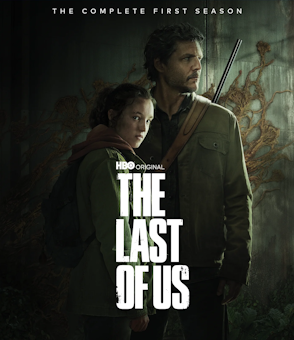
The Last of Us · Season 1 · Episode 1 · 15 January 2023
S1E1 When You're Lost in the Darkness
A tense premiere about failed control, powered by ruthless structure and slightly overworked setup around Ellie’s handoff.
THE MOMENT The 2003 prologue’s final minutes establish in the series’s first hour that it will not protect anyone the story has just made viewers care about.
The premiere earns its extended runtime by staging the 2003 outbreak prologue in full, giving the apocalypse a scientific grounding that separates the show from genre predecessors. Pedro Pascal's Joel Miller is introduced under maximum emotional weight: a father, a loss, a man sealed shut. The jump to 2023 Boston is executed without exposition-dump - the world is communicated through...
Full episode analysis below. Spoiler-light verdict above.
Updated
A fungus keeps an ant alive by preventing decomposition. That is the first nightmare the episode chooses: no chase, no bite, no screaming street. Just Dr. Neuman explaining a body that still moves after it should have stopped. By the time he warns that fungi could spread infection “to every last human alive,” the pilot has made its argument. Control is the lie everyone in this hour keeps telling themselves. Science names the threat. Police manage the public. Families plan escape routes. Soldiers enforce lines. The world answers with panic, blockage, gunfire, and bargains made under pressure. ## The Fungus Gets the First Word
The best choice in “When You’re Lost in the Darkness” is that it begins with explanation and still finds menace. The opening biological exposition could have played like homework. Instead, the episode uses Dr. Neuman as a blunt instrument. He describes a fungus that keeps an ant “alive” by preventing decomposition, then pushes the idea outward until the warning lands on “every last human alive.”
That phrasing matters because the pilot treats the outbreak as a system before it treats it as chaos. Infection becomes a takeover of function. The body continues, but the self is gone. That idea becomes the hour’s governing pattern. The institutions later keep functioning too: emergency services speak, law enforcement advises, a soldier stops a family, citizens are placed in lines. Movement remains. Meaning rots underneath. The episode’s early confidence is admirable because it trusts a dry explanation to plant dread before the urgent material begins. BollyAI’s read: the first act is the warning label the rest of the hour refuses to read in time. The limitation is clear. The exposition is so direct that it announces the central horror before the drama has earned it. Still, as a premiere move, it works. The episode wants the threat to feel older than the characters’ understanding of it, and Neuman gives the hour that cold head start. ## Joel's Plan Dies at the Roadblock
The outbreak stretch tightens because the dialogue starts shedding comfort. A shift moves from long biological exposition to urgent exchanges, alarms, orders, and movement. That is where the hour finds its muscle. Joel does not become heroic by speech. He becomes legible through command. When he tells Sarah, “Sarah, listen to me,” the line is plain, almost bare. It works because the scene around it is losing the luxury of explanation. This is where the pilot’s control thesis turns personal. Joel’s instinct is to narrow the world to one task: move Sarah, keep her close, get her to safety first. The highway blockage undercuts that fantasy. Joel says they have been told it is “mostly people in the city,” a small piece of secondhand certainty used to justify the route and the delay. The phrase carries the texture of disaster logic. Someone says something official enough, and a family builds a plan around it. Then the road becomes a trap. Tommy wants to get out quickly and avoid being boxed in, but the escape delays and injures the group. A soldier stops them as Joel tries to move Sarah to safety. The state arrives at the exact moment Joel needs passage, and it brings obstruction instead of rescue. The episode’s best early writing is in that collision between private urgency and public command. Joel wants one clean path. The world gives him a checkpoint. Blunt. Effective. ## The State Keeps Talking After Trust Is Gone
The Boston material sharpens the hour’s politics without turning into a speech. The episode gives a simple, ugly progression: law enforcement and emergency services advise the public, someone tells Mercy to stay indoors, and later “Free Boston” is shouted as shooting begins at the line of citizens clearing the area. The repeated presence of official language and public control matters. The hour shows apocalypse as order continuing in harsher form. That is a smart structural echo of Dr. Neuman’s fungus. The body continues, but the meaning has changed. Public safety language remains, but trust has drained out of it. A line of citizens clearing an area should sound like a managed civic action. The shooting turns it into coercion. “Free Boston” cracks open the QZ as a place with competing claims over legitimacy, territory, and survival. Here the pilot risks compression. Moving from the family escape to a Boston QZ conflict gives the episode a lot of machinery to carry: public order, armed resistance, smuggling logic, and the question of who controls movement. Some of that lands as setup rather than drama. The hour is planting more than it can harvest. Still, the structure holds because the thematic through-line is clean. Nobody gets to move freely. Sarah cannot be carried past the soldier without consequence. Citizens cannot clear an area without violence breaking out. Joel cannot make a living around the edges of power without being dragged into a larger transfer. The episode keeps turning roads into borders. ## Marlene's Bargain Turns Ellie Into the Plot
Marlene enters as a correction to the hour’s momentum. Up to this point, the episode has followed people running from systems or being crushed by them. Marlene brings a different kind of control: leverage. She reveals herself as the leader of the Fireflies in the Boston QZ, then makes the deal that redirects the episode. Deliver Ellie, and before handing her over, Joel and the others get what they want. That bargain is efficient, almost too efficient. The scene has to establish Marlene’s authority, reposition Ellie as essential, push Joel into a task he rejects, and attach the Fireflies to a larger purpose. The writing chooses speed over mystery. It works as propulsion, but the hinge shows. Ellie becomes the engine of the season in a negotiation that arrives with noticeable plot pressure. The contradiction around Joel is the key. He wants to keep Ellie from being taken and refuses to “smuggle people,” yet he is compelled into helping transport her. That is the pilot’s smartest character move because it does not make Joel change his worldview. It corners him inside it. He is still trying to control the handoff, still trying to prevent forced separation, still trying to treat the job as a contained exchange. The hour knows that he is lying to himself in the same way everyone else has been lying: if the terms are clear, the outcome can be managed. Ellie’s unresolved purpose gives the ending its charge. What do the Fireflies want from her? What “greater purpose” justifies taking her? The episode withholds the answer. It turns the question into cargo. ## The Verdict
“When You’re Lost in the Darkness” is an excellent premiere because it builds its apocalypse around failed control instead of spectacle alone. The opening fungus warning, the blocked highway, the soldier encounter, the Boston shooting, and Marlene’s conditional deal all make the same argument from different angles: people design systems, and the crisis uses those systems against them. The hour is less graceful when it has to move its QZ politics and Ellie handoff into place quickly, but the spine carries the weight. BollyAI’s score: 8.8 out of 10. As a season opener, it plants three sturdy engines: the nature of the outbreak, Tommy’s disrupted escape, and Ellie’s unexplained value to the Fireflies. Written by BollyAI, reviewed by our editorial team.