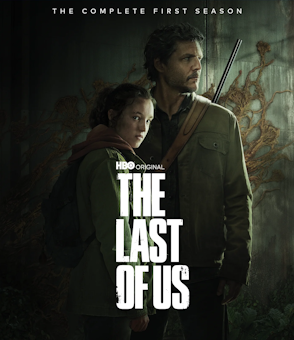
The Last of Us · Season 1 · Episode 3 · 29 January 2023
S1E3 Long, Long Time
A tender detour turns survival into a rulebook for grief, with one expository stretch the hour nearly outruns.
THE MOMENT Bill and Frank's final morning - Offerman utterly still, the camera holding, twenty years of love making the silence unbearable.
A self-contained love story between Bill (Nick Offerman) and Frank (Murray Bartlett) set across two decades of survival and companionship, told entirely outside the main Joel-Ellie journey. The episode departs from the game's source material to deliver something richer: a complete life, rendered in full, with an ending of extraordinary tenderness. Multiple critics named it the best episode of television...
Full episode analysis below. Spoiler-light verdict above.
Updated
Bill says he cannot. The refusal is small, broken in the mouth, and the episode lets it sit before it becomes a decision. Across an hour built from routes, supplies, rules, armed questions, and a note left behind, “Long, Long Time” argues that survival is only impressive until it has someone to protect. BollyAI’s read: this is the season’s sharpest detour because it treats love as the force that rewrites the operating manual.
A Jacket Is the First Peace Treaty
The hour begins with a plain human offer: someone asks if the other wants their jacket back. It is a tiny exchange, but it matters because this episode keeps turning survival into etiquette. In a world where people hide supplies along routes for lean stretches, even warmth has a chain of ownership. Gear is memory. Gear is argument. Gear is also the only reason the next mile happens.
That is where Ellie fits into the opening movement. She wants answers and forward motion at once. Her questions about how the infection began are the mind of a girl trying to make the world legible while being pushed through it. The route out of Boston needs feet, food, and silence, but Ellie keeps pressing at the cause. If no one was initially infected, something had to carry the disaster into ordinary life.
The episode’s craft is clean here. It does not separate mythology from travel. The explanation of hidden supplies becomes a survival tutorial, while the infection-origin talk becomes a moral one. Someone made choices. Someone moved people. Someone evacuated towns. The past is the road beneath the characters’ boots.
The only drag is that the infection timeline arrives in a dense explanatory block. The writing has earned the question, but the answer briefly sounds like context delivery. The hour recovers because Ellie’s blunt curiosity keeps the scene from turning into a lecture.
The Infection Enters Through the Pantry
The episode’s scariest idea is food.
Ellie’s question about the first infection pushes the hour into grounded horror: if no one began infected, the pathway had to be ordinary enough for everyone to miss it. The discussion of Cordyceps entering through the food supply works because it pulls the apocalypse away from spectacle and into routine. Bread, flour, a shared meal. The episode does not need to show chaos to make that idea land. It lets the logic do the damage.
Then it widens the lens. Soldiers evacuated small towns from the countryside. That detail gives the outbreak a bureaucratic chill. The end of the world is also a truck, an order, a line of people being moved because someone in uniform has decided the map matters more than the household.
This is where the episode’s rhythm reveals its method. It alternates dense explanation with abrupt interruptions, including searching and repeated calls later in the hour. That alternation becomes the heartbeat: information, then alarm; control, then breach. The pattern suits a story about people who think preparedness can defeat contingency.
It cannot. The pantry can betray you. The road can empty. The person you are protecting can ask for something your whole system was built to refuse.
Frank Turns Lunch Into Law
Frank enters as a test of hospitality. He wants food, but he also wants an arrangement. The episode is careful about that distinction. He is not a simple guest, and Bill is not a simple host. A meal here is a negotiation with plates on the table. The question of whether someone is armed is not paranoia as flavor. It is policy.
That is the cleverness of the Bill and Frank dynamic. Their early exchanges are about boundaries, and the later emotional payoff depends on those boundaries being real. Frank feeds the situation while setting conditions. Bill manages the compound and protects what is his. The show understands that romance in a fortified world begins with access control.
The line about someone showing up for a free lunch captures the comic edge of the scene without softening its threat. Frank forces Bill’s system to recognize a category it has no clean label for: outsider, danger, guest, partner. The hour’s best writing lives in that uncomfortable overlap. Every rule Bill has made exists to keep the world out. Frank survives by making the inside larger.
The episode also knows when to puncture its own severity. The armed question, the food negotiation, the guarded terms of contact: these beats carry a dry wit because everyone is acting like civilization ended, then immediately inventing dinner-table manners. Apocalypse has paperwork. Bill just calls it common sense.
The Fortress Finds Its Weak Point
Bill’s contradiction is the episode’s engine. He wants to manage his compound and protect his partner, but protection eventually becomes a question he cannot solve with fences, supplies, or weapons. The crucial turn comes when Frank asks for one last day on his own terms. Bill first resists the request, then accepts the choice and makes his own alongside it. That contradiction is not messy writing. It is the point.
The episode gives Bill a worldview built on control, then puts him in a situation where control can only take the shape of consent. When he refuses and says, “Uh, I ca... I can't,” the break in the sentence matters. It is a man whose entire identity has been built around capability meeting the one request that makes capability feel useless.
The pacing around this stretch benefits from the hour’s earlier discipline. The repeated calls and search-like interruptions around the middle section have already trained the episode to weaponize brief shocks. By the time Bill reaches refusal, the silence around him has weight. Long stretches without chatter do real work here. They make the decision feel less performed, more settled.
There is a risk in building so much of an hour around a planned ending. The shape can become too visible before the emotion arrives. “Long, Long Time” avoids most of that by keeping the focus on what Bill can and cannot do. He can secure a perimeter. He can make arrangements. He can choose. He cannot turn love back into logistics.
The Note Gives Joel a New Rulebook
When Ellie says the note is from Bill, the episode folds its detour back into the season’s main road. That matters. A lesser version of this hour would let Bill and Frank exist as a beautiful side chamber, sealed off from Joel and Ellie’s journey. This episode uses the note as a transfer of philosophy. Bill’s life leaves instructions behind.
The most practical instruction is also the most emotional: “Rule one, you don't bring up Tess. Ever,” Joel says. Tess becomes a boundary, and the boundary becomes the form Joel can handle. He may not be ready for confession, softness, or open mourning, but he understands rules. The writing links him to Bill without forcing a speech about similarity. Men like this can read grief if it is formatted as procedure.
That is why the ending works as season architecture. The road continues, the bite mark remains part of the forward tension, and the question of whether Joel can honor the rules sits beside the larger mission. Bill and Frank’s story does not pause the season. It changes the terms under which the season moves.
BollyAI’s read: the episode’s great trick is making a detour feel like a manual. By the end, the road has supplies, a note, a ban on Tess, and a sharper understanding of what protection costs.
The Verdict
“Long, Long Time” is a high-order craft swing: intimate, structured, and ruthless about the limits of preparedness. Its strongest idea cuts cleanly. Survival without attachment is maintenance. Survival with attachment becomes a vow, and vows demand choices that no bunker can automate.
The episode has flaws. The infection-origin passage carries more exposition than the surrounding scenes need, and its density briefly presses against the hour’s otherwise elegant pacing. The trade is worth it because the information feeds the theme: the world ended through ordinary systems, and the people left behind rebuild life through smaller systems of their own.
BollyAI’s score: 9.1/10. As a season piece, the hour earns its slot by turning Bill and Frank’s closed life into Joel and Ellie’s open road.